Showing posts with label profesional. Show all posts

US Patent Awarded to Amazon on Studio Photography

0


Amazon.com has just gained the ability to sue photographers who use a white background to capture a product photo with this patent award from the US Patent Office (USPO) which means they can technically ask for licensing fees if you ever thought otherwise.

Yes, you heard me. White background. Here is an except of the Patent text filed:-
a background comprising a white cyclorama; a front light source positioned in a longitudinal axis intersecting the background, the longitudinal axis further being substantially perpendicular to a surface of the white cyclorama; an image capture position located between the background and the front light source in the longitudinal axis, the image capture position comprising at least one image capture device equipped with an eighty-five millimeter lens, the at least one image capture device further configured with an ISO setting of about three hundred twenty and an f-stop value of about 5.6...

Amazon is an online retailer and for that, most if not all of the photos captured for use on their site has a white background. D'uh. Apparently the text also mentions the use of a 85mm lens so if you happen to get sued, all you gotta do is prove that you used a 75mm or a 90mm lens to shoot your object and you're home free.....provided you hired a lawyer to defend yourself which can run into thousands of dollars.


First, let's be clear. This patent is not an innovation. The patent was filed by Amazon in 2010 and granted this year.  For me at least, the idea of such a photographic exercise is really to fight other online retailers who would use a picture of a product shot with a white background. This gentle art of arm wrestling your competitor to the ground with a lawsuit is one of the best ways to perform a take down without using too much effort. Smaller online retailers who cannot fight Amazon's lawyers will have to move on. The very act of hiring a lawyer to defend yourself in corporate America is a dangerous proposition as it cost a lot of money.

This patent can be used only for sites hosted in America. Amazon in this case can't use it against say, China's Taobao or any online property hosted outside of the US.

Photographers probably need not be too worried but you should tell your client that you won't be using a 85mm lens to shoot a product. Instead, why not try using an iPhone? With the right lighting and a portable lighting studio like the Foldio, you can add a watermark that says "shot on an iPhone with Foldio", to deter the legal sharks from Amazon.


What's my Take on the Picture?
What this will eventually mean is that the professional photographer will be obsolete. The only reason why clients would want to use you for a studio shoot is that the object in question is so damn large that it will need a whole room with lighting just to ensure that it is properly lit. That said, you could soon be mothballing your DSLR until your client shows up at your doorstep with a product so large that it can't be shot with an iPhone.


Lytro Illum, Toy Camera or Professional Beast?

0

Pure Digital. What does it all mean? It means that it exist only in a digital form and no where else. This is what Lytro pioneered and now they are coming in for seconds with the US$1,600 Illum.

Pure digital also means you can't print this, at least not yet, until the whole saga of pixel technology is addressed. There is promise in Lytro Illum as a 3D camera, with 3D parallax capability but they don't seem to be leveraging on that. Instead, they are using the technology as a refocus-able image, which exist only in the Cyber world. Makes me wonder what good is all  that.

Lytro is not about Megapixels

There is no megapixel information on the sensor because it doesn't work that way. From the current iteration, the Lytro Illum is VGA quality if you so choose to print a copy of a refocused picture. You cannot for example, refocus a shot, crop it and print a copy out without pixelation as the size of the digital image is very low. The lightfield techology used here needs the extra sensors to capture depth and color information so as to give you the ability to refocus a point.


Lytro has no Commercial Applications as Yet

Besides being able to refocus, a good tool for selling highly detailed products of art, the technology does not offer any commercial value to photographers. 

As more people move to the mobile sphere to access the Internet, there will be less demands for desktop browsing. This also means that Lytro has to transition to a mobile capable browsing experience. 

At the moment, Lytro only has an iOS app, which allows you to view and upload image to the Lytro site. Lytro images cannot be used on a desktop unless you have the desktop program— free to download and use from their site. There is no plugin for Photoshop or Lightroom. In short, there is no other way to enjoy the whole experience except with dedicated software from Lytro. 

You cannot upload Lytro images to Flickr or 500px either. What you can do is to share a link to your images to social media sites, nor is there a way to generate a gif image. 

Lytro Potential yet to be Realized

This is my biggest beef with the technology. I am not sure where it fits. Or if it really has a niche of some kind for photographers to exploit. Sure, there will be those who want to jump onto the bandwagon before it becomes a big but that clientele is limited. Photographers who want to access this technology can do so at their own peril as there is no apparent return on such a investment. 


The quality of the images, which you can see here, offers very little in terms of dynamic range and color accuracy. In fact, the pictures looked washed out, the images just don't quite jump right at you. 

Until such a time the technology is further enhanced to address such short comings, I am afraid there isn't much use in investing in a camera like this. It is at best, an expensive toy. So if you happen to have some spare cash lying around, you could consider this as a distraction. After all, that's what a toy is all about. 


Shooting Speed: Motion Capture on the Fast Lane

0

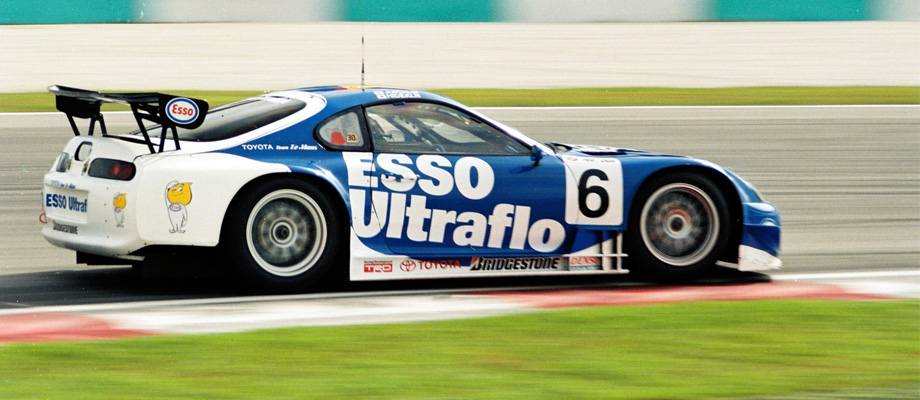
Speed. For professionals who hang around the track all day shooting racing cars, you pretty much end up with the same type of images because you are restricted by the angle that you are allowed to shoot. Often you find the same type of images floating around on the Web that shows some kind of speeding vehicle frozen at the exact moment in time. For stuff like this, you can't capture this unless you have a DSLR capable of up to 1/2000 of a sec shutter speed.

For me, I prefer shooting motion rather than freezing them as this gives a different look to the images instead of the same old, same old styles seen everywhere from billboard advertisements to print and web advertising.

When I started shooting these, I was still shooting on film. Imagine what I could have done with digital as it would have been a whole lot easier with the top of the line DSLRs you have today.

But the way forward is still the same. You gotta know your shutter speed. For motion capture like these, you need to know how to pan the camera.

Panning, as you follow your subject through a fixed path of motion, is what gives you the ability to capture speed and motion in your pictures.

Motion Capture Tips


  1. The best shutter speed to capture motion is 1/125 sec
  2. Make sure your subject is moving in a parallel line to your panning movement
  3. AF should be OFF (if you haven't got a spiffy DSLR with super fast AF)...AND 
  4. Prefocus your Distance to Subject
  5. Use a Monopod to steady your panning

The aperture value is irrelevant as long as there is sufficient light. If there isn't then dial up your ISO to 1600 and preset your Shutter Speed to 1/125. In the days of film, photographers were handicapped by the film speeds of between ASA/ISO 100 to 400. Shooting with ISO speeds of 800 were not widespread due to the grain. That is irrelevant these days with digital cameras which perform well with minimum grain at ISO3200.

Minimizing Background Blur at 1/250

Seems like it is frozen but notice that the wheels are turning
For others, you may want to minimize background blur by shooting at a slightly higher speed of 1/125 just to get the wheels in motion. This depends heavily on the distance to subject and of course the telephoto lens you are using. Shorter lenses (200mm) will need to capture at shutter speeds of 1/125 whereas longer telephoto lenses (above 300mm) will require shutter speeds (between 1/250 to 1/500). Longer telephoto lenses tend to magnify movement so less panning movement is required. The movement is very much amplified at longer telephoto lenses, say between 300mm to 800mm so you need to judge the speed in which the car or bike is carrying on a straight or around corners. The important thing here is to mount your gear on a monopod. You could also fashion a monopod out of a Tripod if you didn't know any better. Just don't use all three legs and only extend ONE of the legs out to help you balance your gear. Hand holding your camera is no recommended at longer focal lengths.


Shooting Around Corners

Motion panning can be done around corners as well but the effect is different, meaning that the subject is less sharp and appear to be blurry. That's because you use a slow shutter speed of 1/60 sec.

All vehicles will have to slow down to take a corner and when you are sitting smack in the middle of one, then you will be using a wide lens instead of a telephoto lens. A standard 50mm lens (full frame) would suffice.

You can of course use a wide angle lens such as a 35mm or 28mm if you are really close to the action—like when you can extend your hand out to touch them but that is rarely the case with racing circuits.


Freezing Motion

When you have a DSLR capable of 1/2000 sec shutter speed. It is very easy for you to freeze motion. You can also freeze motion at 1/250 when the vehicle is in low speeds around corners.


This is probably the first place you will find most trackside photographers camping out. They will of course choose the same angles as everyone else as action shots don't really differ much from one location to another when you want to freeze the action. Getting to a high or low place depends on your access to the track. If you have clear access to trackside shooting spots, you will probably get a chance to use a longer telephoto lens on dedicated racing circuits.

Street circuits, like Monaco and Macau, require lower telephoto ranges, around 200mm and less since you don't have a lot of places on the track which you can fully utilize 300mm. The most common uses for a 300mm lens is a head on shot during the start of the race as all the cars are bunched up together running into the first corner. After this, you'll have to pick out your targets one by one as the race progresses.


Should I get PAID for my Work?

0


Marissa Meyer of Yahoo may have earned the rancor of photographers everywhere when she categorically said that there is no such thing as a "professional photographer" after the relaunch of the Flickr site.

Such anger from the photographic community is not new, which reflects the very sorry state of digital imaging and digital photography.

Before we jump into this contentious issue let's put everything up for review.

Digital Imaging is a Disruptive Force 

You can't deny how digital imaging has changed the professional landscape forever. Unlike the days of film, where every shot you took costed money, every frame you squeeze out of a DSLR now is free from processing fees.

So when it is free, you get to shoot more at no further cost. And when you shoot more, you gotta have ONE frame in your hundreds of shots that will nail the shot a client wants. If this is the case, then the client will automatically assume that to get ONE frame that is spot on for them, they can't be possibly paying you for your time or exposure cost!

Will Work for Peanuts?

How many times have you answered a call for a photographic project only to realize that you will be paid with "Exposure" and "links to your website".  I am afraid there are just too many to call up. Internet sites like dpreview.com and thephoblographer.com use this to lure photographer cum writers out to the open with the promise of "exposure".

If you try editorial work, and have a portfolio to show, you'd probably be asked to shoot for free in return for a byline that shows you own the photo. For the offending publication, they get to use your photo for life and once up on the Internet, it will be flogged and reused to death without your permission.

So be mindful about those "work for free" projects that could bring you a few second of Internet fame but little else.

Don't Be a Gear Head

Love the new DSLR? Gotta have that new spiffy lens? Do you earn enough to buy all that in a single leap? Let's not fool ourselves about the cost of these new toys. Buy what you NEED and not what you want. The difference between the two is obvious. The ones you NEED are the ones that have immediate value to you. The ones you WANT are dream toys and tools you wish to have.

It's the Business and not the Photography

Photography as seen through the eyes of professionals has to be more these days especially when you are starting out. Going pro is about earning a living out of it and not about your photography alone. You need to have the acumen to run a business!

There is no two ways around it. Either you have it or you don't. Often it is never about your photography but rather how you run a profitable business that decides if you can turn pro.

The Last Word

Any monkey with a camera can claim to be a pro these days. Digital photography has made it so much easier to shoot a picture that any iPhone totting folk can claim to be a photographer of sorts specializing in food porn. When you have competition from such a crowd, how do you justify that 300 dollar an hour food shoot in your studio?

There will always be a demand for photographers in every industry, it's just a matter if that is a paying one. I have read elsewhere that in order to be a successful photographer, you need to do some market research and price your services lower than the next guy you're fighting with. If that was a success formula, then we should all set up stalls selling $1 dollar take away coffees just outside Starbucks. I am sure it will work. Don't you think?