

35mm Film Cameras for use during a Zombie Apocalypse in 2016
0
 |
| I said smile dude...! |
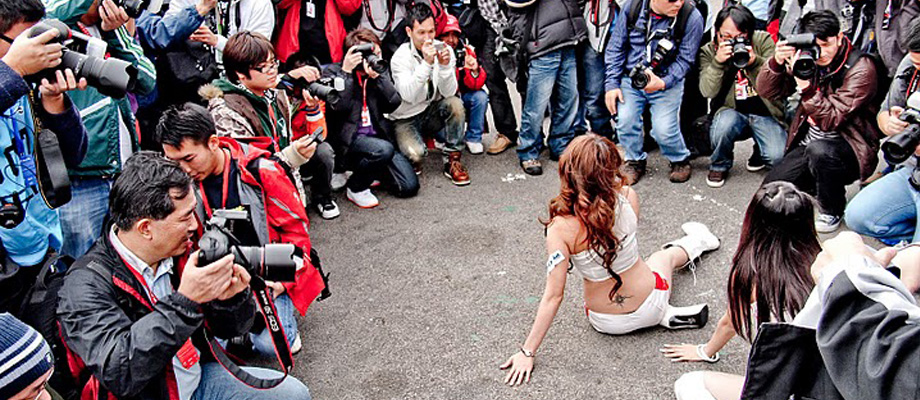
The Zombie Apocalypse is upon us! If you are going to go out to document the last days of mankind, what would you use? Let's be fair, the Internet would die, and unless someone had access to your digital camera raw files, they would never be able to see how the world really ended. So your best bet would be to get a film camera to document everything before a Zombie gets you and eats your brain. So what are your choices? Read on.

Nikon F6
Yup, still selling after all these years, be prepared to pay up to US$2600 to own one. This is like driving an all auto car, nothing to worry about, just point and shoot. The intelligent system will take care of backlighting and is weather sealed to prevent dust and water. So if you are running away from zombies through mud and grime, you'd be pretty sure the camera would work so long as you have these AA batteries handy. That's right, for all the metering and shutter to work, it needs to be powered up. This is what a professional photographer from the film age would buy. Lenses are autofocus too so no worries. Think of this as the Porsche of the analog camera world.
Nikon FM10
It is like riding a five speed bicycle. Not the fastest camera, all manual...think of it as driving a stick shift, and the intelligence has to be from you and not the camera. It needs a battery to power up the light metering but aside from this, the camera will work without one if you know the Sunny 16 rule for film exposure. Selling for less than US$600, it is as dependable as an ice cream truck when you are getting away from brain eating zombies.
Leica MP and M7
The M Professional or the M7 are both very similar, in that it cost a bomb to own. The M7 is the cheaper brother which cost in the ballpark of US$4,400 while the MP is up there at US$7,000. The exquisite Leica glass often cost more than the camera but that's another story. The Leica MP is for the Pro who prefers to have weather sealing. The MP uses SR44 cells to power the metering but beyond that, you don't have to worry much if you don't have it on your person. It still fires mechanically...but a word of warning... the M7 can't do the same.
One of the problems with Rangefinders is that the viewfinder is a little off and without the proper frame lines within the viewfinder, you have to be psychic to shoot one.

The M7 on the other hand is just another tool. I can't say much about these Ferraris of the analog camera world. Even though these German made machines are dependable enough to use as a weapon should a Zombie get you, it just doesn't quite fit the scenario if you had to pawn your left kidney to buy one. Then you have the split image focusing, which is quite a drag to use during low light. If money is no object to you then by all means ante up, and it uses 2L76 cell batteries if you want to have it shooting up to 60 rolls.

Horizon Perfekt
A 35mm camera that shoots super wide images that encompasses two frames instead of one. This one is sold through the Lomo site and cost about US$350. Not bad if you want super wide panos on ordinary 135 film and with a selectable shutter speed, it probably is quite fun too. If you are looking to shoot wide open Zombie landscapes, this would be the perfect camera to use. As a wide angle camera, you could put yourself in a selfie the moment you are cornered by man eating zombies as a last documented proof that you have been assimilated.

Lomo LCA+ and LCA Wide
Not one of my favs for reasons obvious, these are zone focusing cameras and what you see isn't what you get if you turn the focus dial wrongly. Some might like the blurry images as an art form but I beg to differ. However if you are not interested in pin sharp pictures of Zombies, hey....knock yourself. The LCA+ cost US$250 while the LCA Wide is US$390. Both are available for online purchase on the lomo site.

Originally copied by the Russians and made famous as a point and shoot. The LCA was notorious when it came to reliability. So they sold out and gave the opportunity to the Chinese to make them but the camera's Mintar lens that made those gorgeous pictures famous are still Russian made. The color saturation difference between the normal 32mm focal length and 17mm focal length of the LCA Wide isn't much but the aperture on the LCA Wide isn't very useful in low light thanks to its f/4 aperture.
So Here is the Deal...
Buy what you can afford. Each has its own quirks. Some require batteries, others don't. But if you want metering to be functioning, you need batteries, period. These could be the LR44 varieties for the Lomo LCA or AA batteries for the Nikon F6 with the battery grip or two CR123A without the grip.Lenses are another thing. For SLRs, having a zoom is great, and easier to shoot with. The Rangerfinders on the other hand requires you to have more than one lens at hand. Those with fixed focus lenses like the Lomo and Horizon will require you to run up close to your subject which can prove dangerous during a Zombie outbreak.
Digital isn't going to cut it. Especially if you upload everything to the cloud, no one will ever see it. What's more, if your iPhone dies, your photos will die with it. That is why film is the way to go. Even if the exposed roll doesn't get developed immediately, your photos will remain intact as proven by people who bought used cameras from the last country and were still able to develop the unfinished roll of film within it.
So if you want some semblance of legacy....shoot film.


.JPG)


