Showing posts with label microstock. Show all posts

How Public Domain Pictures became a Nightmare for Alamy and Getty

0


Recently, a case where a photographer donated a huge cache of images to the library of congress to become public domain has come to haunt Getty Images. 

Carol M Highsmith is currently suing Getty Images for US$ 1 billion dollars in damages. After she was sued by Getty Images for copyright infringement over her own photos that she donated to the US Library of Congress. In her gift, those photos has become royalty free but Getty Images thought they could misappropriate it and sue her instead. 

This is not the first time such public domain images are being used by Getty in licensing suits. A number of royalty free images from the Library of Congress has ended up in Getty's own coffers and you can actually buy them. 

This has made photographers world wide very incensed at the thought that Getty and Alamy prefer to sell public domain pictures and keep 100 percent of the profits. 

This isn't a bad business model. Take something for free and sue the pants out of people who use them. 

In the world today, are are millions of images being captured digitally every day of week. Many will end up in stock image libraries like Getty and Alamy which will never be sold because too few buyers are turning to them. 


The race to the bottom to sell bulk digital images with subscriptions has decimated the worth of digital photos and yet, Alamy and Getty prefer to list public domain pictures as a way to sell even more picture albeit scalping a clean profit for themselves. 

Such brazen thievery is no different than the many who steal photos off the Internet for commercial use. 

But that's not all, lately Getty has decided to kill its photojournalism department by declaring it doesn't want to keep photographers engaged in reportage work will no longer be getting further assignments from them. 

Reportage work was the bread and butter of photojournalism in its heyday, Today, photojournalism assignments are farmed out to anyone willing to work for beer money. 


I have images listed on Getty and it and not seen a single licensing sale from them, giving me reason to suspect they are more interested to selling photos where they make a bigger profit than those who are listed as royalty free on their library. 

But the rush to the bottom by royalty free image agencies are making the business more and more difficult to justify. 

We all know that you can buy an image for a song on some of these sites and it is a sign of desperation for photographers who want their work purchased. 

Getty has been in hot soup lately, making several of such misappropriations from photographers and later suing them for copyright infringement only to be counter sued by the photographer and copyright owner instead. 

Getty Fights Lawsuit Update


In the ongoing litigation between Getty and Carol Highsmith, the image agency has told the court that Carol's images in public domain is free and cannot be infringed so their argument is that Carol cannot sue them for copyright infringement since no protection exist for them. 

For charging people for public domain pictures, Getty had this to add. 
“Public domain works are routinely commercialized,” writes Getty. “Publishers charge money for their copies of Dickens novels and Shakespeare plays, etc.” That, claims Getty, is what they’re doing with Highsmith’s work, and it’s totally legal. 
So what they are saying is that you should never put ANY images up into public domain because Getty has the right to misappropriate it and sell them online for a fee. 

Told you this can't end well. 


Corbis sells out to VCG for a song....

0

It is official, Corbis has sold out to Visual China Group, the same group that bought out 500px over a year ago.

Corbis sold for less than it was imagined, with rumors flying saying it was below US$100 million and with a library of 50 million images, that sounds like a deal that can only made in China.

Getty has an agreement to sell Corbis images outside of China so that won't affect world wide sales for photographers.

Photographers weren't too happy as they were not informed of the sale and some have even started to pull their images out from the library. But to say that Chinese are going to abuse the issue is misstating the facts.

Decline of Revenue for Stock Images 

With lax to no regulation by stock image agencies over the use on the Internet, the decline was to be expected. For the record, world wide copyright enforcement for stolen images is extremely low and DCMA takedowns cannot be enforced with servers hosted outside of the US.

Even with personal images, the law is on the side of the offender for US cases. You cannot claim a copyright if you didn't file for copyright protection in the US. This is a costly affair and with your images worth only a tad more than the royalty image, getting a lawyer to sue the offender just doesn't make sense.

To make matters worst, even if rights managed photos are exploited, stolen or misused, stock image agencies still fail to perform any type of regulation to ensure rights are not abused.

This means that a offender can buy a lower quality photo for web use and still blow it up to wall size for use on rooms and walls.

Photographers who own these photos do not know the buyers and this is kept confidential. If a rights use issue does crop up, offenders normally get a slap on the wrist rather than pay any penalty since laws are opaque when it comes to copyright from country to country.


Worst time for Stock Photographers

It is hard to imaging who would want to carve a career in stock photography when royalty free and crowd sourced photos are disrupting the markets.

Camera gears are getting more expensive, and to be kitted out with the latest equipment for professional photography would be a very difficult business proposition.

This is not to say that you can't make money from ad hoc photography services be in commercial photography or weddings. It is how much you can make that determines your future in the business.

Stock photography cannot be treated as a mainstream  income but for beer money. So enjoy the photography while keeping in mind the weekend booze could be more memorable if you earned a little more.


Photokore to Shut its Service in Decemmber 2015

0

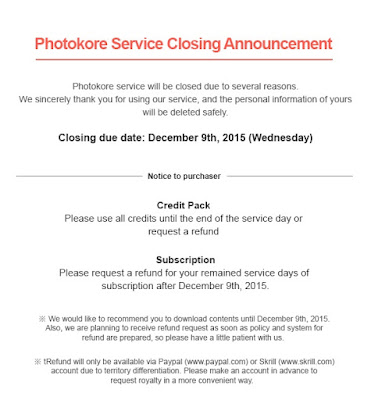
It is sad to see another one go but times are a changing. Photokore, a stock image library that's been around since 2010 is finding hard to find paying customers for pictures from Asia. And by December 2015, it will shutter its site for good.

One of Photokore's strong points was it capitalized on photos made available to them from photographers based in Asia. That however hasn't translated to sales. People in Asia just don't buy pictures!

It has of course sent out alerts to both subscribers and photographers on the impending closure.


Problems with a Paying Market


One of the trends I notice is that Asia isn't a big contributor in terms of revenue to stock photography. Many prefer to lift images off others from social media and don't give a hoot until they get found out. In south Asia, where the weather remains relatively the same, you don't find much changes in the environment as say in four season countries. There are no distinct differences besides the rain and the sun shine. North Asia, aside from Japan and Korea, no one really bothers about buying pictures either. The respect for copyright is a right to copy. China, well, need I say more?

Western based markets are only slightly better as collateral has to be purchased before hand and this contributes somewhat to the revenue base. In fact, a majority of these stock agencies from the west make decent living from selling photos.

The paying market is shrinking, while the contributor base has been increasing, thanks largely to mobile photo sharing sites that have opted to jump into the stock image business.

Instagram briefly flirted with a stock image revenue model in 2012 only to have their users go up in arms about it. Now users will pay the price for this with lots of advertising. Which is the other way to get around the problem.

There is no two ways around this. Monetize or die.

Stock image wasn't the first choice for EyeEm or 500px.com but they now offer a library of photos to would be photo buyers as well. Competing and sometimes complementing big names like Getty Images, they offer a cheaper option.

Not sure how long this model will survive but there isn't much in the long term to look forward to in the stock image business as we are already been inundated with photos from around the world in social media.

I have sold some photos but not enough of it to pay rent. That's my observations so far and I don't think it will change in time to come.


Consolidation of Stock Image Agencies

0

When Adobe bought out Fotolia, people were saying that it was a good thing but seriously folks. You have all been mistaken.

Back in June, Adobe announced its own photo bank called Adobe Stock. You sign up with their cloud services which can run into hundreds in a year, you get 40% off all your stock photo purchases.

For me, it was a WTF moment.

In doing so, and charging your customers less, and you're selling it at a lesser price which in turn benefits the agency and not the photographer. If Adobe sold your photo at a retail rate of dollar, you get only a few cents from it. And if they sold it cheaper, you get less than peanuts.

This is a problem I have with stock agencies which sell stock imagery for cheap. You want the best photos taken on a DSLR with Leica lenses, have a model or property release as well, then charge buyers a buck for a download. Maybe a little more than a buck if you want a higher resolution version. And if you give discounts to your buyers, you also discount the return on commission to the photographer. So where does this end?


Challenging the Microstock Market

I don't give a damn about long tail marketing or mass market buying. Adobe isn't a premium company that is going to pay you well for your photos. Fotolia made a name for itself as a microstock for everything. Adobe hopes to do the same.

From images to clip art and vector files, the creative effort behind it is getting valued much lower.

Sure there will be some winners but even on Wallstreet, the losers outweigh the winners. So who are the winners here? Adobe of course because they don't own the intellectual property behind your image but so long as you give them the permission to sell it for you, they can set a price and give you a percentage of the retail price. Technically speaking, they won't give you a higher rate if they sold it lower because of their promotions.

This is how it all works these days. You the photographer gets your foot in the door by providing royalty free with property and model releases, it is a classic case of having you do more and earning less. It is a disruptive model of business that only benefits the business owner. That is, unless you are some rich millionaire with plenty of time on your hands and want to shoot some really awesome photos and sell them for beer money.

The Two Faces of Microstock


Currently, don't think that you can challenge the big guns of photography with your amateur attempts to make money from photography.

There are two types of microstock agencies, one that only validates and takes in DSLR high spec imagery and those who don't. These stock agencies want only the best imagery shot on DSLR cameras to be listed as Royalty Free. Photographers who are desperate enough to sell will list them there as they have no other choice. You might think that rights managed is the way to go but seriously, unless it was a big corporation going on a global spending spree, your chance of getting something sold for such use is next to zilch.

Image buyers are spoiled for choice since they can get the best imagery for the cost of next to nothing.

The other type of Microstock will be more forgiving with your imagery but they don't make money from them because you used a mobile device to capture those photos. Not that it's not any good but compared to the quality of those using DSLRs, your photos suck.

Why buy a photo for a buck that was captured with mobile devices compared with those using DSLRs. They cost the same. Do the maths and you'll know what value it is. As a buyer, I want to pay the least for the best. 

I have seen pretty good pictures listed on royalty free, with model releases and stuff required for commercial use. And they go for cheap. As an ambitious photographer who wants to break into the business, you have to hedge your bets on a better camera, pay for models if need be and photoshop the hell out of them so they look great. All for the return of a buck. Don't think you can hijack the big boys by setting up shop. People have tried to set up coffee stalls outside Starbucks just to do the same and they never work.

Now, some photographers would prefer to sell their images on dedicated sites like Photoshelter.  You get to make all the money on your own but hey, have you forgotten the marketing part? Do you not see those online search adverts inserted into Google for stock image or stock photos? Seriously you want to take o the big boys with millions to spend so that your Google Ad bid will never get seen? Advertising is the only way to get your site shown to the world and if you were hoping some guy who wants to buy an image for his website is going to land on your web image fire sale page, well think again.

What the Future holds for Image Agencies

The market is worth roughly US$4 billion a year. If a hundred image agencies were to battle for that same market, you can see the fragmentation. Some will fall off a cliff. Others will exist only in name.

The future is marked with consolidation. Too many agencies and the market isn't growing fast enough.

Adobe Photos have subscription models, and so do some of the more popular microstock agencies, and if a client were to download photos with a their paid subscription, you will get pennies in return. 

For the up and coming photographer, listing on a stock photo library might turn out to be a bad idea. If they get bought out, turned inside out to a microstock model, you have to agree to stick with them or delete your albums for sale.

Selling your photos might sound as easy as uploading it to a site but in the end, it is the retail prices that will eventually inspire you. Why would you waste time on a business that demands not just your time but money as well if you want to compete in the big league with little or no hope of ever achieving a decent income? Think for a moment about those stock photographes who earn hundreds of thousands every year and ask them how hard they work and how much of a dollar investment they put into their business. Does the end justify the means?

That, unfortunately, can only be answered by you.

Scoopshot Pro to become the Uber of Photography?

0

Sometime back, I wrote about a crowdsource photography platform which allowed you to take photos from your mobile device and sell them as microstock images. 

My own experience on the platform didn't go well. First, there were so called 10 dollar assignments where the best photo will get bought from Scoopshot themselves, it turns out that the photos that were purchased were the worst ones imaginable and somehow I felt cheated to have participated. 

With that, the Finnish owned crowdsourced mircostock platform started to falter and with funding already running into millions, it looked like they were going down the gutter. 

Then they announced ScoopShot Pro, a Uber like business model where photographers could get hired based on their shooting experience and location. Your portfolio will have only NINE images. For any digital photographer, this should be easy peasy. In any given day, a digital photographer can shoot a whole stream of photos with only the best chosen for the portfolio. Or for that matter, a photo that could be composited to look like a single frame image. 


Scoopshot Pro is not a Professional Network for Pros


Apparently anyone can join, and the best part of it is there is no requirement to own expensive equipment. You get hired based on a selection of images found on your online portfolio and the lowest price per hour or per assignment. 

The incentive for photographers is to get hired on the spot based on location requirements and genre of photography. So if you do weddings, chances are they won't be asking you to shoot a car or wildlife image. 

Scoopshot says that the assignments will be prepaid in advance by the customers. Which sort of means the prices are not set by you but rather by Scoopshot themselves. This sounds particularly distressing to photographers who are thinking that they can be paid as good as their counterparts in developed countries. What you need to worry about is minimum wage. How low are you willing to accept in terms of fees for an assignment brief. That's because if there is a match up for two similar photographers from one location, I assume that both of you will be notified. Who takes the job depends on who is faster on the trigger and hit the accept button. 

Billing is handled by Scoopshot themselves and you don't have to lift a finger. Once you submit your assignment pictures, the customer has to approve them. This will mean that you will have to pay the model in advance of your salary or fees if one is used. 

You are also required to undertake the whole assignment without any advance payment of expenses as well. Which means money upfront by the photographer to pay his way and the cost of it all is factored into the assignment cost so you cannot claim any further expense. 


Scoopshot also mentioned that experience is what counts and you are required to list them to prospective customers. That's kind of difficult if you don't specialise in a genre that will help you get the job done. 

For example, advertising photographers would have far more experience shooting commercial photos as compared to wedding or street photographers will gain the upper hand for commercial request. 

But street photographers would be better off provided editorial photography than commercial photographers....and so on. 

Hiring photographers seems to be at the customer's request if they pay an annual fee. Please note the pricing package listed above as it clearly states that they have unlimited mobile task which they can request for as assignments from photographers around the world. 

All a sudden, this Uber Photographer platform starts to get fishy. 

Customers don't want mobile photos....they want high quality DSLR photos and if you are paying to get mobile tasked assignments, I think you as a potential customer will have grounds to believe that you might not be getting the best deal for your money. 

So until this rolls out and proves to be true. We can only guess how far and wide this platform will be in enticing professionals to their fold. 

After all, Uber is not about quality but price. If you can undercut the market minimum, that makes for a good business model. 

Lifetime Stock is here to Disrupt the Royalty Free Stock Image Market

0

When you start out with a camera in hand, and the world at your feet, you have every right to be optimistic. 

During my time, it was an exciting journey. People were paying for good photography and learning to shoot was a skill. It wasn't something you could get our of a craiglist advert as photography during the analogue age was difficult. 

Magazines wanted writers who could shoot some basic photos because those two talents came as a bonus. Photographers were hire as full time staff in Magazines and those who could afford it, even had their own in house dark rooms to process photos. 

In the real world, people didn't take up photography for fun. Almost everyone who took up a camera could earn money shooting for people and people paid money for it because film and development cost were part of the equation. There was no freebies, because the consumables like film and printing itself cost money.

In my last post, Depositphotos was mentioned as a microstock agency that was raising prices while cutting royalty payments to photographers. Then I also had the post on the microstock business itself and how to make it in the business. It was to highlight the reality of the image business, in the digital age. 

What I use to do no longer applies. Magazines and newspapers often source for photos found on the Internet and credit the photographer in kind. Websites prefer not to pay for photos even if they are backed by multinational media corporations. So where are the markets for photographers? 

It is still in advertising or commercial space. 


What the Hell is Composite Photos?

People who set up websites and magazines will need to put up banners and print adverts. and there is no mistaking the need to have photos as a form of illustration. 

In the deposit photos post, I mentioned Composite Photos, but many didn't know what I meant. Well here is the example. Lifetime Stock is a microstock agency where they sell photo elements to create the ultimate composite photo. 


What Lifetime Stock does differently is that they buy blank background and isolated models posing against a blank space for compositing later by any digital artist. 

If you want to shoot such stock images, you have to learn to shoot against a blank background and at the same time ensure your light source is neutral so that no one can really tell which direction the sun is coming from. 

Beyond this, you can also shoot still objects, maybe fruits, cups of coffee, everyday items with neutral lighting. These objects will be etched out and the isolated object dropped into a corresponding background. 

This agency is on the look out for photographers who have some experience shooting such photos and if you qualify, you can easily fill in the gaps. However you have to note that they sell photos based on a subscription model, meaning customers can download up to 33 files a day based on the annual package they buy. 

The standard package is optimised for web use, while the Pro package is more suited for print use. 

The online photo editor is sort of like a Photoshop cloud app. You can do masking and compositing based on your chosen photos and create a brand new one just like you want it to look. 

You have to look at this sort of sites as an opportunity, which however demeaning to the photographer it may be, is a way to earn some money. 


Reality Unmasked


The reality of my teenage dream is officially a nightmare. To dream of having to shoot pictures while earning a decent income is nothing more than a fantasy. You can still go professional of course, but not in the way you could imagine. 

In the analogue days, film stock images were costly to store and people who wanted to use your photos had to pay good money for it. Corel was one of the first to pioneer the success of royalty free stock photos from Canada, where you could buy a CD full of images which gave you the rights to use it as you will. 

But before that. stock images could only be ordered from a catalog and the slide would be delivered to you via a parcel. There were no on-demand photo service which you could buy a photo when you needed. However whoever took part it the stock image business during those days could earn decent income if you had over 1000 images at a photo bank. 

And that's how they like to call their business, a photo bank. Because only a bank holds pictures with real value. 

Microstock? It's as vaporous as a bear or bull market run. That's how you tell the difference. 


Depositphotos Raises Prices and Cuts Photographers Commissions

0

In another step towards racing to the bottom, photographers will be paying the price for it and not consumers. In a saturated world where photos can already had for free, Depositphotos think that you deserve a rate cut. 

old royalties

read'em & weep new royalties

So where is the logic? Apparently Depositphotos has had enough of going through your photos and want to pay you what you deserve, according to the reasoning, it is to bring it more in line with market demands. This could mean that they are raising the rate as the demand has fallen off a cliff so they have to sell less but charge more, while at the same time trying to accommodate more and more photographers who wish to sell at their marketplace. 

This cannot be good news for the photographer. The 10 percent royalty cut may not prevent you from earning your beer money but it does towards drinking lesser pints. 

Why you should rethink your plans about Quitting your Day Job


Everyone at some stage of their miserable lives would want to embark on a life changing career and some may even want to dabble in photography. 

There is no sin in this but you need to understand that each step you take forward is like traversing a minefield. 

Having had the experience of working within a advertising agency, I know how they manage client expectations and this can be difficult. First, every dream the client has about an advert has to be skillfully rationalized in terms of budget. If a client refuses to opt for a staged photo shoot to meet the imaging expectations, then they resort to using royalty free photos. 

Royalty free photos can be purchase for either print or web campaigns, and this is where they start to fire up their photoshop skills to composite photos to create the illusion of an actual piece of canvas. This is a no brainer. 

Royalty free microstock photos pander to such needs and are ideal when very little is involved in terms of cost. Instead, the Advertising agency will then charge their Digital Imaging Enhancement fees on top of the purchase photos, making the bulk of the money in place of what they have purchased from you...the photographer. 

There is always some work to be done, for photographers to shoot for agencies, but the value proposition is always very poor. 

Special assignments do not come in a bear market but a bull market, where lots of special projects to shoot models and products can be had in a booming consumer market. 

The reverse is true when in a bear market where consumer sentiment is poor, budgets will have to be cut and this is where they turn to buying stock photos. 

Stock imaging works best in countries where a copyright is valued. This unfortunately does not happen in Asia or the USA, where countless large corporations have ripped photographers off. 

The last market for microstock lies in websites, but not personal blogs. Corporate or business websites have a need to fill those blank spaces in their content and this is where an image will come in handy. But look at the above rates for web use and you will know that you're not going to get rich from it anytime soon. An image that is between large and medium cost lower than 3 bucks. A buck might buy you a beer at some places while anything less than 3 might qualify you for a Starbucks latte in some parts of the world. 

In a day or week, you have to work out your expenses on how much you want to devote to this career and how much you can earn in the process. 

Lastly, demand for photos always come from developed countries as oppose to semi or least developed ones. This is due to copyright laws and of course demand for unique content as a corporate differentiator. 

In Malaysia, a third world country, several banks were caught off guard using the SAME stock image to run their ads. That's how poor budgets are and even the big guns don't bother licensing managed photos. 

So proceed with caution, don't raise your expectations that you will be a earning a decent income when shooting royalty free stock photos. If you have a comfy financial basket to rely on, and want to take up photography as a past time, then go ahead, live your dreams. However if you think it is going to pay for your overheads, expenses while affording a comfortable life, well you had it coming. 


Microstock Pictures: The devolution of the value of Photography

0
this is a creative common image example

We have all heard of the term, deflation, that's when things get cheaper economically. Now every economist will tell you a deflation is a bad thing. This is when the price of a product or service goes down either due to poorer market conditions or demand.

Stock photography has been in a deflation spiral for some years. Microstock photography, which hints broadly at cheaper pictures which can be sold more often therefore making its margins through bulk purchases. Microstock is also a royalty free approach to licensing photos, allowing consumers to pay as little as one dollar to use a stock image on a web site.

As the technology behind cameras evolve, it can't be said for the photography business in general. Everyone with a camera, mirrorless...DSLR....or a smartphone camera, can provide an image that is acceptable to most microstock agencies.

What's more there are thousands of images which are released into the Creative Commons domain, some of which are pretty outstanding in quality, all for free for web use. These photogs hope that by giving away some of their imagery, they could in turn get valuable web traffic to their site and promote their name.

This 'free' stock image sites (there are over 50 right now) compete directly with royalty free microstock images. So the the game has gotten even harder to compete in. 


Making it as a Stock Image Photographer

I have read stories of photographers pulling in hundred of thousands of dollar ins revenue from their stock image sales, but I can assure you this can't be from microstock photos.

Stock image agencies are always on the look out for more talent to contribute to their image library. It cost them very little to sign you up....or for that matter, validate your photos as acceptable after all you are responsible for potential lawsuits.


Microstock photography is probably a good way to start if you are thinking of submitting images to any photo agencies. The reason is simple. If your photos get rejected even at a microstock level, don't even hope of getting that past larger stock agencies like Getty, Alamy, Fotolia, etc, etc.

To start, all you need is a smartphone like the iPhone 5 or 6. If you already have one, then you don't need to spend another US$500 buying a compact camera.


Tips to Start Shooting as a Microstock Photographer

I am going to lay out some advice to keep you going and as cheaply as possible. This will work out in your best interest for one very simple reason....microstock is not going to make you rich but it can earn you some decent beer money.

Each region or continent of the world has a search term that stock agencies track, and these are very useful if you happen to live in a particular region of the world where they pay for such images. To get an idea, here is a list of key terms from one of the agencies. 


# Rule One : Be Opportunistic when Shooting Outdoors

As microstock photographer, you have to recognize a great photo opportunity when you see one. For example a great day, with the sunlight breaking through the clouds, or maybe a street scene where colorful flowers are arranged for sale. Shooting street vendors selling their wares (the wares...and not the vendors should be in the picture).


When you go out to order food or a coffee at a nice setting. Whip out your smartphone to capture a picture in the best possible arrangement. It's a photo opportunity that you have already paid so why not make the best out of it? Remember to arrange them in such a way that brand names are obscured. This makes them more marketable.


#Rule 2: Learn to capture photos without glaring brand signs or faces of people

This is another trick that will help you sell photos. Getting people into pictures is really very easy, especially identifiable people. The hard part is having them in the picture without their faces in it.


One way to do this is actually using long exposure on a tripod. People's figures and faces will get blurred while you get a public picture of a place. A festive atmosphere is best with people in them.

The other method is to spend time on photoshop to erase them out, which might or might not work since stock images of public places look more lively with people in them instead of without them.


#Rule 3: Use Hand, Arm and Leg Models

A object on its own is pretty useless unless a human interaction is in the image. This is where asking a friend for help will come in handy. Hands holding items, or any bodily part used as part of the composition is one way to get away from the model release conundrum most photographers have to get around.


You need to spend time and effort to arrange the shoot and once you do, shoot an entire theme on it. Won't cost you a dime as long as all the objects in the picture are borrowed.


#Rule 4: Get a Friend to Pose for You

These days, stock photos call for model releases and the same can be said of microstock images as well. If you have a friend who looks the part and is a willing victim of your photography exploitation, then ask them to sign on!


There are a lot of people who think they would make good models and for your part, you could help them on their way by giving them an online portfolio of images to use as their own.

Nearly every microstock agency these days ask for model releases once you have recognizable faces. If you go through the trouble to get one for them, the chances of you selling a picture is far greater than that without a model.


#Rule 5: List with Every Microstock Agency 

Royalty free means photos are not exclusive to one agency. So if you are going down this route, list with all the available ones you can manage and I can assure you that there are heaps out there. The best microstock photo agencies are the ones who find ready market for your photos. This means they should be advertising about their service either offline or online.


Microstocks that don't advertise often take on Photographic Missions as a way to address a client's requirement. They find willing client who are wiling to buy the right photo submission for rates amounting to a few hundred dollars at a time.

Here is where you make that distinction on which path to take. If you want to shoot what you like and submit them to microstock agencies all over the world, then make sure these agencies are doing their part by actively seeking buyers. There are loads of agencies that just exist online without doing much to push their services to buyers. These are dead ends and there are plenty of such agencies littering the Internet-scape. Go with one that actively advertises online to start with. They might get more exposure but you also get drowned out as their libraries probably have a hundred similar type photos as yours.

Lastly, you have to ask yourself what sort of buyers would be interested in your photos. And here is some food for thought. Over 20 years ago, I met a photographer who had gone to Myanmar's Bagan city, and he took beautiful panoramic slides of the place. However Myanmar at that time was going through a rough political patch so even though they were beautiful photos, no one ever wanted them because there was no market for it.

People who buy specific photos fall into a handful of categories. They are either in the news business, blogsite, tourism and promotions, hotels and service industry. This is a finite market and they are looking for the cheapest option for photos. Big brands and large corporations these days are also on the look out for cheaper images, so that too is another potential market for microstock photos.


The Last Word on Microstock Photography

The rule here is not to spend too much time and effort for just one photo. Make sure you have a whole theme of photos lined up when you do put in some money to make it happen. Microstock cannot be a zero cost business. You will have to come out with some form of monetary investment if you intend to pursue this further.

If you are lucky enough to make decent money on it, and enjoy doing it. Then you can consider moving up the chain by being a semi-pro stock image photographer (you will need to invest in a proper camera though). For that, you can start to hone your skills with more complex subjects as a larger sensor camera will give you greater latitude with low light or challenging lighting environments. Beyond that, just hope you are lucky enough to secure some sales to keep you going. 

[disclaimer: none of the photos featured here belong to me. These are royalty free photos for non commercial use.]


RooM the Stock Agency Sends out Warning to Photographers

0


This is quite weird, if you have signed up with Room the Agency of late, you'd realize that they have added a new terms and condition clause which is totally unexpected.

Hi benard

You have been a RooM member for a while now and as a small collection of serious shooters we pride ourselves on our collective spirit. We have excellent exposure at Getty, with their 1 million clients, in over 100 countries:


Without every RooM member getting involved and supplying the right content, that sells, everyone suffers, because it affects our exposure on the Getty and iStock sites and therefore reduces our sales potential.

As one of the last few guys who have yet to upload content to RooM we have now put your account on temporary review.

This means that if you do not upload a minimum of 5 images, at least 1 of which must be a model released people image, before 10th April, that are all, or mostly all, accepted – review may take place after this date – your account will be deleted soon after.

Only the best, mostly people, shooters are invited to join RooM, you are one of the few that has a treasured account - this is your last chance to save it.


If your account is closed you will only be able open a new account by invite, as we are changing our sign up rules. With over $1 billion in annual sales, that’s half the World’s stock photography market, going through our channel, you might regret letting your account lapse into closure.

So please allow me to reply to Room the Agency in an open letter.


Dear Room Creative Team

Forgive me but you didn't leave a personalised signature so I have no idea if you are male, female or just a mail-bot programmed to send out email threats to photographers in your network.

From the tone of your email, I gather that you are quite exasperated by the lack of images in which you wish to sell online at the cheapest possible rate. Now the reason why I have not responded is this, I downloaded your Room the Agency iPhone app to see if I could submit photos on my iPod Touch, apparently I could but the value of such works don't seem to be much.


I have joined up as a lite-contributor thus I would only enjoy a 35 percent commission for every sale. Your Elite contributors enjoy up to 40 percent, which is just 5 percent more than what I am getting. Thank you but I think you can keep you 5 percent as I am sure it will contribute immensely to your pantry budget.

Secondly, I do not understand why you want a model released picture to be included in any of my submissions when your own rights managed pricing guideline is as ambiguous as the NSA's stand on personal privacy. You have implied that if I do not submit ONE model released picture, then you are going to close my account.

I have two issues with this. First being that a model would designate a person who is willing to sign a paper as a release and since I don't own a gun to make anyone sign a piece of paper I would have either pay them in cash or in kind if you so wish me to grant them sexual favors. You see, signing away your rights as a model would imply that the person is knowing indulging your passion for want of money. And even if you live in a third world country, a fat and aging prostitute would demand money from you even if you took a picture with her clothes on. 

The second thing about this issue is that all model released photos should be rights managed so to speak. With that, I am afraid that I have no idea what you are talking about when you say things like:-
Rights Managed (RM) PricingPrices are often higher than RF, but far fewer sales are made. Rights Managed (RM) pricing is based on how the image is used. There are many variables with RM pricing: editorial v advertising; length of usage; number of territories; and much more – the wider the use of an image the more it costs the client - but some usage, such as inside textbooks, is much cheaper than others and can be quite low.
We only sell the largest file size we have on file to clients and cost is strictly controlled by what they use it for.
If you can put it out in plain English, like maybe a 50% commission from the total deal, then I would probably be much happier with instead of twisting the words around like a serpent in heat.

For the record, regardless of how much you sign for or price the photos, there is a commission structure which you can share with photographers remains the same regardless of the number of licenses you sold to a buyer. What's more, your license type from RF to RM is rather rigid for the buyer and it tanks out at 500,000 copies, the irony is that you use an honor system and take no interest in making sure that the print run is not exceeded. So will you bill them more if you found out they fibbed a little by understating the print run? Do you have the means to police the issue? 

Lastly, based on the offering, and also with your own admission, there is no way to expect more sales from a photo that is Rights Managed. So even if I paid a model to pose for me, obtain the model release and send it to you, there is only a slim chance of making a few hundred dollars. How many hundreds I might make remains a mystery for me as your chart to photo buyers failed to illustrate how much they have to spend to buy a photo from you. 

I am sure you make millions from the 1 billion sale turnover you like to brag about. For photographers, they might be real lucky to earn some regular beer money for all their work. So let's have a beer when you have the time to drop by for a talk, I just hope you're buying. 


Finding Success with Stock Image Libraries

0

WTF? No one told me I would appear in a Playboy ad!
This is a post of something I wrote on my other photography blog which is intended for a mobile audience. For those of you who have heard, there are some individuals who shoot stock and earn over US$100,000 a year. If you want to get to that bracket, then you gotta know what sells and what doesn't sell on stock image libraries.

Stuff that Sells

For the most part, the demand comes from the corporate sector where they had enough of paying for rights managed photos, a royalty free option is preferred and yes, you need models in the picture and we are not talking toy airplanes here.


The Hot Stuff that every Stock Agency is looking for are:-

Model Released people doing things. So, rather than just standing there, we want people out walking (not a dot on the landscape), shopping, using technology, celebrating, engaging, all the everyday activities we enjoy, in fact.


Story Telling Themes that Sell:-


Concepts, with and without people. Such as – Adventure, Balance, Connection, Discovery, Escapism, Fragility, Growth, Hope, Idyllic, Journey, Loyalty, Motion, New Life, Persistence, Real People, Sharing, Teamwork and Young at Heart.


There are caveats to this list and besides the property and model releases you are expected to furnish, you also need to avoid the following in all your pictures:-


Trademarks and Logos
Before you submit photos for consideration, make sure you whip out your trusty desktop or notebook computer and fire up Adobe Photoshop. Stock Agencies do not want to see any trademarks or logos in your picture. Combing through your image for offending logos and trademarks is easy. See that logo on the jacket that says Hugo Boss, well take that out and that Coke Bottle in the background? Just erase the logo and word Coke from the bottle.

Art Installations
Don't submit photos with famous arts of works in the background. Waste of time really as all that is already copyrighted. So for example you want to pose a model next to Rodin's Thinker, well think again dude. It's not going to fly with the Agencies. Public monuments are fine, like the Eiffel Tower, London Bridge and Statue of Liberty but it has to be in a context of something.

Events and Concerts
If you had to buy a ticket for a sporting event or performance, you cannot shoot any fucking thing intended for commercial use there. It can be for editorial use and that restricts your market by about half. The paying customers are always the corporates who are looking for royalty free exceptions. If you can produce a picture they want, they will skip paying for a rights manage photo and go for yours. Will this make you any richer? I seriously doubt it.

What me? Royalty Free? Are you kidding?
If you had sports pictures from a curling event in Sochi Russia, well you can't sell that as commercial stuff unless you fucking hire the damn team to pose for you in a make believe set. That too must be sans Olympic attire and logos in the background. And you can't sell it as an Olympic image either, just Curling.

The same applies for concerts. You can't shoot in a U2 Rock Event and sell that as a commercial image. Bono will clearly tell you it is a no-no.

Stock Image Agencies would Puke if you Tried Submitting...

There is a list here too. Don't bother looking too deep into it as I am sure you have all tried to make your first million in stock photography by venturing out to your own back yard.

  1. Squirrels, Ducks, Geese, Swans, Pigeons and all the birds and animals you find in your garden or local park
  2. Seascapes, Shorelines and Lakes - especially the one's with long shutter speeds
  3. Sunsets over water
  4. Sunsets behind Trees
  5. Trees
  6. Generic landscapes with no distinctive geographical, iconic or stylistic features
  7. Snapshots of dogs and cats
  8. Nature abstracts submitted as "backgrounds"
  9. Insects – unless they are fantastic
  10. Objects on a white background – especially Food and Still Life images.
  11. Animals in captivity, where it's obvious they are in a Zoo or Safari Park
  12. Individual Flowers and Plants outdoors, especially close-up without any context or visible sky

This list isn't as extensive as I would like but it is a start. For the record, there are tonnes of these types of photos on Flickr which people are already giving away for free. So what makes you think that picture you took in your back yard is going to make you any money?

How to Make Your First Million in Stock Photography

Invest in those freelance models. Remember what your Mom said about bringing strangers home? Well it's going to make lots of money if they can sign a model release and do you bidding. Pose them with props, such as your TV remote, Playstation 4 controller or in your bathtub taking a bubble bath. Activities like these sell like hotcakes as Royalty Free Imagery.

Use expensive props as accessories. Remember the guy who lives down the street who has an exotic vintage Ferrari, well you can find out when he's not home and get your models to pose next to it. Just remember to blank out the number plate for good measure or else he might want a cut from your earnings. Props are extremely important in stock photography. You don't need to feature a logo of the prop in any shoot as long as you pose the model right.

Travel to Places People won't Venture to. If you go to Iceland, you could hire someone to don a space suit eating a hamburger and that will sell in droves. The landscape is nothing like what you will find anywhere in the world. You could even fake a moon landing there. Take along a scale model kit and drop that in your shoot.  Forget the Eiffel Tower and Statue of Liberty, those have been done to death. Humor sells and if you can use that to good effect, you'll sell millions.

Set up an Indoor Studio to Stage photo shoots. This is probably the least expected but makes the most money. You can for a start have you own studio set up within the confines of your home and shoot models in various poses. All you need are just three type of backgrounds, black, white and grey. You don't even need to have a background element as this can be further added on in Photoshop by whoever buys your photos.


Invest in Photoshop. Yes, you can make a million pictures by compositing various subjects and elements to make a picture. If your photoshop skills are up to mark, you can do almost anything. Add flying pigs into your sunset pictures, make your dog laugh out loud while watching TV.

And if you noticed I didn't say it won't cost you a dime to stage any of this. All of the above cost time, effort and money because that's what the majority of photographers are not interested in investing. Anything which cost them next to nothing to do has been done to death. Taking pictures of garden vegetables, strangers molesting your pet dog or hamster, backyard insects or even those beautiful sunsets at the park might seem lovely to you but no one is going to buy them. The key is to be unique and that calls for models. So if you don't know anyone who will pose for you, time to fire up Facebook and connect with your friend's friends. Who knows, you might get lucky?

Royalty Free is a Hit and Run Business

I bet no one told you this but Royalty Free is just another name for an open retail store that works on a honor system. You take the goods, drop in the money and move along. They do not look after your rights should your image be used by various other people who did not buy your photo. Let's for a moment assume that someone did buy your photo for use in a website. Well guess what? A web surfer will steal that photo and post it on his website and so on. Guess who is going after them for royalties? Well it certainly not the stock image agency. How about the dude who turns your photo into a viral Instagram meme? Do you think you can sue him?

Stock agencies do not as a rule furnish you with the name and address of the purchaser. This is not their beef. You can have your photos submitted as a rights managed photo but that doesn't mean the stock agency will look after your photo either. They only take notice when it is sold as exclusive rights managed for a fixed duration usage. Those pay big bucks. But once you go that way, the chances of you getting a photo sold diminishes as buyers often opt for royalty free if a similar picture is available.

In the corporate world, you need staff to stay responsible to rights managed photo use. Often such responsibilities fall under the guise of the marketing communications department. Smaller companies won't even bother with this and lets the advertising agencies deal with the details. Would they care if the usage rights have lapsed? What do you seriously think they would do if you didn't pay up?

The competition for that corporate dollar is rife. And stock agencies expect you to follow their lead by racing to the bottom is terms of pricing of any photo. They don't care how much you spent staging and capturing that photo. It's not their business to care. They want to sell everything for a dollar if they could.

In the near future, you'd shoot a model and composite various elements to make it new. That's why Photoshop is such a game changer in digital photography. You can make new photos out of old ones. Think for a moment, need a model to wear a new attire? Just change the colors of the clothes she's wearing! Want to have an interesting background? Drop in a bokeh blurred background in Photoshop and you'll have a new picture.

So don't give up your day job for a career in stock photography if you don't have a dime to invest in it from the beginning. It takes more than just back yard pictures to bring home the bacon if you want to carve out your own turf in the stock photo business.