Showing posts with label Leica. Show all posts

Are Leica Users Idiots for wanting to buy a Hawk Tsubasa?

0


There is a sucker born every minute and the Japanese seem to think so with a new M mount lens that fits the Leica.

The Tsubasa Swallow 35mm f/2 lens is touted to be big on imaging and price, costing a whopping US$1800 a piece, they think you'd swallow it up once it is released sometime in 2017.

And for samples, there are only B/W images, and here is one below.


So you going to ante up on this lens base on one b/w image? Oh come on people.

Cosina makes Voightlander lenses with a 35mm focal length that cost under one grand, and sure, the Leica made 35mm cost about US$3,300. For roughly half the price, would you pay for a lens that only shoots good b/w images?

I don't know about the sucker remark but any fool with that much money to spend should by now consider the alternatives, which to me would be the Zeiss Bigon 35mm f/2 that sells for US$1,200.

The Hawk Factory in Japan would think that Japanese buyers would ante up to this since their website is wholly Japanese and offers no English version of what they wish to sell.

That to me, would a red alert for would be buyers of lenses.If you can't stand with the best in the world market, Japan alone isn't going to save you.


Leica Sofort is a Fuji Instax Mini Camera

0

I really don't get it. Why is Leica jumping on the Fuji Instax Mini bandwagon just like Lomo while a much larger instant film format like the FP-100c is being given the death sentence? To be fair, I think peel film is really special and the colors are just great, but then again it was never a product that originated with Fujifilm in Japan. 

Earlier this year, Fujifilm announced that it was no longer producing the FP100c and that once the stocks run out, it would be the end of it. Now, the FP100c is a fine instant film that was license from Polaroid in its day, and yes, they pay a royalty to produce this but they never did come out with a camera to use this. Instead, we have the Instax Wide and Instax Mini, which are their own original properties. 

The problem I have with them is the size of the camera, the Wide is just too bulky of a camera but the prints are awesome, while the Instax Mini is just right in size but small in print. Those business card size prints means you have to squint to see what's on it. What's more, the Instax Mini has a following among the young, who love those instant prints for art and sharing with friends. 

So why is Leica, of all people, think these young ones would want to buy and use Leica branded Sofort Camera and Instant film?

The SoCalled Sofort


Now the Sofort Leica isn't going to change what Lomo is already doing, and even though it has several preset modes for shooting, it lacks any sort of manual controls. It even looks like a rip off of a Fujifilm Instax Mini 90. 


And since Leica is famous for its legendary optics, I am not sure if they are going to put glass lenses on this camera either. Will there be a Summarit or Summicron lens on this baby? Clearly there is a business strategy behind this which I will explain in a moment. 

Leica, like Ferrari and Porsche, has brand appeal but the average owner of these vehicles are much older folks that qualify for pensions and a retirement home in the Bahamas. 

These high net worth people aren't being replaced by the younger generation as they clearly favor the brands by Apple or Samsung when shooting something instant to share. The trendy mavens prefer Canon and Nikon and where does that leave Leica? What's worst is that Leica still foolishly markets itself as a street photographer's camera circa the 1950s when Henri Cartier Bresson would sling one around Paris to capture those impromptu moments. That style of photography has been replaced with an iPhone but Leica still thinks you should ante up to a five thousand dollar camera just to shoot street scenes. 

For some years now, I have noticed a dwindling number of fans for the German brand, I rarely see people use a Leica camera for fear they would be robbed or targeted in public. So when Leica signed a partnership with Huawei for the development of the P9 dual camera smartphone, they are clearly moving mainstream to garner enough interest from the younger generation to move to their brand. You whip out a smartphone with a Leica branded camera without generating the same attention as you would with a Leica branded digital camera. 


So here we have it, the Instant film compatriot to the digital Leica system. It is eye catching enough for the young at heart and not as stuffy as the Leica digital cameras which would cost you your left kidney to own. But that's not to say that the Leica Sofort is going to be cheap. Rumors have it at upwards of US$300 a pop. 

Leica will also sell Fuji Instax Mini film under its own Leica brand, expect to pay more for this privilege, but you can load up any Mini Instax film by Fujifilm. 

Leica is trying to appeal to a younger audience to arrest the falling sales of its own digital camera products. And with the brand appeal and hopefully, quality as well, we can see a new generation of Leica camera users who are not already retiring to the Bahamas. 

So I will no doubt double down on a Leica Sofort once I win the lottery. Enough said. 


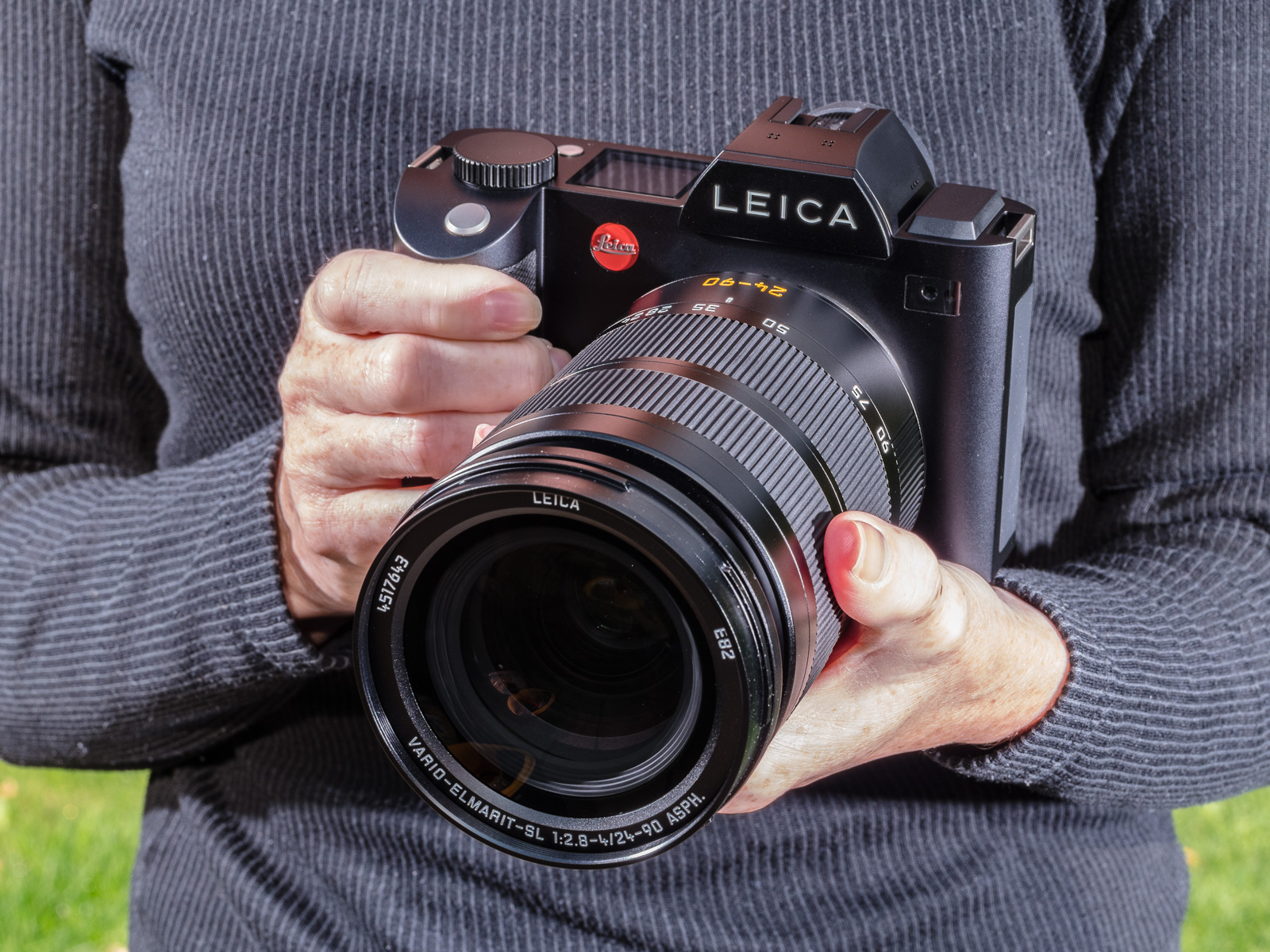
The SL is the new Crown Jewels of the Leica Family

0

A long time ago in an era far far away, there was a film camera called the Leicaflex SL, and it was a monster of a camera in terms of size and handling.

Enter the new SL. The Type 601 is built like a German Tiger Tank, with a deadly canon of a lens as well. It is heavy. And heavy is good. The germans have been building big things while the Japanese are opting to make it smaller. Remember the Rover Mini, the diminutive car that BMW bought over and turned it into a BIG car? Mini apparently is just a moniker to the Germans to reinterpret what is small into something bigger.


It is a beast that is milled from a pure aluminum block which can be used as weapon against your detractors who say you can't take a good picture even if your life depended on it.


Many of you would have wondered why the Leicaflex even existed, well there was a time when rangefinders fell out of favor with users and Leica had to innovate. Out came a film SLR camera and this is what you get from German technology. It used R mount lenses and it was later replaced with the R series SLRs during a brief interlude with Minolta. That didn't take off either so off with their lenses. 

So why the SL? Why now? Why the fuck would someone pay US$7000 for a camera body?

Just as there are mountains that people wish to climb, there are people out there who would buy and use a Leica SL for whatever the reasons it has been uncalled for. 

I have been a fan of M lenses. But the SL lenses are something to be avoided. 

The M lenses are manual and come in a nice compact size. The SL lenses are fully AF and will scare any mugger if you swung it at him like a weapon. 

The reason why I opt for M lenses is because of its timeless nature. Being a manual lens, you don't have to fear that some AF motor inside the lens would go broke. The M is also full frame, fits like a charm to M43 cameras with a M adaptor and can be paired with those nice Fujifilm APS-C sensor cameras as well. 

The M lenses are not bulky, and is comparative to what you find with M43 lenses. 

Carrying them around and having a close look at the quality of the imaging will convince you enough to own them for life. And should you sell it, you will find ample buyers on the second hand market. 

The SL lens hasn't got a lens adaptor as yet. If you bought it and didn't like the lens you have for it, you don't have much of a choice on selling it since the number of people opting to buy such lenses are restricted to AF users who are themselves SL camera owners. 

This is probably the only clear reason that I won't be buying into a SL camera. Sure, you get the same Leica imaging but I want my hardware to last too. Digital isn't built to last. It was built to kill time when you needed something fast. 

I am decidedly old school for good reason. I see the value in old school lenses because that is what I feel will last. 

There is nothing like having a camera and lens system you can pass them to someone who can continue to use it. It is renewable technology compared to the throw away technology modern cameras are made of. 

I could for example continue to use a Leica CL rangefinder with a M lens, and pass that down to someone who wanted to experience film photography. They can also mount that M lens on future cameras through a lens mount since full frame is the direction everyone is going these days. 

The last thing you want is to double down on those latest SL lenses only to find out ten years later that the SL cameras no longer exist and there is no mount to reuse it for other similar cameras. 

Photography isn't like what was used to be. Technology has democratized the skill needed to take a nice photo and any fool with an iPhone is qualified enough to be called a photographer. 

Then you have the pros, who keep wanting to upgrade to new equipment for better imaging without really bothering to upgrade their skill. Everything is Photoshopped these days and if you are good with photoshop, you will have plenty of customers who will subscribe to your services. 

Which brings me back to the Leica SL. 

Buy this at your own peril. 


Lomo's 20mm New Russar+ Lens to Launch in August

0

Full frame wide angle 20mm is probably one of the great lenses one can get their hands on but they will never be cheap...even though they come from Lomo. It cost US$650 a pop and it only fits the Leica mounts and the L39 screw mounts.

You can of course use this fully manual lens on digital cameras with the option of a a lens adaptor but APS C or M43 type sensors will have to take into account the crop factors of a full frame lens and hopefully realize that they are not buying into a wide angle.

For smaller sensors, you are probably getting between 35mm and 40mm in focal length, which isn't a bad thing considering the vignetting you see on full frame results.


The smaller crop factor reduces the frame and the less than desirable vignettes will be gone...so you have been warned.


Lomo gets into the Leica M lens business

0

Behold the Minitar from Lomo, its first foray into the Leica M-mount lens business. Now the Leica M is a classic mount for the Leica rangefinder cameras like the M3 and M7.

Sold as add on manual lenses for both digital and film cameras, it cost US$350. For those who wishes to use this, you will need to have an M mount camera or get an M mount adapter for your Nikon or Canon camera. These cost in the ball park of US$100 each.


Now we all know that Rangefinders, even the digital ones from Leica, do not have AF capability. The Minitar is Zone focus. So you get three choices of distance choices.


The Minitar is also a 32mm lens, with a f/2.8 aperture. It should be relatively easy to use but don't expect razor sharp results with wide open apertures. The lens is a fun lens and from the looks of the sample photos, has pretty decent vignetting.

For now, the lens is only on pre-order. Head down to the Lomo website to book now.


Photography Evolution in Review 2014

0

So what will you remember about 2014 that was worth reviewing? Was it the Drone craze where people ante up to a flying camera or was it that you should never let monkeys take a selfie?

The drone photography business has taken off in such a way that the US National Parks have banned them forever from their midst.

A Geeky Drone Pilot gets roughed up at the Beach

Bad pilots who fly them in public have blood in their hands after crashing them into pedestrians. The craze has gone so far that even GoPro have announced they will come out with a flying camera as soon as their R&D engineers get back from their Christmas Holidays. Meanwhile frustrated single and bow legged women have gotten brave enough to beat up geeky drone pilots who fly their wares in public. That said, aerial photography in 2014 hasn't been all that good.


On another note, David Slater's predicament echoes some of the pain felt by photographers around the world when his monkey pix was made public domain. Technically, and this by legal definition, Slater should not have released it as a selfie because an animal can legally be the rights holder and not the human that owns the camera. His pictures went viral and made it to the top ten list of stories in 2014 in regard to the photography profession that went wrong.

Photography as a Profession

Being a photographer in 2014 has gotten more difficult. There are loads of photographers who cringe on admitting this one true fact that they lack the financial means to prepare for retirement. The successful ones (which are only a handful) gloat at their peers who can't seem to get ahead in the cut throat world of photography.


True. There are plenty of corporates in this world who hire photographers to do work. But these jobs hardly constitute a viable means to earn a living wage judging from the equipment and business savvy one needs in this world.

Remember that in the old world of analog film, photographers co-existed with color lab technicians who developed the prints needed for real world use. Today, everything is online and the onus is on the photographer to process, capture and edit photos all on their own for the same amount of fees—which does not take into consideration the amount of camera equipment, software and computers you need these days to conduct your business. Color lab technicians in the good old days were the go-to guys whenever you needed something done to your positive or negative film. Some even went as far as to manually touch up the negatives or positives to remove blemishes and such from actual film. Photography in its heyday supported a long string of down line jobs, from print makers, color labs and the printing press. Today, with the Internet Disruption model, this is no longer possible. It is basically you and your equipment that decides the way you conduct a business. As for digital prints for hanging on your wall, you can upload them to Flickr and order one online.

Photography went from becoming a hard skill to the Performing Arts where photographers had to suffer for their art without clients ever taking them seriously. Everyone is a photographer thanks to the iPhone and as long as you have 1,000 followers on Instagram, you're a pro. This is not expected to change in the near future and in 2014, I would like to say a silent prayer to all those photographers who have abandoned their dream for a stable monthly income in light of the demands of the real world.

Keeping up with the Joneses

So we have more megapixels in 2014 but camera companies are not making more money from it. So you have more more cameras with the same megapixel count. This has been one of the stories for 2014 and if you were one to fall for this old Jedi mindtrick, then you've been had.

Each time a sensor is created, millions are spent pouring into the research and development process. To think they will be able to give you more pixels for cheaper is a defeatist strategy. People are taking more photos but not with actual digital SLR cameras or DCCs.

The Lumia 1020 still ranks on top of my list for a camera even though it's not really a camera in the first place.


Even though the Apple iPhone 6 ranks on top for color reproduction and low light performance, I'd rather have DNG files of scene I take to work them in post production for a better fit. Who cares if the iPhone can post to FB and Instagram all at the same time? Good pictures have to be edited in some way unless you were using a Leica camera with those expensive glasses for lenses.

Behold! the MA!
Speaking of Leica, they will take the headline for the only company to have come out with a top spec analogue camera! Yes! Film lives! Then again you need to check the price tag before you jump for joy. The new Leica MA weighs in at just over US$4700. It is totally manual, no light meter, nada. When you consider the Leica MP, a pro spec manual camera that sells for just over U$4900, that 200 dollar difference starts to look shady.

Compare the MP


The MP was built for professionals, namely press people who love winding each frame mechanically to capture a picture. It has the same flash x-sync and shutter speed as the MA. Either Leica has a wicked sense of humor or they are just removing old unsold MPs by cannibalizing their parts to make a new budget model (though the term budget may not necessarily apply in this case).

Regardless of where you stand these days. I would like to wish you all a great year ahead shooting can capturing moments that truly matters instead of trying to take a dozen selfies each time you chance across a bathroom mirror.

Photography will still be around and for better of worst, your best bet is to not to buy into the hype and use only what you need to get a good picture.

Merry Christmas and a Happy New Year to All!


Leica jumps Onto the mirrorless Wagon

0

By now, everyone would have heard of the Leica T. It's a first for Leica as it taps a mirrorless camera market segment with a spiffy new T mount lens. 

We had heard the rumors, that maybe Leica would produce a MFT type mirrorless but that would be watering down its image. 

Presently, the MTF segment, dominated by Olympus and Panasonic already offer mounts to use Leica M type lenses as well as mount Panasonic made Leica camera lenses. The Leica T for that matter uses custom T mounts, so it won't be backward compatible with any of the other Leica lenses on the market. It would only be be appropriate that Leica found a way to squeeze more money from a user with this US$1,850 body designed specifically for a point and shoot photographer. 

The APS-C sensor is the same 16 megapixels and should not perform any better than the current crop of cameras with similar specs. The Leica comes with the option of having a Vario-Elmar-T 18-56mm f/3.5-5.6 zoom or a Summicron-T 23mm f/2 prime (non-zoom) lens. Both lenses will cost $1,750 each. You could add on a US$500 M mount made by Leica just to mount those old M type lenses. 

This means you will have to fork out US$3,000 for the privilege of owning one should you be devoid of any M lenses to begin with. 


Leica has partnered with Audi to make the body. It is cut from an aluminum block just like the engine block of a Audi R8 so this could be the reason why the featureless camera is so expensive. 

It looks pretty normal from a design point of view, like maybe a brick that has been crafted to fit a camera's body and not the other way round. No much thought has been used in this process, precision equipment shaved the block into a heavy skeleton of a camera and hopefully it will qualify as a weapon once you decide to toss it at your enemies once it stops working. 

Photography is a Gentleman's Hobby

Leica can do no wrong with this model. You don't have to make many to make that much money and with the Leica brand name attached to it, people will line up to buy it. The demand for premium cameras is growing. Pros will carry Nikon and Canon to do their job, casual photographers will turn to Fuji, Panasonic and Olympus for everything else. 

This means there is no one company able to tap the luxury market. Carl Zeiss isn't in that line of business even though Sony thinks it could hack that market with the wildly expensive A7s. Leica, well, they just fit in like a glove. It doesn't even look out of place in a Prada handbag. So there you have it. Luxury in photography is Leica. 

For those who do not have the money to buy into such madness, well, consider eBaying one of you your kidneys. It might just do the trick. 


Leica's 100th : Luxury in Photography

0
I love Leica lenses. Having owned one, you'll find that there is something really exquisite about the imaging quality. The color, contrast, and clarity is superb. So Leica is celebrating 100 years in photography. Wow. That's a long time. Looking back, one can't help but realize how much photography has changed since then. 

Today, the average digital photo is pretty much worthless. To buy one for use on your website, you pay a dollar for royalty free rights. The only people who seem to be making money from it all are the stock photo agencies who charge you that dollar to download an image. 


Leica has moved away from film to digital. Good for you. Look at the spiffy new Leica 100th D-Lux 6 with 5,000 of these will be sold world wide. That said, it will be a collectors item. I don't want to go into the pricing. You can't do that with a Leica. It has a great lens and that should cost you in the ballpark of a full frame DSLR alone. 

To pay that much for a camera speaks volumes of Leica photographers. Rich, affluent and probably a point and shoot enthusiast. You are not going to be the next Alfred Eisenstaedt or Robert Capa. 

Instead, we find Leica indulging their fans with Street Photography and offering courses and exhibitions for would be street photographers. This genre of photography was made famous by HCB, who in his free time spent hours upon hours on the streets of Paris. But Leica, haven't you noticed that the people who buy your cameras do not necessary venture out to the street? 

The typical Leica user would probably avoid spending too many hours on the street as his Leica gear would cost more than his left kidney on the black market. You can go to a cafe and the moment you put down your camera bag or gear, you'd be assured it'll be gone within a few minutes of you taking your eyes off it. A Leica camera is like magnet for thieves and robbers. Unless you venture out with a shotgun in tow, chances are people everywhere will try to rip you off. 

Lastly, why Street Photography? As a career pursuit, it won't be as financially rewarding as Paparazzi Photography. Even wedding photography makes more money on a regular basis than any street photographer. You should be aware that the constabulary of every Western country has an axe to grind with people who point cameras in the street. Post 911 they say. It's a sign of a would e terrorist. 

Then there is the privacy issue. In Hungary, it is illegal to take photos of people on the street without their consent. In the age of the NSA with eyes on your Facebook profile, you'd be happy that your face doesn't appear in a picture on Flickr captured in a embargoed country. 

What's more street photos are often made up of people, with recognisable faces. This means that if you ever tried to sell a street photo as a royalty free stock image, you'd be asked to supply a model release. You can of course take photos when there is no one around. For this, all you have to do is wait till the eerie hours of the night to do so. But I understand that Leica cameras don't handle well in low light, so are you saying that this is a myth?

Regardless, I think you are doing well financially as a camera manufacturer. Those limited edition cameras are genuine rip offs but hey, let's keep that a secret between the both of us. I still think you make fabulous lenses and I am addicted to them. Saves me hours behind the desktop trying to enhance those digital images on Adobe Lightroom. For this, let me wish you a very Happy Birthday, and let the good times roll.