Showing posts with label photoshop. Show all posts

Pure Photography is not about Photoshopping Details

0

Here is another reason why you should be reverting back to analog photography instead of going digital. The image above is the latest in a series of digital photo editing tools which basically allows you change any landscape picture into one that could just win you an award.

The program in question is called Landscape Pro, an intelligent picture detecting and enhancement program that runs on Macs and PCs.

What the program does is to detect elements within the picture to enhance and unlike Photoshop, which needs you to get down to smoothening the minute details like color fringing. It uses a masking technique for you to label objects within a picture so that the program can automate the process with a preset algorithm to darken, lighten, or just change the look and feel completely.

At the moment, some of the usual presets are already geared towards more challenging digital editing with contrast controls, lighting direction as well as shaded color in water environments.


With technological advances in digital editing, what is the worth of a picture these days?

For commercial photography, it is great guns to shoot in any weather and yet produce sunny 16 results. It saves time too since you are not subjected to environmental elements on any day which could ruin your shoot. So you can literally play God with your pictures.

Death of Pure Photography

Pure photography these days are designated with a #nofilter tag on pictures but the point is, who cares? I personally do not care if you have a #nofilter tag on your digital pictures since it is shot digitally in the first place. If you stuck a #film tag on it, I would take notice.

The #nofilter tag is like telling the world you are vegetarian but do I care that you don't eat meat? You still eat #food so why should I be of interest to how you eat.

Likewise why would I be interested in a #nofilter tag when all you shoot on is with a digital camera.

Unlike analog film, there is only so much you can do to it while in the darkroom. Contrast controls are limited to what you are able to do with hand dodging. Yes, this happens when you are in a dark room where you use your hands to dodge and burn a picture to control the highlights, and shadow details while expose a sheet of photographic paper with an Enlarger.

Beyond this, you can only touch up the film medium to scrub out very small details.

The purity of analog photography is now lost for good since every picture we see these days are nothing more than a by product of the computer age.

I would not bother to go and see a photo exhibition just to witness what technology is capable of doing to a digital image. But I would pay to go and see pictures capture from a forgotten past because photographer those days used only film.

For those living in Europe, there is still a love for photography that is unseen elsewhere though I do not know how long this affair will last.

Don't get me wrong. Digital for me is a great way to learn photography, you can shoot countless frames until you get it right without costing you a dime. In film, you pay for every frame that gets wasted.

The learning curve to photography is very low these days and if you still haven't got it, you might as well take up house painting.


Badly Photoshopped Image wins Nikon Photo Prize

0

This is an image of a rooftop ladder where a photographer claims he shot a silhouette of a plane though while waiting for a plane to fly over.

It won a Nikon prize in Singapore.

Goes to show that you only need an ounce of photoshop skills to win something online.


Using photoshop, the image was detected to be fake. But Nikon refuse to admit its error. This sparked a whole slew of fake pictures that became a meme.


Including this one of a Tie Fighter. 

So what do we take from this? Obviously a picture is worth a thousand words but with Photoshop, it's worth probably far more. 

I recently had a conversation with a camera retailer who joked that these days, you don't have to be a top notch photographer to get jobs...as long as your photoshop skills are excellent that's what clients want. 

Looking back, what he said is true. I mean, which of you out there who shoot weddings and commercial photos would refuse to use Photoshop to remove any imperfections?

Running a Photo Contest is a fatal affair for a Brand

During my time with Sony, I was given a chance to run a photo contest and we did. It was a difficult decision and we had to take Photoshop into account. 

You had to send in copies of your originals which were short listed and later, asked for the RAW files. The contest itself was free to enter. We only wanted pictures that told a story and that was it. There was a lot of work involved and many people were engaged for a rather simple project like this. 

All because we wasted to be sure that whoever won the prize deserved it. 

When brands like Nikon give out prizes to undeserving photographers, it gives the impression that Nikon values Photoshopped images more than real ones and this is VERY bad for the brand. 

Nikon was in no doubt not in a big hurry to remove the image from its Facebook page or for that matter cancel the award. They were lost for words. Sort of like shooting yourself in the foot and then putting your foot in your mouth. 

This is why having a photo editor run a contest is crucial. And these are not your average Tom, Dick or Harry. They are experts in detecting fraud and in another time, they would be known as fraud detectors. Why do Brands have to do this? Because Photoshop exist. 

Photoshopping is not illegal for Stock Image Sales

Many a time, Stock Image Banks or Libraries do not make it clear on the subject of image manipulation because they encourage it. 

Stock images sell because it is a cleaned imaged, that means an image that has been created or staged to the point that it appeals to buyers. 

If you have brands in the background or foreground, it is up to you to remove them. Once it is done, it because more marketable as the buyer doesn't need a copy of Photoshop to clean it up for their use. 

A less than perfect photo isn't enough. It has to be perfect, not for viewing but for commercial use. 

Once photographers get into the habit of this, then firing up Photoshop becomes a routine affair for processing photos rather than use Image Editors like Lightroom. 

Photography is about the capture of Images

This is where I have problems with the above understanding. You become less of a photographer and more of a photo manipulator. 

You then have to ask yourself where you stand. 

I don't have a copy of Photoshop sitting on my computer for the last five years, and have allowed my Photoshop skills to depreciate with each new version of Photoshop CC. Do I miss it? 

Not one bit. 

I find that I enjoy my photography more either using a mobile device or on an analog camera. I don't even use my digital cameras to shoot anymore. 

The purity of the experience is in the art of making photos with a camera and not with a computer. I don't think of capturing less than perfect photos because I know I can fire up Photoshop to change things around in an image. 

This is a very important lesson if you want to learn the art of Photography in a digital age. 

You have to ask yourself if you are doing it for profit or for your own sense of enjoyment before embarking on it and if you say the former, that is to sell your works, then you probably need to ante up on your Photoshop skills more than your Photography skills. 

Photos can also be sold as framed artworks so this works to your advantage if that is your goal. 

The the purist who just wants to enjoy Photography, my advice is for you to take up a film camera before you shoot with a digital one. The experience and skills you pick up from this contributes exponentially to your skills later and you won't regret a moment of it. 


How the digital age has change Automotive Photography

0


In a previous life, I was a magazine editor who had to carry a camera and take photos of cars for the print use. This was in the 90s. During that time, I was told repeatedly that shooting cars was the most difficult aspect of photography (analogue) because of how the lighting fell on the car on specific times of the day. In daylight, you can only shoot during the early hours of the rising or setting sun.

Shooting was a pain as you had to recce a suitable location in which to place the cars. That made the whole process even more difficult as it had to be done in advance, prior to getting the cars needed.

Then you have to wait for the weather of course. If that holds up, you have a shoot on your hands.

The process kept a lot of people at work. The whole photography business, even in a studio environment to shoot a car advertisement would cost in the ballpark of US$100,000. Photographers with large studios and strobe lighting were dominated by a few players. Film exposure had to be captured right and that was how the business was done.

I even met John Lamm, of Road and Track magazine once and spoke to him about his photography. He was essentially the man every guy wanted to emulate, photographing the latest cars for the hottest car magazine on the planet. This was the stuff that made college kids dream about being a professional photographer. The art, the skill and the know how was something you had to pick up over time because analogue is brutal when it comes to mistakes. There are no second chances if you fuck it up the first time.

The Great Digital Disruption


Of course when digital photography and Photoshop came along, things started to change. What made matters worst was that magazines started to cut budgets in view of the stuff you an already find on the Internet. Shooting cars wasn't a big deal anymore. Anyone could get the official pictures from the marques which look strangely like pictures taken off a digital workstation.

Looks real? Baby...this is a rendered image!
Advertising companies could even get files from the 3D modelling workstation and place that car in almost any imaginable background and blend that into photo realistic quality. Any other enhancements can be done in photoshop. Car photography, became what is later known as composite photography...where objects are added to to create an image.

But don't get me wrong, photographing cars still happen but not on the same scale as it would for shooting a Top Gear episode.


The decline of print magazines contributed to the decline of photographers working on such publications because suddenly, anyone can shoot cars. You didn't need a pro but just anyone with a camera with an eye for composition. I remember in the old days, we had to shoot covers for the magazine and this meant we had to shoot a car with the right composition to use. There must be room for text, and room for the masthead of the magazine. Heck, you don't need to do all that.

With digital, things got a lot easier. No more fussy with the photos, just ask the digital artist to render a background and drop the surgically clean official image from the car manufacturer into a blurred background. So many work arounds were available where you didn't need to incur the cost of a photographer. This meant that photographers did less specialised work.

Photographers had to play second fiddle to the digital artist who can literally create magic from the desktop.

What Can Photoshop do for You

Photoshop was a blast and it shows. Having a photographer to shoot a car of a different color didn't have to mean having three different colored cars had to be on set. Just shoot one and a digital artist will render a photo realistic color onto it.

This meant no more long hours in the photography studio. Just one shot, or one take with the perfect lighting and that's it. No more fussy around to recreate the look of the first car image of a different color. 


Better still if you have a photo realistic 3D vector of the car which you can tip around on its axis. You can have a different view by tilting the camera of the 3D program and render the image. Who needs a photographer now when everything can be done on a computer?


Digital photography suddenly didn't seem so great anymore when you have hyper realistic cars speeding around the track of a computer game. As long as a vector file of the car exist, you can have that rendered anywhere in the world and have pink elephants flying overhead for good measure. 

Digital has Levelled the Playing Field

Today, we don't need to go on location to shoot a car. You can render one by buying a cheap background image and blending the car in. Drop in the lighting shadow and you're done. 

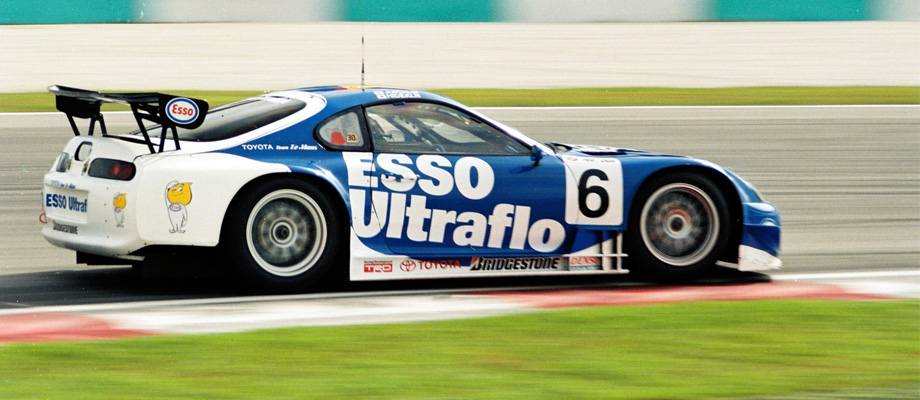
The only thing that hasn't changed is that motor sports images still have to shot on track or in circuit. Beyond that, there is hardly anything that can't be done. I mourn the passing of a bygone era where the image was sacred. Hardly anyone notices this as many of you have never shot on analogue film. 

The decline of print journalism also contributed to the decline of automotive photography as less and less are paying attention to shooting a car that looks good. Publishers are unwilling to hire a photographer to shoot a unique image when they can already rip one off the Internet for next to nothing. Makes perfect cents doesn't it?


Affinity to put a lid on Adobe's Cloud based Photoshop

0


This year marks the 25th anniversary of Adobe Photoshop. If you have been using Adobe's wildly successful Photoshop since version 1.0, you'd know that this software was responsible for changing the way photographers work with  digital photos. Adobe's photo editing tool is so popular, even ISIS terrorist use it to create propaganda.

ISIS Photoshop Image

ISIS photoshop image

Adobe's Photoshop was born in the age of analogue photography, where photos had to be scanned onto disk and manipulated. This allowed unlimited possibilities for photographers to improve on their images, and this alone does not mean enhancing the color curves. You can mask and take out objects that get in the way, change the color of clothing and blend in still subjects as requested by your client.

In my DTP years, I found Photoshop indispensable for creating wild and beautiful imagery for use in print and later websites.

Fast forward to the new century and the move to the Creative Cloud. Adobe says that it gives good reason for them to move to cloud based software as it gives them the chance to update the software quickly and address your needs efficiently. This was all bullshit of course, as Adobe had no means to control their software from being pirated and had to do something about it. Several attempts were made including the use of activated keys and regular updates via a live Internet connection. That didn't work. So what next? Why not try having an always online software?

Adobe's Epic Fail and Fall from Grace


When people talk about Cloud Computing, it's really about programs that connect you to a higher consciousness with greater processing power than your desktop PC. In the case of Google's Cloud strategy, your stuff exist in the cloud via Google Chrome, a PC device which has bare basic processors and just about enough RAM to run your CPU. The idea behind it was to allow you to carry a machine that let's the Cloud do your heavy lifting.


Not so for Adobe, Photoshop has evolved into a behemoth of code.  You can't possibly move your work to the cloud all at one so the CC badge was just added to confuse you. Relaunched as a subscription only cloud verified program for desktop PCs, Photoshop CC was meant to keep the pirates at bay while reaping the rewards of the digital imaging age.

Let's be reasonable, no photographer is desk bound all the time, you can't have digital uploads of your images unless you have hyper fast internet access. This means storing your client images online would require you to park yourself and computer at a Starbucks Cafe and let it chew through the web traffic. If you live in a city, getting high speed internet isn't a problem but not all photographers have such access.

Then you have the annual cost, for which they promise you regular feature updates. Seriously, when you move to the cloud, how often did you have to wait for new features? Did it come every month? Week? Let me tell you a secret, a program that needs to be updated regularly is one that is badly coded....to the point they are fixing it as it goes live. No program is totally bug free when released but there is a critical testing period in which to sort out the pressing bugs. If this bug hunting isn't done correctly, then the process will continue into your living room after you have bought it.

Adobe has found many creative ways to enhance the Photoshop experience...the the point it gets almost too cluttered with features. This is where Lightroom comes in. It simplifies the process for digital image editing without the heavy loaded features found in the full version of Photoshop. Pro photogs are advised to get both, so that one can function as a full service image editing tool while the other slimmed down version is more for photo management.

Welcome to Affinity

When Adobe bought out Macromedia, it was a designated anti-monopoly move that no one cared about. Since then there has been no real challenger to Adobe's Photoshop but on the Mac, Affinity hopes to change that perspective.

Affinity Photo is a stand alone Photoshop rival that is now in Beta. It is a wonderful alternative to Adobe's offering and though not really ready for prime time, it could pose a serious challenge.

What Adobe has done so far has been to build on the core of Photoshop over the years and this has made it very heavy on hardware resource. Affinity Photo on the other hand was built from the ground up so there isn't any legacy code to worry about. Affinity previously had a hit with Affinity Designer, a Adobe illustrator killer app that runs only on the Mac.


Affinity Photo Beta Has Landed from MacAffinity on Vimeo.

You can sign on for the free beta right now by heading to the their website. The other thing I like about Affinity is that it isn't cloud based. You can take it with you. No problems there when you travel anywhere with an assignment in tow. The features are very powerful as can be seen in the video so for the professional, this is a God send.


And now for the price...it's 50 bucks...USD, only from the Mac Appstore when it launches. And how much were you paying for your copy of Photoshop CC to do the same thing?

One of the underlying reasons that people all over the world have been totally taken with Photoshop is that it has become mainstream. Geeks, amateurs, professionals and even casual hobbyist have taken to it like ducks to water.

Adobe has never had it so good. But in order to monetize, they will need people to pay for the full version. Piracy was one of the reasons they switch to the cloud. But they could have just made it cheaper if they wanted people to buy more of it.

Affinity sees this as a way to muscle in, but only on the Mac for now. This makes sense as it concentrates its resource on building a stable alternative to Photoshop before embarking on world domination.