Showing posts with label film. Show all posts

Positive 120 Film Makes a Comback?

0

This is a little weird. Not that it cannot happen but it takes a little skill to be able to do this. Galaxy film photo paper is a straight to paper development process that has no real film. In fact, the film is the paper and the paper is the film.

Positive paper, like the instant camera paper, isn't new. But what happens here is a little more tricky as you need to have a two stage development process. This project is meant for medium format cameras, and what you get from the resulting image are black and white or monochrome prints.

There is no need for an enlarger to print this since you virtually develop the paper just like you would with negative film. I am assuming the steps are the same though no chemical info was available on the site.


Medium Format Cameras

If you have an old Hassey or Mamiya camera lying around and would would like to goof off a roll to see the results, it could be worth your effort. But the problem of developing it remains your own as not may places develop b/w films anymore let alone monotone paper prints from Galaxy.

Without a camera, you are practically fucked.

To buy, well, you are in luck. If you want to double down on analogue, you can't go wrong with the Rolleicord which you can buy off eBay.


As a kid, I remember my Dad having borrowed one of these to try. Not sure if there was film in it but it is quite mesmerizing. The image is displayed on a ground glass screen and you look downwards to compose. Square format is pretty easy to compose of course, so shooting is a piece of cake. 

It is also relatively easy to carry around, even though they are much bulkier than your iPhone, I am sure the trouble you have carrying it around will be well worth it. 

Galaxy film has been fully funded on Kickstarter. No sure when you will be able to buy any online but I must warn you, developing the positive paper can be a bit of a nightmare if all you ever did in your entire life was print on a ink jet printer. 


Voigtlander Rangefinders are no more....

0

Cosina recently announced the end of production for all its rangefinder cameras. Even in a time where interest in film photography has become a bit of a renaissance, Cosina could not sell enough of them to keep them alive. 

This is not to say that you'll see the Voigtlanders disappear from the shelves overnight. There are still plenty of stocks, just that maybe the models might be looking for won't be in stock. 

Like for example the Bessa R4M would have been my camera of choice. It has 21mm framelines for wide angle shooting, so you don't have to buy an optional viewfinder like in the case of Leica M cameras. Leica has no solution for wide angle lenses except for a clip on viewfinder which you have to pay for. 


Voigtlander lenses are still being manufactured so it's not a big dent on your film shooting experience. 

For me, the Voigtlander rangefinder cameras was a good step towards film photography for beginners as they are much cheaper to own than compared to the Leica MP or M series rangefinders. 

Leica still manufactures the MP, a pro level film camera which cost a bomb. But the Bessa was the cheaper alternative. In fact, it is only a fraction of the cost of a used Leica M7. You could go buy a used film camera on eBay, but there are some of us who want to own something new. 

Why the SLR won the Film Battle

Before the introduction of the SLR, the rangefinder was the only professional film camera you could use. How the SLR became king of the hill was simple. It was much easier to focus and use. 

In a rangefinder, you have to align two split focus images together to know that you are in focus, whereas in a SLR, you can judge the focus by the clarity of the whole frame. Even the highly praised Olympus XA did away with rangefinder focusing in subsequent models. 

The ease of using a SLR was evident from the onset but prices between the two didn't differ as much. Both needed manual lenses and the Japanese found a way to make it cheaper. This meant that Voigtlander was sold to Cosina and the European heritage faded away. 
Over the years, Voigtlander started to withdraw production of its cameras, the first to go were the A models, now even the M models have been killed off. 

As rangefinder cameras fell out of fashion, the digital age was probably the final nail in the coffin. 

What you'd be missing on a Voigtlander Cameras

The Bessa R3M had a 1:1 viewfinder aspect ratio so you can keep both eyes open to frame a subject. This is clearly a step above what a Leica could do. 


But shooting with a film camera like the Bessa takes some getting used to, the A models have auto exposure while the M is fully manual. I could double down on a manual model as that is the best way to experience rangefinder photography like the old pros use to do. 

Using an old world method to capture images has to be experienced to be appreciated. 

There is no instant previews or sharing to social media. Film has to be developed and printed. Money must be spent on film. 

Film stocks give a varying degree of results. No two film stocks behave the same way. You get 36 shots in a roll, which means there is no machine gunning your way to a picture like you do on an iPhone. 

If you mess up the exposure, there is no second chances so you have to bracket shots which are important to you. 

Film photography, especially using a rangefinder camera, sharpens your level of observation as you learn to anticipate picture  moments before it happens. This is more so with the rangefinder as you need to work the focus and set an exposure for the moment while thinking of the framing. 

If you don't work fast enough, you will miss that moment. So instead seizing the moment, you anticipate it why observing what goes on around you. 

Sure you can do this with a film SLR as well, but that defeats the point of training your eye and mind to think at the same time. 

Shooting with a rangefinder is more difficult, sort of like driving with a stick shift on a classic car but the experience you get from it is out of this world. It's a sense of achievement to be able to shoot good pictures on film with a rangefinder than it is on your iPhone. 

So if you intend to embark on this challenge, I urge you to hurry. Bessa models would soon be only found in a used camera store. 


LCA-120 Homes in on Large Format Film

0


Lomography is a cool  place to start for budding analogue photographers but their latest LCA-120 is kinda like a shot in the dark. You know how expensive 120 films are these days and if you are going to shoot Instagram like images for keeps, you're better off with Instagram.

The LCA is a quirky camera. I have one, and I loved using it. Making use of 35mm film is cool as they are available everywhere. But 120 film?

The camera is going to be released soon for US$430 a pop. Has the same zone focus and light metering as the older LCA and nothing else to match. Made it China of course.

The image quality is kinda iffy for me.


Not a fan of vignetting on the four corners of the lens but hey, some will sell their souls for it.
Sharpness and color reproduction is decent, not great but it looks like something you'd get out of a digital camera.


One thing that most people misses out on is that the square format is ideal for learning composition. It is what made Instagram great and this is where you can pick up some good habits on how to place your subject on the viewfinder.

Zone focusing is a bitch. Never quite liked it but for artistic merit, those blurry photos could make you famous....like the one they took of Bigfoot.


Rhonda Cam revisits the Super 8mm Past

0


In the past, photographers were often mistaken for film makers as the stock film that used to capture images were the same type used in capturing motion pictures and home movies were the stuff of legends as portrayed in the JJ Abrams movie, Super 8mm. Analogue film came in several varieties in the 70s and it was the success of the 35mm film that gave birth to the motion picture industry (and the porn film industry in the US). But let's not go the 35mm route. For people who are nostalgic about analogue film, the best place to start is with the 8mm stock.

Today, we have Pro8mm as the only surviving cult cine-cam maker which still extols the value of analogue capture. The best example for us is their version of the Canon 310 XL Super 8mm camera sold by them on the site (and on photojojo.com) called the Rhonda Cam.

Rhonda cam is in essence Lomography for the motion picture film enthusiast. Selling for US$395, it is probably one of the best value for money analogue motion picture cameras you can buy on the market right now. The Canon 310 XL was a legendary name in Super 8mm capture as it had a much better lens and an aperture of f1/0. This means that it can be made to work in low light conditions with the right analogue film. Super 8mm comes in a fixed cartridge for quick release and change so you can continue shooting as long as you have enough film stocks in your back pocket.

Now there are plenty of Canon 310XL film cameras being advertised on eBay for less than US$50. Apparently no one is keen to keep shooting expensive film so it has to find a new owner. We all know that film isn't cheap. A roll of Super 8 will last you up to 4.5 mins of shooting and there is no such thing as digital storage. Pro8mm offers a film package similar to what the folks in Kodak use to and offers free processing of the film for US$80 a roll inclusive of scanning in SD digital video. Now that is expensive if you were only able to shoot roughly 4 min of film WITHOUT sound. Yep. It's silent and there is no way to add sound unless you sync that in during post production telecine. The term telecine refers to film media transferred to a digital medium. Most of the film stocks are color negs, so unless you use color reversal film, you won't be able to project it. So think of the film with processing costing 40 bucks but with a further 45 bucks thrown it for the whole telecine package.

How is shooting film is all the same?

Pro8mm Super 8mm film stocks come rated from ASA64 to ASA500. Most of them have a exposure latitude of only 6 stops, while the 160ASA has 9 stops. This might not make sense to you as a digital photographer but it says a lot about the film. The motion picture capture process is the same as analogue film photography. You need to note the ASA speed of the film, that best suits the scene you wish to capture and fire away. Even though exposure can be set automatically, you can never be too sure about high contrast or low light situations so a light meter can be handy.

There are two types of film stocks for the Super 8mm. The negative film can't be projected but the color reverals film can only be experienced with the use of a projector. You also need to ante up on a projector, which can be had for roughly US$600 to US$800 refurbished. There are only two film stock for color reversal film so shooting rated at ASA200, one in color and the other in b/w.


Why Super8mm is Beautiful

I don't have children and for that I have no use for archival quality but for those of you who have, it makes perfect sense to shoot the best moments on analogue film.

Film is forever. Still images are nice but moving ones are better. The LomoKino achieves this to some extent with 35mm film used in photography but hand cranking the device for a 5fps capture harks back to the 19th Century. A roll of 36 exposure 35mm film will only gives you roughly 6 seconds of motion capture. That's probably just enough to film your self in a new car backing out of the garage.


Rhonda Cam's Super 8mm gives you up to 4.5mins depending on the chosen frame rate so you have this leeway to play with (with pro spec Super 8 cameras, you can shoot at 24fps for up to 2 mins of footage). However with the postage and processing included, you could well end up paying up to US$100 per reel (shipping your film from worldwide that is).

Comparatively, you can shoot all your want, share it online till the cows come home and gets plenty more likes online if you shot digitally on your iPhone. Total cost? Well how much did your iPhone cost without contract?

The beauty of the analogue medium has to be experienced to be appreciated. It is a lot harder to shoot, takes effort to process and there is a learning curve. Shooting analogue is a hardskill learnt through time and effort. The surviving film will outlive you and in time your own great grandchildren can appreciate what life was in the time you lived.

Digital is vaporware. It is gone the moment a service closes down. You might think that Instagram and Facebook would be forever but that's taking it too lightly. I remember a time when Netscape Communications was the unstoppable force on the Internet, look where they are now. What about the hard disk crash that wiped out all your holiday photos? Ditto.


What Pro8mm has done is to make analogue motion capture cool again. The retro movie camera is just plain kick ass and it feels good to hold one with the collapsable stock folded in. But all these experiences comes at a price, and only you can decide if you can afford it. The Rhonda Cam is probably the best analogue experience that can be had in a overtly digital world.

It is a costly hobby if you want to shoot solely on this medium but this is why it is so cool. The limited shooting time gets you thinking about what you shoot all the time as you will be assembling the scenes as you go along and capture what you feel makes beautiful memories. That alone is priceless.

Rhonda Cam Specifications


Focal Length: 8-5 – 25.5mm f/1.0 Macro Zoom
Speed: 18 FPS plus Single Frame
Auto Exposure
Power/Manual Zoom
Power = 2-AA

Ferrania's Film is Alive Project gets Kickstarted

0

Film is alive and well in Italy judging from the enormous support Ferrania got from its Kickstarter project. This was a project to save a few upstream suppliers who made the materials possible for film production and this is probably the most exciting news to come out of Europe which happens to be the bastion of Lomography of Austria. 

Early backers of the program have already pitched in to the fullest so you can be assured that they will be up and running in 2015. 

What is more exciting is the production of analogue motion picture film which were the mainstay of home movies in the 50s to the 80s. 

What is important is that Super 8mm film is still being made by Kodak but not the Kodachrome stock and this means processing anything remotely Kodachrome is impossible. 

Now many of you will be asking where to get a Super 8mm or 16mm film camera, well eBay of course. 

As for processing, Dwayne's Photo (no relation to the Rock) is still processing motion picture film stock. 

Why shoot stock film when there is digital? Well film is forever and when your digital storage dies, so will your captured moments.


Lomo films: the Purple Connections

0


LomoChrome Turquoise XR 100-400 is an infra-red film released by Lomo for use in quirky captures beyond the ordinary. The film does not render turquoise colors, hence the name so it's one of those weird effects you'd be getting if you shot on water...everything will be rendered blue, whereas warming colors will turn emerald. Get the drift?

The film itself being infra-red, means you can cross process it in normal C-41 negative solution to have it both 120 and 36mm formats. The stock is limited to 5000 rolls so it's on preorder now before it is available.

Rated at 400 ASA, it is probably is quite safe to shoot both indoors and outdoors though I have to pass on judgment when it comes to low light and high contrast situations.


The exposure latitude is something you gotta learn to deal with, and you can't do that with just one roll. That's one of the caveats with shooting on film. You virtually waste a roll as a sample. Having a working light meter will be indispensable so remember to download an app on your iPhone or Android device before going out with that film camera of yours.

Now the film bundle isn't cheap, be prepared to spend US$60 for a pack of 5 films.

Lomo Cine200 Tungsten Film

0


Rated at ASA200, the new Cine200 Tungsten film isn't all that new to begin with. During my day as a photographer, I would not have bought such a film for use for outdoors for one simple reason, the film gives a cold cast, looking more blue than what you'd get with daylight film.

What are Tungsten Rated Films

Used primarily in studio that have floodlights, these lights give a extremely warm cast, and to balance them, you'd use a Tungsten film so that the colors would appear accurately as perceived in daylight.

The idea behind this is to allow the photographer the freedom to shoot in Tungsten lighting without the use of lens filters. This was a god send for analog photographer who worked constantly under floodlights shooting magazine adverts to printed catalogs.

All you needed to do is to load up the film and shoot. You could also do a vise-versa on normal daylight balanced film with a lens filter that balanced the harsh lighting. Either way,  Tungsten film fell out of fashion during the digital age because White Balance controls negated the need to use any type of filters.

Digital Tungsten White Balance


You can of course switch on your digital camera, go to your White Balance controls and select Tungsten lighting and get the same effect. There is no big deal about this. This method will only give you a bluish looking tint. Not a bad thing if that's what you are looking for but if you have RAW files on your HD, you can give all your digital photos the same look in any post production program like Photoshop or Lightroom.

Lomo's Tungsten Revival


For the young and aspiring analog photographer, the whole Tungsten film revival might seem like a big deal but to the old hands in the industry, it's a yawn.

But this is not a bad thing for people who continue to shoot film. The reason? Well, for art sake. These days, you can virtually tell if an image is digital or analog based on its tint and color reproduction. The closest to digital reproduction can only be achieved through good quality slide film but that too must be under optimum lighting conditions. Films are generally balanced for daylight exposure, if you have heavy clouds hovering before you, that changes the definition of daylight as well so your pictures won't look as good.

Digital Auto White Balance is better at detecting and correcting these minor shifts in the weather so you won't have to do this manually.

Shooting Tungsten in Daylight

Easy as pie but don't be surprised if you don't get the cooler tint during a hot summer's day at the beach. Very warm and sunny weather almost mimics the real conditions of Tungsten lights so you get a well balanced picture in the end.

There is no reason not to use it in everyday mixed lighting conditions just to take your artistic freedom up a notch.

My advice is ultimately this. Film is expensive so remember to capture something worth keeping.

Print your own Analogue Camera

0

Is there hope for analogue photography? Seriously? Well in the day of 3D printing, it might just be what you need to keep those rolls of film going.

The Open Reflex camera is completely printable camera designed by Leo Marius. The idea behind it was to adapt a camera body to a lens mount which takes in a spool of film. This camera is only capable of firing at a fixed 1/60s shutter speed. This might ruin a lot of moments but at least you have a good lens to pair with it.

The whole project will cost you less than 50 bucks, that's provided you already have a 3D printer at home.

There isn't much room for analogue photography other than the stuff you find on Lomography, much of which take less than normal photos. The Open Reflex camera on the other hand makes for a very good kit camera, which can be adapted as a complete kit sans the lens. 

Trusted that the lens will be the problem, I reckon the only way around this is to package a cheap Russian made lens as part of the kit. It just doesn't make sense for kids to assemble something and look out for a used lens on eBay.

As you already know, much of the picture quality (which you can see here) is determine by the lens. Color negative film don't have much contrast and even with b/w film, you can see that may have to tune it up a few notches with Photoshop.

Leo likes the idea of having this turned into a kickstarter project of some sort but seriously folks. Film is in decline and unless it's for a school project, there won't be many backers.

Homebrew, all you need is a 3D printer. For that alone, I think it rocks!


Going Analogue: Gear Talk for Today's Photographers

0


Every year, new film stocks are being discontinued by either Fujifilm or Kodak, the latter being a target since it is emerging from bankruptcy. So it should not come as a big surprise that the sort of new gear you can buy on the Internet these days are limited. Film is forever they say but film sales has been in a comatose state for years. What's out there today? If you are going to start on film, what is available?

Medium Format Rules

How do you get started on medium format photography? You could go buy a new camera or an old one from eBay but your best bet is still on a camera which is still in production. There are many old used cameras you can buy online but the danger is that it will break on you. Having experienced this first hand, you need to appreciate the working value of a camera versus an unreliable used unit. This is not to say that you should not buy used cameras. For beginners, I think you need to find a place to fix a camera should it break down. In big cities, its often very easy to find a camera repair shop run by those old dudes in glasses. But in a smaller city, such folks can only be found in retirement homes.

Wanderlust Travelwide 4x 5


Kickstarter funded Travelwide medium format camera will be on sale soon this summer at US$149. Not a bad price for a medium format camera except that it is not really a camera in the first place. What you get is a body and a pinhole lens cap which essentially lets you start shooting but they don't tell you that you also need to have a film back and a set of real lenses, 90mm type, which could cost you anything from US$150 to US$450 on eBay. The film backs are cheap, you can find one at Keh for less than 10 bucks.

Lubitel 166+


Nice little number from Russia, this TLR plastic bodied camera is capable of a variety of shutter speeds—a serious consideration if you want to shoot on the go. As a packaged  TLR camera, the features are good so you can shoot the moment you take it out of the box. It comes with a fixed lens, 75mm and cost about US$350. Sold on the Lomographic store, I think you can buy this and get it delivered anywhere in the world.

Kiev 60, 88, 645


The Hasselnyet cameras are great value for money and unfortunately, with the ongoing problems in Ukraine, I am not sure this camera will still be manufactured. The Kiev 60 sells for US$390, while the 88 model goes for US$475, the 645 sells for US$430. Not a bad idea really as all the camera kits come with a 80mm lens. The 88SWC model is a wide angle version, sells for US$775 with a 30mm lens.

Buying Used Equipment on eBay

Very risky affair but it might be worth it if you can find something that is of value. These days, eBay sellers are a dime a dozen. Almost anyone can sell something they consider a piece of antique and it is only the more experienced among us who will know what is a piece of junk.

All mechanical parts have a life span. It could be the shutter, winder or the photocell that measures light. Then there is wear and tear, like the glass being used as a mushroom farm, where it gets really foggy.

I would not advise anyone to get something they do not know enough about and with used cameras, there are heaps. Technically speaking, mechanical wear is less obvious if the item has been rarely used but the gunk they used for parts lubrication (often of animal origin) would have to be cleaned out and you need to send it for a CLA (clean lubricate and adjust) that is performed by a professional. Do not for one moment think that you are handy with the screwdriver and thus have the license to take it apart. Cameras are not like cars, they have delicate parts and once broken, you may have just inherited a junk heap.

Medium Format Film Development

Developing film isn't all that difficult. It's actually quite fun if you happen to have a dark room but in most cases, you don't really need one if you are only going to develop negatives.

If you don't plan on playing with chemicals, be sure to look out for color labs that still process film found in big cities. You can mail in your exposed roll and have that digitally transferred onto a CD.

Analogue photography is very rewarding. It is difficult to master but once you do, it's like getting that license to drive and own your first car. Medium format allows you to think about big pictures, and to have the film as mementos to share with others in later life is a real blast.


Leica's 100th : Luxury in Photography

0
I love Leica lenses. Having owned one, you'll find that there is something really exquisite about the imaging quality. The color, contrast, and clarity is superb. So Leica is celebrating 100 years in photography. Wow. That's a long time. Looking back, one can't help but realize how much photography has changed since then. 

Today, the average digital photo is pretty much worthless. To buy one for use on your website, you pay a dollar for royalty free rights. The only people who seem to be making money from it all are the stock photo agencies who charge you that dollar to download an image. 


Leica has moved away from film to digital. Good for you. Look at the spiffy new Leica 100th D-Lux 6 with 5,000 of these will be sold world wide. That said, it will be a collectors item. I don't want to go into the pricing. You can't do that with a Leica. It has a great lens and that should cost you in the ballpark of a full frame DSLR alone. 

To pay that much for a camera speaks volumes of Leica photographers. Rich, affluent and probably a point and shoot enthusiast. You are not going to be the next Alfred Eisenstaedt or Robert Capa. 

Instead, we find Leica indulging their fans with Street Photography and offering courses and exhibitions for would be street photographers. This genre of photography was made famous by HCB, who in his free time spent hours upon hours on the streets of Paris. But Leica, haven't you noticed that the people who buy your cameras do not necessary venture out to the street? 

The typical Leica user would probably avoid spending too many hours on the street as his Leica gear would cost more than his left kidney on the black market. You can go to a cafe and the moment you put down your camera bag or gear, you'd be assured it'll be gone within a few minutes of you taking your eyes off it. A Leica camera is like magnet for thieves and robbers. Unless you venture out with a shotgun in tow, chances are people everywhere will try to rip you off. 

Lastly, why Street Photography? As a career pursuit, it won't be as financially rewarding as Paparazzi Photography. Even wedding photography makes more money on a regular basis than any street photographer. You should be aware that the constabulary of every Western country has an axe to grind with people who point cameras in the street. Post 911 they say. It's a sign of a would e terrorist. 

Then there is the privacy issue. In Hungary, it is illegal to take photos of people on the street without their consent. In the age of the NSA with eyes on your Facebook profile, you'd be happy that your face doesn't appear in a picture on Flickr captured in a embargoed country. 

What's more street photos are often made up of people, with recognisable faces. This means that if you ever tried to sell a street photo as a royalty free stock image, you'd be asked to supply a model release. You can of course take photos when there is no one around. For this, all you have to do is wait till the eerie hours of the night to do so. But I understand that Leica cameras don't handle well in low light, so are you saying that this is a myth?

Regardless, I think you are doing well financially as a camera manufacturer. Those limited edition cameras are genuine rip offs but hey, let's keep that a secret between the both of us. I still think you make fabulous lenses and I am addicted to them. Saves me hours behind the desktop trying to enhance those digital images on Adobe Lightroom. For this, let me wish you a very Happy Birthday, and let the good times roll. 


A tribute to analogue film in the Secret Life of Walter Mitty

2

When James Thurber wrote his story of Walter Mitty, little did he know that Ben Stiller would turn it into a homage of sorts to analogue film. Thurber wrote this short story in 1939 and it was actually made into a film back in the 1947 but this remake with Ben Stiller starring and directing became something of a nostalgic journey for many.

The movie featured Sean Penn as a photographer, who worked exclusively on film but in one scene, a camera seen in the movie was paired wrongly with an AF-S 300mm f/2.8 VR G lens. That's a bit of a misuse of creative license for historical accuracy for that matter.


Nikon F3T paired with an AF lens?
The Nikon F3T was the very last workhorse from the dark ages of film photography. I remember the F3 well, I wanted to own one but never had the chance to. Here's a short quote from Wikipedia on the F3.
A significantly more durable, robust titanium version of the F3HP was also offered, called the "F3/T", initially in a more natural titanium finish or 'champagne' coloring, and later in a less conspicuous black. It weighs 20 grams less than the comparable F3. The champagne offering was introduced in 1982 and was quickly discontinued around 1985, making it the rarer (and costlier on the used market) of the two titanium models. The F3/T featured titanium clad viewfinders (DE-4), titanium back, titanium top and bottom plates. It also benefited from the conformal coating of the internal circuit board. The mechanical specifications between the black finished F3/T and the natural finish F3/T were identical.


Beautiful things don't ask for attention- James Thurber
The camera is manual but to a point. You can only fire it at one speed, 1/80 sec if you don't have any batteries. It uses two LR44 batteries sold at most watch shops. There were several variations of the F3, including the HP (high eyepoint which the FT is based) and the P for Press. This version had a dedicated hotshoe ontop of the petaprism bulkhead. This meant you could use a standard flash with the hotshoe mount as opposed to a dedicated hotshoe mount found on far left of the camera. This was in fact a pain for some to use as the Nikon hotshoe was non-standard.

For those of us old enough to remember, seeing Life magazine featured in the movie brought back many memories. It was the only way to see the best of what photojournalism has to offer.

Life was an American magazine that from 1883 to 1936 was published as a humor and general interest magazine. Time founder Henry Luce bought the magazine in 1936 solely so that he could acquire the rights to its name when it became a weekly news magazine launched by Luce with a strong emphasis on photojournalism. Life was published weekly until 1972; as an intermittent "special" until 1978; and as a monthly from 1978 to 2000.[1] It became a weekly newspaper supplement published by Time Inc. from 2004 to 2007 and was included in some American newspapers. The website, life.com, existed from March 2009 to January 2012, as a joint venture with Getty Images under the name See Your World, LLC,[2] which in January 30, 2012, became a photo channel on Time.com.

Death of Photojournalism?

Life Magazine's final demise was in 2000. It was just after the Dotcom bubble of the 90s. For that, I think the movie had it right as up until then, there were still film photographers but Instagram? That's another creative license which was abused by Hollywood for the sake of entertainment.

Today, real photojournalist are a rare breed. Many who enter the profession now have to spend a big load of cash on equipment alone, and the big payoff is a myth unless you were a paparazzi.

Molhem Barakat, the Reuters freelance photojournalist killed recently while covering the Syrian conflict was paid only a hundred bucks for uploading his pictures. He was 18 years old. His gallery of work can be viewed here.

I don't think Reuters would have paid him pittance if we were all shooting on film. Digital photography has in some way depreciated the value of images regardless of where they come from. There is nothing more rewarding than to see your work pay off in some way and to be able to do what you do best.

Digital photography is not sacred. It can be tampered with, edited and enhanced with a computer. Analogue photos on the other hand exist in celluloid. Shooting a picture is only one part of the equation. You had to find a way to develop the film and send it over to the News agencies. Not easy I tell ya.

I remember working in a darkroom where a photo was developed by hand, the print had to be dried and later line scanned transmitted to the head office. It was fucking hard work compared to what people had to do now. Developing film has two stages, the first is to develop the roll into a negative and the next, using an enlarger, a hardcopy print was made from that frame. This is what you see in "The Secret Life of Walter Mitty". Digital photographers today have no idea how this was done and couldn't understand the process to appreciate it. In the age of digital, the last thing you needed to do was to create a two step process to sharing your pictures to the world. For this I can proclaim one thing.

Photojournalism is dead. Long live the Selfie. 

Shooting Speed: Motion Capture on the Fast Lane

0

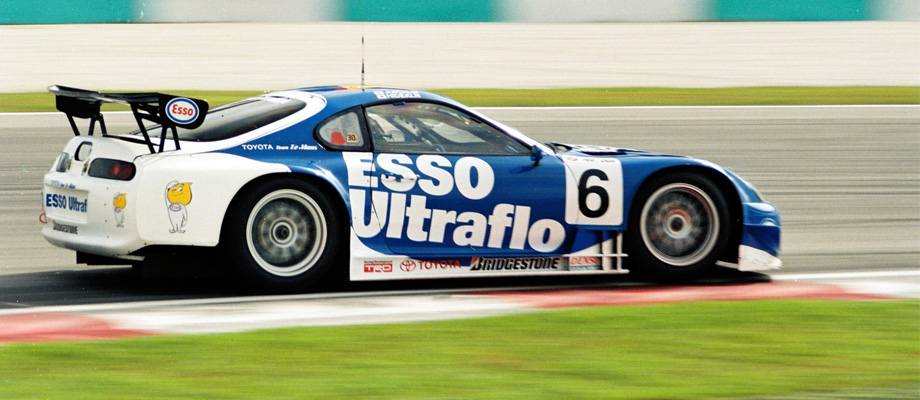
Speed. For professionals who hang around the track all day shooting racing cars, you pretty much end up with the same type of images because you are restricted by the angle that you are allowed to shoot. Often you find the same type of images floating around on the Web that shows some kind of speeding vehicle frozen at the exact moment in time. For stuff like this, you can't capture this unless you have a DSLR capable of up to 1/2000 of a sec shutter speed.

For me, I prefer shooting motion rather than freezing them as this gives a different look to the images instead of the same old, same old styles seen everywhere from billboard advertisements to print and web advertising.

When I started shooting these, I was still shooting on film. Imagine what I could have done with digital as it would have been a whole lot easier with the top of the line DSLRs you have today.

But the way forward is still the same. You gotta know your shutter speed. For motion capture like these, you need to know how to pan the camera.

Panning, as you follow your subject through a fixed path of motion, is what gives you the ability to capture speed and motion in your pictures.

Motion Capture Tips


  1. The best shutter speed to capture motion is 1/125 sec
  2. Make sure your subject is moving in a parallel line to your panning movement
  3. AF should be OFF (if you haven't got a spiffy DSLR with super fast AF)...AND 
  4. Prefocus your Distance to Subject
  5. Use a Monopod to steady your panning

The aperture value is irrelevant as long as there is sufficient light. If there isn't then dial up your ISO to 1600 and preset your Shutter Speed to 1/125. In the days of film, photographers were handicapped by the film speeds of between ASA/ISO 100 to 400. Shooting with ISO speeds of 800 were not widespread due to the grain. That is irrelevant these days with digital cameras which perform well with minimum grain at ISO3200.

Minimizing Background Blur at 1/250

Seems like it is frozen but notice that the wheels are turning
For others, you may want to minimize background blur by shooting at a slightly higher speed of 1/125 just to get the wheels in motion. This depends heavily on the distance to subject and of course the telephoto lens you are using. Shorter lenses (200mm) will need to capture at shutter speeds of 1/125 whereas longer telephoto lenses (above 300mm) will require shutter speeds (between 1/250 to 1/500). Longer telephoto lenses tend to magnify movement so less panning movement is required. The movement is very much amplified at longer telephoto lenses, say between 300mm to 800mm so you need to judge the speed in which the car or bike is carrying on a straight or around corners. The important thing here is to mount your gear on a monopod. You could also fashion a monopod out of a Tripod if you didn't know any better. Just don't use all three legs and only extend ONE of the legs out to help you balance your gear. Hand holding your camera is no recommended at longer focal lengths.


Shooting Around Corners

Motion panning can be done around corners as well but the effect is different, meaning that the subject is less sharp and appear to be blurry. That's because you use a slow shutter speed of 1/60 sec.

All vehicles will have to slow down to take a corner and when you are sitting smack in the middle of one, then you will be using a wide lens instead of a telephoto lens. A standard 50mm lens (full frame) would suffice.

You can of course use a wide angle lens such as a 35mm or 28mm if you are really close to the action—like when you can extend your hand out to touch them but that is rarely the case with racing circuits.


Freezing Motion

When you have a DSLR capable of 1/2000 sec shutter speed. It is very easy for you to freeze motion. You can also freeze motion at 1/250 when the vehicle is in low speeds around corners.


This is probably the first place you will find most trackside photographers camping out. They will of course choose the same angles as everyone else as action shots don't really differ much from one location to another when you want to freeze the action. Getting to a high or low place depends on your access to the track. If you have clear access to trackside shooting spots, you will probably get a chance to use a longer telephoto lens on dedicated racing circuits.

Street circuits, like Monaco and Macau, require lower telephoto ranges, around 200mm and less since you don't have a lot of places on the track which you can fully utilize 300mm. The most common uses for a 300mm lens is a head on shot during the start of the race as all the cars are bunched up together running into the first corner. After this, you'll have to pick out your targets one by one as the race progresses.


Shooting on Film is more difficult

0
 I am often reminded how easy it is to shoot in digital. Just dial in the auto mode and fire away. You can't go wrong especially if you have RAW file mode enabled.

That's why the challenge in photography often lies in using film. These two photos were shot on slide. The first is of Johnny Herbert, F1 driver and the second one Shinichi Ito, Suzuka 8 Hour winner and 500cc MotoGP rider.

Film doesn't have the super sharp pixel density you often see in high resolution digital cameras. The quality is different. I realize this when I was browsing the photos at 500px,com, look carefully and you'd see the sharpening and detail. Not a bad thing but it is almost unreal.

Film has its unique look. The analogue quality is evident the moment you look at it. The dynamic range is different too.

Shooting film is very challenging because you need to know what film to use. Expose it wrongly and you'll find it difficult to recover the detail. Mistakes are often fatal, and there is no turning back.

Film may have a much bigger latitude but that doesn't mean you can underexpose a frame and expect the quality to be the same. It isn't. If you overexpose it too much you lose the detail in high contrast scenes. Zone metering is probably a good way to get a correct exposure. Slide film is more difficult, with a latitude of about 2/3 of a stop. Negatives can still hold an image with a 1.3 stop difference.

I wish Kodachrome was still around. Store it well, these slides will last for ages. It was my preferred choice even when the latitude was very narrow. Kodachrome 64 only has 1/3 stop latitude and shooting high contrast scenes can be very difficult. In zone metering, where you take the darkest and lightest areas of a scene to get an average, the difference can be up to 5 stops. How you select an exposure to capture the best detail is crucial. Metering on a grey card is often the preferred choice.

I love my Nikons. The FM2 and FE2 are my choice favs. I do love my F4 too, but I don't have much time to shoot with it now that I am playing around with smaller cameras like the Pen-f.