Showing posts with label instant film. Show all posts

Michael Kors goes Analog with Fuji Instax Mini

0
Purveyors of high fashion, Michael Kors, have teamed up with Fuji to produce another Instax Mini 70 camera. 

Before you rush out to buy one, let it be known that the pricing details are yet unavailable but you could roughly second guess the price if you were to compare it with the Leica Sofort announced recently. 

Built more for selfies, the camera has a dedicated selfie mode and vanity mirror for you to check if you are in frame.. 

Fuji Instax mini is going to be a huge hit with fashion victims around the world and these so called camera partnerships will hopefully generate more revenue for analog instant film to make it even more worthwhile. 

Square is going to be Hip Too


In the mean time, Fuji is also planning a square format instant camera. The print area is only slightly smaller than the one on Polaroid Land cameras and is due to be launched in the first half of 2017. For most of us, it is not the size of the print but the size of the camera that dictates if it would be useful enough to carry around. 

For the mobile photography crowd, the iPhone fits in your pocket. To carry anything larger would mean you need to sling it over your heck or shoulder, which doesn't make it convenient. 

To appeal with the fashion conscious mavens of our age, yes analog photography can be expensive, the square format Fujifilm camera better look hip and cool or else it will be sitting on the shelves on stores gathering dust. 


Leica Sofort is a Fuji Instax Mini Camera

0

I really don't get it. Why is Leica jumping on the Fuji Instax Mini bandwagon just like Lomo while a much larger instant film format like the FP-100c is being given the death sentence? To be fair, I think peel film is really special and the colors are just great, but then again it was never a product that originated with Fujifilm in Japan. 

Earlier this year, Fujifilm announced that it was no longer producing the FP100c and that once the stocks run out, it would be the end of it. Now, the FP100c is a fine instant film that was license from Polaroid in its day, and yes, they pay a royalty to produce this but they never did come out with a camera to use this. Instead, we have the Instax Wide and Instax Mini, which are their own original properties. 

The problem I have with them is the size of the camera, the Wide is just too bulky of a camera but the prints are awesome, while the Instax Mini is just right in size but small in print. Those business card size prints means you have to squint to see what's on it. What's more, the Instax Mini has a following among the young, who love those instant prints for art and sharing with friends. 

So why is Leica, of all people, think these young ones would want to buy and use Leica branded Sofort Camera and Instant film?

The SoCalled Sofort


Now the Sofort Leica isn't going to change what Lomo is already doing, and even though it has several preset modes for shooting, it lacks any sort of manual controls. It even looks like a rip off of a Fujifilm Instax Mini 90. 


And since Leica is famous for its legendary optics, I am not sure if they are going to put glass lenses on this camera either. Will there be a Summarit or Summicron lens on this baby? Clearly there is a business strategy behind this which I will explain in a moment. 

Leica, like Ferrari and Porsche, has brand appeal but the average owner of these vehicles are much older folks that qualify for pensions and a retirement home in the Bahamas. 

These high net worth people aren't being replaced by the younger generation as they clearly favor the brands by Apple or Samsung when shooting something instant to share. The trendy mavens prefer Canon and Nikon and where does that leave Leica? What's worst is that Leica still foolishly markets itself as a street photographer's camera circa the 1950s when Henri Cartier Bresson would sling one around Paris to capture those impromptu moments. That style of photography has been replaced with an iPhone but Leica still thinks you should ante up to a five thousand dollar camera just to shoot street scenes. 

For some years now, I have noticed a dwindling number of fans for the German brand, I rarely see people use a Leica camera for fear they would be robbed or targeted in public. So when Leica signed a partnership with Huawei for the development of the P9 dual camera smartphone, they are clearly moving mainstream to garner enough interest from the younger generation to move to their brand. You whip out a smartphone with a Leica branded camera without generating the same attention as you would with a Leica branded digital camera. 


So here we have it, the Instant film compatriot to the digital Leica system. It is eye catching enough for the young at heart and not as stuffy as the Leica digital cameras which would cost you your left kidney to own. But that's not to say that the Leica Sofort is going to be cheap. Rumors have it at upwards of US$300 a pop. 

Leica will also sell Fuji Instax Mini film under its own Leica brand, expect to pay more for this privilege, but you can load up any Mini Instax film by Fujifilm. 

Leica is trying to appeal to a younger audience to arrest the falling sales of its own digital camera products. And with the brand appeal and hopefully, quality as well, we can see a new generation of Leica camera users who are not already retiring to the Bahamas. 

So I will no doubt double down on a Leica Sofort once I win the lottery. Enough said. 


Funded: The Lomo Instant Automat

0


Lomo has another instant camera using Fuji Instax Mini Prints. This time, it has auto exposure and it is called the Automat.

It is good to see that the analog instant sheet film is still alive but it probably isn't a great thing since you have the instant equivalent in the form of a Zink print for digital cameras. Yes, I have a instax mini, the first generation that is about 16 years old. It still works like a charm though I don't use it much. The problem with instant film is that it is expensive, and when you have a instant film camera that uses Zink prints, that is cheaper and equally convenient to have with you. 

Anyway, this isn't the first time Lomo has come out to support the Instax Mini revolution. And the Automat shares the same credentials as the Lomo Instant. It comes with both a wide angle and zoom lens attachments. 

The automat is fully funded on kickstarter as we speak, and I do not think it needed it. Kickstarter is for newbies wanting to launch a new invention and get the necessary crowdfunding. 

Lomo on the other hand, makes the cameras and test the market with a Kickstarter campaign for added publicity. They don't really need crowdfunding to know that there are enough people out there willing to double down on one of their new cameras. 


  • Film Format: Fujifilm Instax Mini 
  • Exposure Area: 62mm x 46mm 
  • Shutter Speed: Bulb (maximum 30 seconds), 8s-1/250 (Auto Mode)
  • Aperture: f/8, f/22 
  • Exposure Compensation: +1/-1 Exposure Values (Ambient Exposure)
  • Film Ejection Mechanism: Motorized
  • Multiple Exposures: Unlimited 
  • Built-in Flash Guide Number: 9 (m) 
  • Built-in Flash: Automatic Flash & Flash Off Mode
  • Zone Focusing Setting: 0.6m / 1-2m / infinite 
  • Tripod Mount: Yes 
  • Remote Control: 2 sensors (one at the front, one at the back), transmission via Infrared 
  • Film Counter: LED indication, counting down 
  • Battery Supply: 2 x CR2 batteries (2 x 3V) 
  • Remote Control Battery Supply: 1 x CR1632 (3V)
  • Remote Control Effective Range: Sunshine: 1-2m. Indoor: 5m. 
  • Filter Thread Diameter: 43mm

On another note, Fujifilm, the manufacturers of the original Instax cameras, have also released a monochrome instant print in the Instax Mini format. Not sure if it will be a hit but it would be nice to have for a change. 


The Impossible Project Debuts Its First Camera, The I-1

0

Truth be told, I wasn't taken by the name. I was hoping for more, like maybe V1, or A1 for analog one. But it didn't hold true.

Impossible Project has been grinding its way to more sales of positive polaroid film. They have in the past come out with a slew of accessories for you to double down on their instant film. Problem was the films relied on old Polaroid cameras which are in decline.

The old Polaroid formats needed more users, hence the new camera from Impossible Project named the i-1.

I am for analog cameras. But I clearly want a classic of vintage to shoot with in the same way I would buy and use a vintage or classic car if I had the money. Would I buy a replica car? Nope.

And the i-1 is a replica of sorts with updated ring flash and some exposure controls.


It doesn't look one bit like the beautifully designed Land Cameras from Polaroid.

At first, by looking at the picture, I thought the folks at Impossible Project had invented a new analog telephone....and mistakenly called it a camera.

Apparently that's the problem with designers. They use the best and cheapest option for flash by having LED bulbs arranged in a ring shape. This low power option will give good life to the battery no doubt.

Beyond this, you have bluetooth. It connects to your iPhone or Android device allowing you to remotely capture images and control the shutter speed and aperture.

Not sure how useful this would be as controlling the aperture and shutter speed via an app just sounds weird. If you don't know the exposure reading for a scene, how are you to remotely dial in the needed aperture or shutter speed?

Finally the resulting images are dreamy. Sort of...

Those of you who have been shooting in Instagram won't have a problem adapting to the square format pictures but for me at least, the camera appears bulky and unlike those collapsable Land cameras, they can be quite a pain to carry around. This new i-1 will hit the retail shelves in May 2016 and is expected to cost in the ballpark of US$300.


Rezivot Ressurrects Polaroid Film Backs for old Cameras

1


Here is a Kickstarter Project that is worth backing. A self made camera engineer of sorts is trying to create a new 4x5 as well as Fujifilm Instax Wide instant film adapters for a wide range of old skool cameras. 

His Kickstarter presentation isn't very polished but Kendar Chen is pretty adamant about having a film back that will fit most old film cameras that used  Polaroid 600se instant film sheets. 

Since the demise of Polaroiod, the Impossible project has been hard at work producing these instant film stocks from a bygone era and unfortunately, not everyone is able to buy into them. 

Two instant film stocks that is still widely available is made commercially by Fujifilm, namely the Instax Wide and FP-100C


If you are going to use instant film, your best option is to use them with the best instant film available. The problem with the Impossible Project film stocks are they are very unreliable as can be seen by the output results. The chemicals used from for the original Polaroid film stocks are no longer available and as a result, substitutes have to be used. The new film stocks are still being tweaked, and do not perform like the original Polaroid film so something had to be done.

Fujifilm still manufacturers their instant film stocks that gives consistent results. The FP-100 is by far one of the best if not the best in the market. The Instax Wide comes in a distant second. 


What Rezivot has done is create those backs that will fit onto some of these old skool cameras that have no film stocks available and to adapt others to take in the Instax Wide processor. This processor mimics the shooting and spitting out of the film after capture. 


So with it, you could literally adapt it to a few different types of cameras, including Mamiya 6x7 and Hassey. This means those old cameras aren't going away but now have the necessary ammo designed for you to shoot again. 

For the Kickstarter Campaign, you have a choice to back your desired film backs depending on the camera you still have lying around in the attic. 


The campaign just started and I urge you to make this a reality. Apparently, they already have a few successful beta designs and are still working to make more old film cameras useful once again.


Socialmatic Camera on Zink: Does Print Size Matter?

0

In the days of analogue photography, all you got were negatives or slides which needed to be exposed via a hardcopy print. You went down to the Photo Lab, told them which frame you wanted to print and you'd be given a choice of sizes. I remember fondly that it was the infamous 3R size photo that did the trick and much later in the 1990s, it was the postcard sized 4R.

The 4 x6 inch print won the world over as it was a 3:2 aspect ratio that suited 35mm photography. The 3R eventually fell out of favor world wide as the cost of the print was only marginally cheaper than the 4R.

Why did the 4R print won the world over? Well if you care to look, it was the natural size for almost everything from landscapes to portraiture.

What your Eyes Can See

Unfortunately for mankind, we are not built with auto zoom lenses to which we can zoom onto details like a camera. Images have to be of a certain size before we are able to admire and see them in their full glory. The 4R print is probably the best size for just about any type of photo and I tell you this from experience. Any print that is too small will mean you need the eyes of a hawk to admire and appreciate.

Pros always love having large prints made of their photos for use on walls. The crucial thing about having it big is that all the detail and nuances of what makes that photo great is for all to see. No squinting required. This is why large screen devices are always the preferred choice for showing off a digital photo portfolio. Devices like the tiny iPhone is just not going to cut it.

The 4 x 6 postcard is probably the optimum size for everyone if you ever wanted to make your pictures available for viewing.

Printing on Digital Printers

There are two competing print standards in digital portable media for photos, those from Zink and the other is from Canon and Sony. Both the Sony and Canon photo printers are geared towards producing 4R size photos.
Of late, there has been a lot of interest in photo printers from Zink as they are known to be much cheaper than the ones offered by Canon and Sony. Initially, Zink photo printers produced very poor quality photos from the Pogo line of printers but over time, the quality has gotten better. Zink paper sizes for photo printing comes in three sizes, 2x3, 4x6 and 3x4. The Socialmatic camera is rumoured to be using a 2x3 print just like the new LG Portable Printers. 


I won't go into detail on the 3x4 print as it was made solely for the Polaroid Digital Instant cameras that failed to rock the photography world. The Socialmatic camera seems to have piqued the interest of the masses with its stylish design and instant photo capability with a smaller size print. 

I must add that judging from the print size alone (2x3) which is technically half the size of a borderless 4R photo, Socialmatic cameras will have limited appeal with more demanding mobile photographers. 

As I have mentioned before, print size will dictate how useful a print will be. For something this small you only have two choices:-

  • Portraiture, half body capture or Selfies
  • Close up to Macro of still life or any objects

The Zink's  2 x 3 smallish photo size is unsuitable for a host of other things you'd might want from a printer namely:
  • Lanscape or Cityscape photo
  • Architectural Photography
  • Group Photos with a Background Scenery
  • Full body Photos

First, the print resolution plays a part in giving you detail in a photo but on a smaller print area, you are not going to see much. This means that should you frame or print a photo that has got wide vistas, chances are you won't be able to see the faces of people in group photos or see the details found in any form of architecture with Socialmatic Camera Prints. 

I don't know about you but this is a huge bummer for people who want slightly larger prints. The 4 x 6 paper option is still yet unavailable for Socialmatic use and even if it does come out, it will be a humongous piece of hardware. That's not going to be a hit with people who already carry too much gear with them when they travel or move about. 

This doesn't mean you can't have an optional 4 x 6 printer from Zink which cost roughly US$0.50 a print whereas the Sony and Canon print version cost roughly US$0.36 per print. At those prices, there is nothing to stop you from walking into a Photo Lab and getting yourself a print from a self service Kiosk at the same price. 

Socialmatic will have its Day

I think it would be great if you could hand someone a print the moment you capture an image and still retain a digital copy of the image in your camera and this is what the Socialmatic camera is going to be used for. 

Often, people these days never get to see pictures of themselves in print as everyone shares them digitally via social media. Thus the Socialmatic camera will be primed for social occasions where a digital print will be made for all those in attendance instead of having them shared on Facebook. 

This might sound quite useless to some but for the socialites among us, it will be god send. Socialmatic camera at least in my books will be what its moniker says about it. It's for social use only. 


Analogue Photography Bucket List: Polaroid for Christmas

1

Unlike many of you, I have had my fair share of Polaroid during my younger years. I wanted one and went out to get one. It was a Supercolor 635CL Polaroid camera which had a close focus lens (for up to 2 feet) and electronic flash. It was something I loved but wasn't too portable. I didn't shoot much with it as I didn't have the money to buy the film packs. It takes a PX600 or P680 Impossible film, the replacement to the once popular Polaroid 600 film packs. Much later, I got myself a Fuji Intax 10. Lovely camera but the print was far too small to enjoy anything substantial when it came to imaging quality. 

For me, Polaroid has a lot in common with Apple. It was a huge success during its time and Dr. Edwin Land nailed it with the SX-70 back in 1972. It was the iPhone of its time. Great gadget, no fuss, and pretty expensive if you get what I mean. It was a premium photography gadget just like the iPhone became the premium smartphone gadget of our time. Polaroid started producing instant cameras in the 40s so it took a while to achieve success, just like Apple did. Edwin Land was not a gifted public speaker but his mind worked like an inventor. He was once quoted as saying "An essential aspect of creativity is not being afraid to fail". 

Today, digital is king. We use the iPhone to take snap shots instead of the SX-70, which was the favorite camera during its day for such things. 

Polaroid and Instagram

When I first started using Instagram, I dismissed the square format pictures as another attempt at a digital Polaroid. If you look at it closely, Instagram is model after the famed SX-70 square prints. So you could in some way say that Instagram is paying homage to Edwin Land's most famous square instant prints. 

Why Be Square?

One of the secrets to photographic composition that I often talk about is the no brainer approach to framing  subject in a square box. It is pretty easy and you can't go wrong with it. Sometimes, you have to be a total nincompoop to get the composition wrong with the square format. 

Dr. Edwin Land moved away from the rectangular format found on the 250 series cameras for a simple reason, with a square format...you didn't have to reorientate your field of view to fit the scene. There is no portrait or landscape view. A square format just makes it easy for you to shoot quickly without thinking. It was brilliant in both execution and practical use. 

Polaroid SX-70 on your iPhone

I want to ante up to a SX-70 but the film is just far too expensive. The PX series from Impossible project can cost between US$2.60 to US$3.00 per print. Unless you're a drug lord from Mexico, using one daily could be detrimental to your bank account. 

Impossible project's iPhone Instant Print Lab is one that you can buy off Amazon, which turns instant prints from an accompanying app found on the Appstore. 

This is not any cheaper than having a real Polaroid Camera but with the iPhone, you now can make instant prints just like any Polaroid device. 

Digital Polaroids

There is nothing to stop you from creating great looking polaroids in digital. Those die-hards who have sworn an death oath will tell you that it can't be the same as a true polaroid print. This is pure hog wash. 

Digital virtualization has made Polaroid looking prints possible, and with the right app, you can't tell the difference on an iPhone screen. Imaging quality is what determines the picture and Polaroids on PX paper these days are not really that great. Sure some might argue for the sake of argument that it has a nefarious artistic quality to it. If someone wants to argue for art's sake then it's not a picture. 

If you want to dabble with some digital polaroids outside the confines of your iPhone, I would recommend Polardroid, which has a PC and Mac program that does just that. 


Fuji Instant Film with Polaroid

The much older Polaroid 101 and 250 Land Cameras still have film stocks made by Fuji. In fact, these Fuji Film stocks are clearly much cheaper than the SX-70 ones. 


Fuji makes these 10 shot packs which sells for less than US$20, and that works out to less than US$2 a picture. Worth your while this Christmas. The camera can be had for less than US$100 a pop on eBay but you'd be warned beforehand if the thing actually works. There isn't many camera shops specializing in camera repairs these days and you'd be stuck with one which will become a door stopper if you're not too careful.


Old cameras die hard. If you have kids, by all means collect them, use them and enjoy them. Analogue cameras will be a novelty items one day and getting one for Christmas won't be that easy. So do what you can now and have a great Christmas ahead!


Polaroid'd Digital Foray in the Instagram Age

0


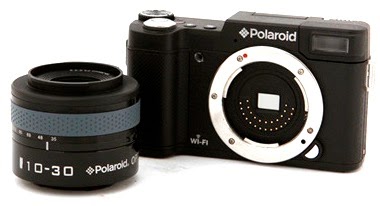
Sekar International isn't a name you'd associate with Polaroid but the licensee did try to get the iM836 off the ground by copying the Nikon J1. Ok, copying may be a strong word. Google copied the workings of iOS and they didn't get sued. Now Sekar isn't a newbie in the digital camera scene. They have been making Vivitar lenses for the longest time. They also license Hello Kitty, Kodak and even Polaroid as brands to drive their consumer electronics products like cameras and Android tablets.

Technically speaking, Polaroid exist only in name. It does not exist as a photographic entity anymore than Atari's famed console gaming division.

Do We Need Another Mirrorless Platform?

Actually no. There are too many. When Panasonic and Olympus pioneer the mirrorless interchangeable lens camera, or iLCs, the other camera manufacturers actually did write them off. But when sales of the mighty Pen started to eat into DSLR sales, the powers that be started to take notice.

From Samsung to Canon, these manufacturers have put their bet on iLCS. Polaroid being just another brand name isn't going to cut it. Why invest in a camera that cost more than a smartphone which doesn't even allow you to make phone calls? It just doesn't make sense.

Polaroid was the Apple of its Time

Steve Jobs idolized Dr. Edwin Land, the founder and CEO of Polaroid. If you look at the 1972 launch of the SX-70, where Dr. Land held his keynote address to announce the new product, it was exactly the same as what Steve Jobs did for the iPod 'click wheel' and 'iPhone'.

Dr. Land would take the product out of his pocket and unveils the product before the excited press and audience. Jobs wanted to emulate this innovative vigour, something he tried to keep up throughout his life in Apple.

The Polaroid SX-70


Polaroid's legacy was that it pioneered the instant photo business, a technology that was not duplicated until the 1980s with Fujifilm entering the business and within a decade, launched its own integral instant sheet film camera, the Instax series.

Instagram's Homage to Polaroid 

The dark ages of film gave birth to the digital age. Not a bad thing but the value and experiences are very different. Even though digital is technically 'instant'. It is has no physical attributes unlike print film.

Today we enter the world of the Instagram moment, as oppose to a Kodak moment. Instagram, surprising, was modelled after the Polaroid SX-70. The square format used by Instagram is a technological copy of the SX-70's print film aspect ratio. You don't have to flip the camera on its side to shoot landscape as the square format effectively makes that redundant. The SX-70 Land camera is used in the same manner, there is no need to tilt it on its side as the pictures are square. Sharing is instant, the world will see your pictures the moment you post them up.

Welcome to the Instagram age.

You can follow my Instagram feed at http://instagram.com/freiherr.