Showing posts with label photographer. Show all posts

Protecting Your Image with a Contract

0


The story of Max Jackson versus Color Run Inc. will go down in photographic history as one of the most bitter showdowns between an up and coming photographer and a multi million dollar commercial entity. We have all had our days when people would ask for free 'samples' for commercial use and are unwilling to pay for your day out shooting an event. Basically I don't negotiate without some form of worded contract and yes, they will ask for them. It is in your interest to state the affirmative or the negative at such a point so think wisely.

The usual ruse they will use is these excuses:-


  • I will give you the image credit
  • Offer you free publicity and exposure to the masses
  • Promise of future assignments


When you are a newbie. It's hard to not want to turn down such an offer. After all, you need the free publicity. Remember that once you give it away, you can't turn back. It's like virginity, if you give it to a cheap hooker, you're fucked. Financially speaking, it's the final nail in the coffin for you.

There is nothing wrong with a work for hire agreement where they pay you for your time and you take the pictures that will belong to them. This is far easier for a newbie to negotiate.

Where the Color Run Debacle went Wrong

In the vaporous age of internet consent, you can easily purvey sexual favors from a minor without knowing it. This is no different in the Internet age where people start asking you for free stuff and the moment you say yes, they will load it all up with their welcome wagon and take it all home snickering at the loot they have just gotten away with.

Digital imaging isn't worth much if you care to look. Too many people will ply the welcome wagon and give away their stuff for free, that said, any amateur who dips his toes into the water will have to do the same and why not? The next guy is giving his stuff away so must I.

Therein lies the problem. As a photographer, you could easily have submitted those same photos to a royalty free site and directed your would be client to go there and purchase them. It would have solved the problem of not having to do any negotiations.

Demand for Ransom

In Max Jackson's case, the magic figure was US$100,000. But you forget that you can't fight an entity larger than you without first having a WMD of your own. This is where all hell breaks loose.


The first rule is to send them a gentle reminder that rights negotiated were not honored and that you are willing to burn bridges with the entity when pressed to do so. Failing of which you need a lawyer to word out a settlement agreement and a demand for payment letter for you. Never draft this out on your own as your letter can be misunderstood as a ransom note. Get a lawyer if you want to demand for damages and this is where Max got wrong footed. 

In Black and White

When you deal with entities that are big and imposing, don't think for one moment that you are going to win just because you bought into the tale of David and Goliath. The law is all about contracts and this is where you as a photographer should prepare one for every occasion. Go google one up that basically protects you basic rights. There are busloads of contract samples on the Internet for imaging contracts. 

One of the problem with photographers is the lack fluency in writing a simple contract. If you are unsure, then you better damn well spend the money to get one written for you. That contract should cover two spectrum of use. 

  • Limited Rights Usage
  • Perpetual Rights Usage


Limited rights usage is simple. You tell the people that you intend to let them use your photos for the desired purpose and anything that falls out of that scope has to be negotiated. 

Perpetual Rights Usage would be giving away all rights to the photos to the client to do what he pleases. This is probably the best way to start if clients gets sticky about where and when they want to use them. 

Newbies are not Pro Photographers

Pro photographers negotiate rights on many factors, including for use in Print, TV, Billboards, etc. As a newbie, you don't have the muscle to pull such a thing off because you're not a pro and you don't have the business acumen to package the deal. 

Let me cut a long story short. Pros have all the necessary documentation drafted out for selling photos to clients. Amateurs do not and people can tell when they ask for free pictures. As a Pro, you don't give away free pictures because you own a legitimate business. Any request for free use will be countered with "I'm so sorry but I run a business, if you are interested in the photos, then allow me the courtesy to direct you to my stock image library to purchase them". 

Last Word on Photo Licensing

You have to admit that you can't do it all. Sometimes you license the use of the photos yourself, other times you let someone else license it for you. There are lots of stock image libraries around the world. Pick one that you like best and put your pictures up for sale. Stock image libraries do not litigate but they have a contractual obligation to give you the rights managed licensing agreement for you to take action. There are third party agencies that litigate in America when it comes to rights managed photos but it does not apply for cross border copyright infringement. What's more, even in America, the copyright debacle is full of inconsistencies. For example, you need to have your image registered with the Library of Congress to enjoy copyright protection. 


Microstock libraries are normally royalty free. But the buyer pays according to the resolution size he or she needs. If someone steals it from the buyer, don't expect the agency to come after you. 

Litigation is expensive, and for royalty free photos, it makes no cents.


Consolidation of Stock Image Agencies

0

When Adobe bought out Fotolia, people were saying that it was a good thing but seriously folks. You have all been mistaken.

Back in June, Adobe announced its own photo bank called Adobe Stock. You sign up with their cloud services which can run into hundreds in a year, you get 40% off all your stock photo purchases.

For me, it was a WTF moment.

In doing so, and charging your customers less, and you're selling it at a lesser price which in turn benefits the agency and not the photographer. If Adobe sold your photo at a retail rate of dollar, you get only a few cents from it. And if they sold it cheaper, you get less than peanuts.

This is a problem I have with stock agencies which sell stock imagery for cheap. You want the best photos taken on a DSLR with Leica lenses, have a model or property release as well, then charge buyers a buck for a download. Maybe a little more than a buck if you want a higher resolution version. And if you give discounts to your buyers, you also discount the return on commission to the photographer. So where does this end?


Challenging the Microstock Market

I don't give a damn about long tail marketing or mass market buying. Adobe isn't a premium company that is going to pay you well for your photos. Fotolia made a name for itself as a microstock for everything. Adobe hopes to do the same.

From images to clip art and vector files, the creative effort behind it is getting valued much lower.

Sure there will be some winners but even on Wallstreet, the losers outweigh the winners. So who are the winners here? Adobe of course because they don't own the intellectual property behind your image but so long as you give them the permission to sell it for you, they can set a price and give you a percentage of the retail price. Technically speaking, they won't give you a higher rate if they sold it lower because of their promotions.

This is how it all works these days. You the photographer gets your foot in the door by providing royalty free with property and model releases, it is a classic case of having you do more and earning less. It is a disruptive model of business that only benefits the business owner. That is, unless you are some rich millionaire with plenty of time on your hands and want to shoot some really awesome photos and sell them for beer money.

The Two Faces of Microstock


Currently, don't think that you can challenge the big guns of photography with your amateur attempts to make money from photography.

There are two types of microstock agencies, one that only validates and takes in DSLR high spec imagery and those who don't. These stock agencies want only the best imagery shot on DSLR cameras to be listed as Royalty Free. Photographers who are desperate enough to sell will list them there as they have no other choice. You might think that rights managed is the way to go but seriously, unless it was a big corporation going on a global spending spree, your chance of getting something sold for such use is next to zilch.

Image buyers are spoiled for choice since they can get the best imagery for the cost of next to nothing.

The other type of Microstock will be more forgiving with your imagery but they don't make money from them because you used a mobile device to capture those photos. Not that it's not any good but compared to the quality of those using DSLRs, your photos suck.

Why buy a photo for a buck that was captured with mobile devices compared with those using DSLRs. They cost the same. Do the maths and you'll know what value it is. As a buyer, I want to pay the least for the best. 

I have seen pretty good pictures listed on royalty free, with model releases and stuff required for commercial use. And they go for cheap. As an ambitious photographer who wants to break into the business, you have to hedge your bets on a better camera, pay for models if need be and photoshop the hell out of them so they look great. All for the return of a buck. Don't think you can hijack the big boys by setting up shop. People have tried to set up coffee stalls outside Starbucks just to do the same and they never work.

Now, some photographers would prefer to sell their images on dedicated sites like Photoshelter.  You get to make all the money on your own but hey, have you forgotten the marketing part? Do you not see those online search adverts inserted into Google for stock image or stock photos? Seriously you want to take o the big boys with millions to spend so that your Google Ad bid will never get seen? Advertising is the only way to get your site shown to the world and if you were hoping some guy who wants to buy an image for his website is going to land on your web image fire sale page, well think again.

What the Future holds for Image Agencies

The market is worth roughly US$4 billion a year. If a hundred image agencies were to battle for that same market, you can see the fragmentation. Some will fall off a cliff. Others will exist only in name.

The future is marked with consolidation. Too many agencies and the market isn't growing fast enough.

Adobe Photos have subscription models, and so do some of the more popular microstock agencies, and if a client were to download photos with a their paid subscription, you will get pennies in return. 

For the up and coming photographer, listing on a stock photo library might turn out to be a bad idea. If they get bought out, turned inside out to a microstock model, you have to agree to stick with them or delete your albums for sale.

Selling your photos might sound as easy as uploading it to a site but in the end, it is the retail prices that will eventually inspire you. Why would you waste time on a business that demands not just your time but money as well if you want to compete in the big league with little or no hope of ever achieving a decent income? Think for a moment about those stock photographes who earn hundreds of thousands every year and ask them how hard they work and how much of a dollar investment they put into their business. Does the end justify the means?

That, unfortunately, can only be answered by you.

US Patent Awarded to Amazon on Studio Photography

0


Amazon.com has just gained the ability to sue photographers who use a white background to capture a product photo with this patent award from the US Patent Office (USPO) which means they can technically ask for licensing fees if you ever thought otherwise.

Yes, you heard me. White background. Here is an except of the Patent text filed:-
a background comprising a white cyclorama; a front light source positioned in a longitudinal axis intersecting the background, the longitudinal axis further being substantially perpendicular to a surface of the white cyclorama; an image capture position located between the background and the front light source in the longitudinal axis, the image capture position comprising at least one image capture device equipped with an eighty-five millimeter lens, the at least one image capture device further configured with an ISO setting of about three hundred twenty and an f-stop value of about 5.6...

Amazon is an online retailer and for that, most if not all of the photos captured for use on their site has a white background. D'uh. Apparently the text also mentions the use of a 85mm lens so if you happen to get sued, all you gotta do is prove that you used a 75mm or a 90mm lens to shoot your object and you're home free.....provided you hired a lawyer to defend yourself which can run into thousands of dollars.


First, let's be clear. This patent is not an innovation. The patent was filed by Amazon in 2010 and granted this year.  For me at least, the idea of such a photographic exercise is really to fight other online retailers who would use a picture of a product shot with a white background. This gentle art of arm wrestling your competitor to the ground with a lawsuit is one of the best ways to perform a take down without using too much effort. Smaller online retailers who cannot fight Amazon's lawyers will have to move on. The very act of hiring a lawyer to defend yourself in corporate America is a dangerous proposition as it cost a lot of money.

This patent can be used only for sites hosted in America. Amazon in this case can't use it against say, China's Taobao or any online property hosted outside of the US.

Photographers probably need not be too worried but you should tell your client that you won't be using a 85mm lens to shoot a product. Instead, why not try using an iPhone? With the right lighting and a portable lighting studio like the Foldio, you can add a watermark that says "shot on an iPhone with Foldio", to deter the legal sharks from Amazon.


What's my Take on the Picture?
What this will eventually mean is that the professional photographer will be obsolete. The only reason why clients would want to use you for a studio shoot is that the object in question is so damn large that it will need a whole room with lighting just to ensure that it is properly lit. That said, you could soon be mothballing your DSLR until your client shows up at your doorstep with a product so large that it can't be shot with an iPhone.


The Business of Image Theft

0


"I am sorry but I can't do this" I said, of which the Marya said "good bye".

This is the story of image theft and it happens all the time. I was looking for some freelance work and came across a posting in freelancer.com, they were looking for writers who knew about travel destinations. The idea seem simple enough, the client wanted a short write up on travel destinations and people could pitch their worth to them. Unknown to the writers, the client has hidden a few "caveats" by not revealing that they also want you to steal high resolution photos.


The idea behind the job was at best, questionable. I suggested they would need to buy photos from a stock agency, with a bulk purchase, it would cost less than US$0.70 a photo for Royalty Free images.


The client went on to say that the purpose is completely different. With that I thought maybe they are using it offline as a training document in a school room. Then I decided to ask if it was off line or online use. The answer shocked me....it was for online use.

Any image for public use should be cleared for public use. You cannot go around taking photos in that manner. I know that some may use images gleaned from Flickr to illustrate a Powerpoint presentation for internal use. I am still ok with that but there are limits. If you use a presentation online for any reason, this is a business exercise and for that you have to buy photos.


The client doesn't seem to care and since it was a Malaysian company, there is good reason to suspect that the online use will be hosted outside of the US, meaning a DCMA takedown will be totally ineffective.

Why Companies should go Legit

It cost you next to nothing. Sign up with a stock image agency on a monthly or annual basis and you can download all the pictures you want for a subscription fee if you have a budget. There is no such thing as not having a budget for even the cheapest of photos from RF Stock Image agencies.

When I worked alongside Sony Asia Pacific, there was never a moment about not paying for Royalty free or Right Managed photos. I would seek them out, research them and buy them for Sony. I have paid over US$40,000 in photo royalties to photographers on behalf of Sony for one project alone.

To not pay a dollar or less for royalty use is like stealing candy from a baby—its no easy! These days, medium resolution RF images can easily be bought for a dollar a pop. We all know that life is bitch when you can't get something easily and for free on the Internet. But there are limits to what you can do and ripping off photographers isn't one of them.

I came away from that episode completely frustrated and angry. For me, I don't think photographers are making a killing out of selling their photos. In fact, the whole business of selling photos has gotten so complicated of late to the point there is no way to address the issue anymore. Which pictures should you be offering for RF, and what should be rights managed? With smartphone photography muscling in on the stock image business, there is literally no point in charging more for a photo just because you shot it on a ten grand worth of equipment. The value of an image has depreciated so much these days that anyone with an iPhone can compete with you in the RF stock market sphere.

Print publications don't buy photos like they use to. In fact, thanks to royalty free photos and image scaling software, they can use any image in print without breaking a sweat.

I am constantly reminded of the kind words I got from photographers such as Michael Yamashita, Abbas Atta of Magnum and author Michael Freeman. They need people to champion their rights and change the mindset of clients who are out to buy photos. Don't think for one moment that a stock image agency will do that for you. Litigation is an expensive process and the last thing they want is to lose customers. That is why co-operative image agencies owned by the photographers themselves work best. They have to protect their own interest when no one else will.


Magnum takes swipe at Creative Commons

0


A new service from Magnum Photos is about to be rolled out and it's going to take a swipe at Creative Commons. For a flat annual fee, you can download and use ANY Magnum image without watermarks on your non-commercial website.

For the longest time, photography had been a barometer of human activity. Photographers have captured those precious moments on film and saved that for posterity but lately, photos are not worth more than a postage stamp — thanks largely to Photoshop and digital imagery.

Magnum, being the oldest photo agency on the planet can't have you taking their pictures with a creative common twist. Even though you only want to use it on your website for non commercial purposes (which is contentious at best since you earn traffic revenue from web advertising) Magnum has the right to send you a DMCA takedown for using their photos without their permission.

What is the Value of Digital Images?

For old school stock agencies, the last thing they want is to host photos from non-agency photographers. The deal behind Magnum Photos as a collective agency is that the whole library of images is set up to benefit Magnum members and since they can't be possibly  shoot the usual commercial crap one has known to expect from a royalty free stock agency, those images from the past should be worth far more than the postage stamp.

I have nothing but sympathy for Magnum Photos. I  have worked with them in the past and they do try very hard to innovate but going out to enlist bloggers by asking them to pay an annual fee to use photos without watermarks is probably asking too much. Bloggers are a different breed. Think Perez Hilton, who as a successful professional blogger wouldn't even pay a cent even when he's being sued for using images without permission. His best excuse? Let's toss in a photo credit and be done with that.

As a collective agency, I was once in talks with Magnum to get sponsorship from Sony to host an exhibition but that faltered for several reasons, first being that the bulk of their photos were shot on film rather on digital. And even if they were shot on digital, it wasn't shot on a Sony camera. Companies like Nikon or Canon could sponsor them but they too do not see the same value since they are the big shots of the camera scene. Leica could of course do this but heck, they are a premium brand. If you shot Fendi, Burberry or LV, maybe they might consider it. Photojournalism isn't a hot commodity these days as anyone with an iPhone can upload the latest video and pictures onto the Internet for free. Magnum built their reputation on photojournalism, which at this time is being savaged by the digital age. No one pays attention to where the photos came from—and much less of the photographer who took it.

Magnum is a prestigious agency and to shore up their revenue, they are hoping to convert up to 30 percent of their recalcitrant image thieves to their new membership model though I think they would have more success if they were aiming for between 1 to 10 percent. Frankly bloggers are not out to pay for images and even if they did, they would want to desecrate them into personal Memes which they can share online. Robert Capa and HCB could be turning in their graves as we speak....


Shooting Speed: Motion Capture on the Fast Lane

0

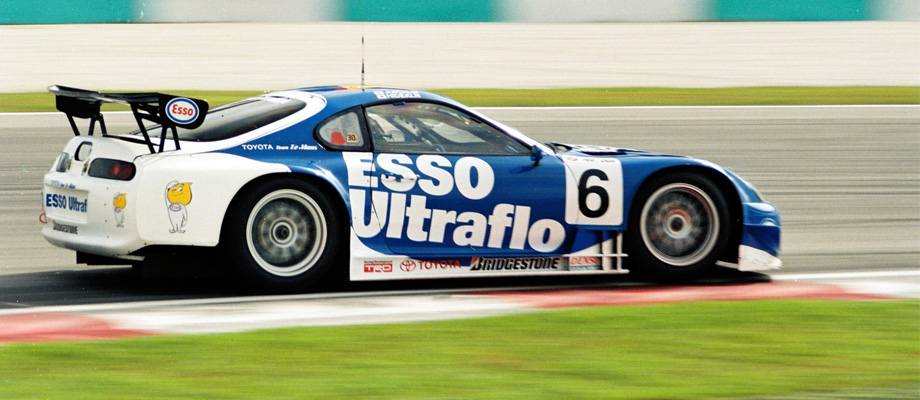
Speed. For professionals who hang around the track all day shooting racing cars, you pretty much end up with the same type of images because you are restricted by the angle that you are allowed to shoot. Often you find the same type of images floating around on the Web that shows some kind of speeding vehicle frozen at the exact moment in time. For stuff like this, you can't capture this unless you have a DSLR capable of up to 1/2000 of a sec shutter speed.

For me, I prefer shooting motion rather than freezing them as this gives a different look to the images instead of the same old, same old styles seen everywhere from billboard advertisements to print and web advertising.

When I started shooting these, I was still shooting on film. Imagine what I could have done with digital as it would have been a whole lot easier with the top of the line DSLRs you have today.

But the way forward is still the same. You gotta know your shutter speed. For motion capture like these, you need to know how to pan the camera.

Panning, as you follow your subject through a fixed path of motion, is what gives you the ability to capture speed and motion in your pictures.

Motion Capture Tips


  1. The best shutter speed to capture motion is 1/125 sec
  2. Make sure your subject is moving in a parallel line to your panning movement
  3. AF should be OFF (if you haven't got a spiffy DSLR with super fast AF)...AND 
  4. Prefocus your Distance to Subject
  5. Use a Monopod to steady your panning

The aperture value is irrelevant as long as there is sufficient light. If there isn't then dial up your ISO to 1600 and preset your Shutter Speed to 1/125. In the days of film, photographers were handicapped by the film speeds of between ASA/ISO 100 to 400. Shooting with ISO speeds of 800 were not widespread due to the grain. That is irrelevant these days with digital cameras which perform well with minimum grain at ISO3200.

Minimizing Background Blur at 1/250

Seems like it is frozen but notice that the wheels are turning
For others, you may want to minimize background blur by shooting at a slightly higher speed of 1/125 just to get the wheels in motion. This depends heavily on the distance to subject and of course the telephoto lens you are using. Shorter lenses (200mm) will need to capture at shutter speeds of 1/125 whereas longer telephoto lenses (above 300mm) will require shutter speeds (between 1/250 to 1/500). Longer telephoto lenses tend to magnify movement so less panning movement is required. The movement is very much amplified at longer telephoto lenses, say between 300mm to 800mm so you need to judge the speed in which the car or bike is carrying on a straight or around corners. The important thing here is to mount your gear on a monopod. You could also fashion a monopod out of a Tripod if you didn't know any better. Just don't use all three legs and only extend ONE of the legs out to help you balance your gear. Hand holding your camera is no recommended at longer focal lengths.


Shooting Around Corners

Motion panning can be done around corners as well but the effect is different, meaning that the subject is less sharp and appear to be blurry. That's because you use a slow shutter speed of 1/60 sec.

All vehicles will have to slow down to take a corner and when you are sitting smack in the middle of one, then you will be using a wide lens instead of a telephoto lens. A standard 50mm lens (full frame) would suffice.

You can of course use a wide angle lens such as a 35mm or 28mm if you are really close to the action—like when you can extend your hand out to touch them but that is rarely the case with racing circuits.


Freezing Motion

When you have a DSLR capable of 1/2000 sec shutter speed. It is very easy for you to freeze motion. You can also freeze motion at 1/250 when the vehicle is in low speeds around corners.


This is probably the first place you will find most trackside photographers camping out. They will of course choose the same angles as everyone else as action shots don't really differ much from one location to another when you want to freeze the action. Getting to a high or low place depends on your access to the track. If you have clear access to trackside shooting spots, you will probably get a chance to use a longer telephoto lens on dedicated racing circuits.

Street circuits, like Monaco and Macau, require lower telephoto ranges, around 200mm and less since you don't have a lot of places on the track which you can fully utilize 300mm. The most common uses for a 300mm lens is a head on shot during the start of the race as all the cars are bunched up together running into the first corner. After this, you'll have to pick out your targets one by one as the race progresses.


Street Photography Tips

0


Street Photography is all about developing your photojournalistic eye. So what is this photojournalistic eye? Well, they are quite easy to learn really and it's not rocket science. Anyone can learn it and you can master this too if you paid attention to these few tips.

Observation

A good photojournalist must have a keen eye for observing and anticipating movement within your environment. When you sit alone in a park, what is it that you see? By identifying possible subjects for your camera takes a keen sense of observation. You have to train your eye to constantly search for subjects,

This picture would not be very interesting if it just showed the food instead of having the street vendor present in the picture. The background restaurant element is a bonus. Captured in Seoul, South Korea. 

Story Telling

If you had a picture of a city street, you have to ask yourself if the picture on its own is able to tell a story. Similarly, I feel that having a human element in your picture enhances the picture as it gives "life". An empty stall with just the food would be extremely boring even though some may find the spread tantalising.


Stall owner in Seoul manning his food stall

Story telling has always been about pictures of people in different places. By having human subjects, you add that bit more into the picture to give it depth.

To do this successfully, you need to have patience as nothing happens immediately. People in street photography are not posed models. They come and go as they please and your ability to anticipate movement is what makes it work.

Sometimes, the timing may not be perfect but with patience, you can be rewarded. The picture on the right is a good example. If I had shot this frame earlier, the woman would not be in the frame and what you have is an empty storefront. By waiting for a human subject to enter the frame, the story telling bit has been fulfilled.
 Composition

This is probably the most misunderstood element in street photography. How you divide the frame to place your subject is very important. If the picture doesn't look right, it is because the subjects are out of sync.  Subjects in the picture can be delineated by lines and segmented by color, space and texture. Some photographers have even used "mass" as way to define an object's place in a frame. To me, it's just the same difference.

Stall owner falls asleep on a hot summer's day in Macau

Should I get PAID for my Work?

0


Marissa Meyer of Yahoo may have earned the rancor of photographers everywhere when she categorically said that there is no such thing as a "professional photographer" after the relaunch of the Flickr site.

Such anger from the photographic community is not new, which reflects the very sorry state of digital imaging and digital photography.

Before we jump into this contentious issue let's put everything up for review.

Digital Imaging is a Disruptive Force 

You can't deny how digital imaging has changed the professional landscape forever. Unlike the days of film, where every shot you took costed money, every frame you squeeze out of a DSLR now is free from processing fees.

So when it is free, you get to shoot more at no further cost. And when you shoot more, you gotta have ONE frame in your hundreds of shots that will nail the shot a client wants. If this is the case, then the client will automatically assume that to get ONE frame that is spot on for them, they can't be possibly paying you for your time or exposure cost!

Will Work for Peanuts?

How many times have you answered a call for a photographic project only to realize that you will be paid with "Exposure" and "links to your website".  I am afraid there are just too many to call up. Internet sites like dpreview.com and thephoblographer.com use this to lure photographer cum writers out to the open with the promise of "exposure".

If you try editorial work, and have a portfolio to show, you'd probably be asked to shoot for free in return for a byline that shows you own the photo. For the offending publication, they get to use your photo for life and once up on the Internet, it will be flogged and reused to death without your permission.

So be mindful about those "work for free" projects that could bring you a few second of Internet fame but little else.

Don't Be a Gear Head

Love the new DSLR? Gotta have that new spiffy lens? Do you earn enough to buy all that in a single leap? Let's not fool ourselves about the cost of these new toys. Buy what you NEED and not what you want. The difference between the two is obvious. The ones you NEED are the ones that have immediate value to you. The ones you WANT are dream toys and tools you wish to have.

It's the Business and not the Photography

Photography as seen through the eyes of professionals has to be more these days especially when you are starting out. Going pro is about earning a living out of it and not about your photography alone. You need to have the acumen to run a business!

There is no two ways around it. Either you have it or you don't. Often it is never about your photography but rather how you run a profitable business that decides if you can turn pro.

The Last Word

Any monkey with a camera can claim to be a pro these days. Digital photography has made it so much easier to shoot a picture that any iPhone totting folk can claim to be a photographer of sorts specializing in food porn. When you have competition from such a crowd, how do you justify that 300 dollar an hour food shoot in your studio?

There will always be a demand for photographers in every industry, it's just a matter if that is a paying one. I have read elsewhere that in order to be a successful photographer, you need to do some market research and price your services lower than the next guy you're fighting with. If that was a success formula, then we should all set up stalls selling $1 dollar take away coffees just outside Starbucks. I am sure it will work. Don't you think?