Photo copyright debacle: To sue or not to sue?

0

Petapixel.com carried this rather amusing story about a photographer fighting for damages resulting from the use of the images.

"In its new motion, Getty and AFP argue that their conduct was “careless” but not willfully malicious, thus shielding them from the maximum penalty. They argue the most Morel is entitled to is a single DMCA penalty of $2,500 and actual damages of $200,000 — legal fees in the case are estimated to have reached northwards of $8 million."

The last bit probably gets photographers worried. If a DMCA damage is only 200K, WTF is the legal fees all about?

Stolen Goods and Usage Abuse

Having your pictures stolen is probably as old as prostitution itself. These days, someone will rip your image and use it unconditionally via Instagram, posters or a soup kitchen. But there are generally two types of infringes you need to be concern about. People who stole your goods, and the people who abuse the limited copyright license of the image.

The first kind is what AFP and Getty got themselves into. They have to show that they had taken sufficient care in finding out the real owner of the pictures instead of just picking the first guy that is associated with it. By right, the photographer in this case should have sued both the thief and Getty+AFP. But the case does not mention this so I can't be sure if it did happen.

The second ones are those who bought a limited copyright license from you and used it on everything they can think of, including the condom packaging you found from a third world country. These you can do nothing about. They are after all your clients and no carefully worded demand for additional payment is going to win you compensation. 

Thieves like Us

Upscaling a low resolution picture is relatively easy as long as you have the right software. There are a few out there that does just this. Often, you can upscale or enlarge a stolen picture by 3 times. Perfect Resize 8 has a fancy patented, fractal-based interpolation algorithms that makes sure your image stays the same once upscaled.


Any stolen picture from the Internet can be given a new lease of life, including the humble screen capture image. This means no picture is safe, and to post your picture up onto the Web is in some ways giving it away. I am sure as hell you haven't got a team of lawyers looking after your images.

How Pictures get Stolen

Instagram, Flickr and any image hosting service. That's how popular these spots are image thieves. I have known some restaurants or cafes who have stolen images used on their menu. Heck, why shouldn't they? You posted it, and there is no water marking or demand for payment, so sue me!

Even with watermarking, you're just adding a layer of inconvenience as any good photoshop digital artist will be able to do away with it.

Searching for Misused Images

Google Image search is probably the best way to find them. They index more pages than you have read books. Drop an image onto the Google Image search bar and you'll be given all the results. Neat. So now you know your image has been abused and misused. What do you do now?

For someone who has stolen your image, you can issue an Internet take down, which is hardly useful if pictures of your beloved Pomeranian Husky is used in a restaurant Menu in Vietnam or for that matter, for the site to be hosted on a Web server that resides in Somalia. DMCA infringement take downs are as useful as a dog whistle—not everyone will hear it. Fair use compensation? That's like asking for a free blowjob while negotiating with a Hooker.

Why Copyright Does not Pay

In the US, you need to register for a copyright of the said image to enjoy additional protection. If you do sue the party involved, your lawyers are looking at the $$$ legal fees as oppose to staking your claim. If you lose, you still have to pay the lawyer. They don't work for free Starbucks coffees.

Legal fees are totally separate from actual damages. If you wish to pursue a case against someone who has infringed on you, make sure you have a good lawyer who doesn't charge that much and are in love with your work. Or for that matter, an avid photographer himself so that he's as interested as you are in protecting image rights. Everything else is secondary.

Printing your Photos in a Digital Age

0

By now, we have all heard how the Indiegogo project called Enfojer failed on lift off and couldn't get the funding needed to go commercial. That's really sad but then again, who needs to print photos? There is always the colorlab option if you need a few quick ones.

Digital sharing has negated the need for anyone to share photos physically. Instagram's new Direct Sharing method is probably a good example of how you can send private photos to people. As long as they have an Android or iOS device, they will receive your photos, however explicit they maybe, for your eyes only.

Dark Room Revisited

I have played around in dark rooms, and it's pretty fun. It takes hours to come out with the prints you want and that's the problem....you need to spend time on this particular hobby to be any good at it. The dodging and burning is a method to expose parts of an image and you only have the light on the Enlarger to guide you. It is fun but never easy. For this you could use your hands to dodge and burn or some other home made tools. Part of the fun is the hours you spend on it. It is clearly not a simple process and it takes plenty of time.


De Vere is a name well known in the analogue dark room enlarger market and they have a similar product to Enfojer if you care to check them out. They make digital enlargers, where photos are projected to photo sensitive paper. The 504DS model is fully digital.

The complete solution:
  • 17 Megapixel LCD Panel
  • Precision Enlarger Column
  • Front of Baseboard Controls
  • Power Suppy
  • 50mm Rodenstock Lens
  • PC System with DS Software
Choice of two light sources:
  • DigiLite Tungsten
  • LED Technology
This means you can output any digital file from your computer to the enlarger for printing. Unlike Enfojer's complete solution, you need to go out to buy your own paper and chemicals for the wash and bath. Not easy to find if you live in a small city.

Frankly, if you asked me personally about the cost of printing on film and on a digital printer, well, the cost are about the same.

First, we are restricted by certain sizes with a digital printer. If you have an A3 printer, well, it's cool but you probably need to spend a small fortune on ink—which I dare say, is never cheap.

Then you have the De Vere Enlarger, which prints to film paper—not cheap either if you take into account the chemicals you need to do this. Photographic paper can last up to 70 years when kept well, while photo printer papers claim to have the exact life expectancy, I can't really vouch for such claims.

Photo sensitive paper have expiry dates and so does the chemicals. Whereas photo print paper for the bubble jet paper has no expiry date and at worst, the ink would dry up anyway once you open them up for use.

My advice is simple. Do what makes you happiest. If you are happy playing around in the darkroom, spending countless hours dodging and burning your pictures, then go for it. But if you are the sort who don't want to spend a lot of time indoors and prefer to go out to shoot more, then by all means go indulge yourself.

There is simply no right or wrong way to print your photos so remember to have fun while you're at it.

Conclusion?

There are some people who spend hours upon hours shooting pictures. Others spend hours and hours behind a computer enhancing and editing photos. Regardless of what you enjoy doing most, a digital darkroom is probably one of the best options if you are in the market of printing your own photos on photo quality paper. The De Vere Enlarger is probably a good investment for those who are artisans, creating one of a kind prints using photographic paper.


A tribute to analogue film in the Secret Life of Walter Mitty

2

When James Thurber wrote his story of Walter Mitty, little did he know that Ben Stiller would turn it into a homage of sorts to analogue film. Thurber wrote this short story in 1939 and it was actually made into a film back in the 1947 but this remake with Ben Stiller starring and directing became something of a nostalgic journey for many.

The movie featured Sean Penn as a photographer, who worked exclusively on film but in one scene, a camera seen in the movie was paired wrongly with an AF-S 300mm f/2.8 VR G lens. That's a bit of a misuse of creative license for historical accuracy for that matter.


Nikon F3T paired with an AF lens?
The Nikon F3T was the very last workhorse from the dark ages of film photography. I remember the F3 well, I wanted to own one but never had the chance to. Here's a short quote from Wikipedia on the F3.
A significantly more durable, robust titanium version of the F3HP was also offered, called the "F3/T", initially in a more natural titanium finish or 'champagne' coloring, and later in a less conspicuous black. It weighs 20 grams less than the comparable F3. The champagne offering was introduced in 1982 and was quickly discontinued around 1985, making it the rarer (and costlier on the used market) of the two titanium models. The F3/T featured titanium clad viewfinders (DE-4), titanium back, titanium top and bottom plates. It also benefited from the conformal coating of the internal circuit board. The mechanical specifications between the black finished F3/T and the natural finish F3/T were identical.


Beautiful things don't ask for attention- James Thurber
The camera is manual but to a point. You can only fire it at one speed, 1/80 sec if you don't have any batteries. It uses two LR44 batteries sold at most watch shops. There were several variations of the F3, including the HP (high eyepoint which the FT is based) and the P for Press. This version had a dedicated hotshoe ontop of the petaprism bulkhead. This meant you could use a standard flash with the hotshoe mount as opposed to a dedicated hotshoe mount found on far left of the camera. This was in fact a pain for some to use as the Nikon hotshoe was non-standard.

For those of us old enough to remember, seeing Life magazine featured in the movie brought back many memories. It was the only way to see the best of what photojournalism has to offer.

Life was an American magazine that from 1883 to 1936 was published as a humor and general interest magazine. Time founder Henry Luce bought the magazine in 1936 solely so that he could acquire the rights to its name when it became a weekly news magazine launched by Luce with a strong emphasis on photojournalism. Life was published weekly until 1972; as an intermittent "special" until 1978; and as a monthly from 1978 to 2000.[1] It became a weekly newspaper supplement published by Time Inc. from 2004 to 2007 and was included in some American newspapers. The website, life.com, existed from March 2009 to January 2012, as a joint venture with Getty Images under the name See Your World, LLC,[2] which in January 30, 2012, became a photo channel on Time.com.

Death of Photojournalism?

Life Magazine's final demise was in 2000. It was just after the Dotcom bubble of the 90s. For that, I think the movie had it right as up until then, there were still film photographers but Instagram? That's another creative license which was abused by Hollywood for the sake of entertainment.

Today, real photojournalist are a rare breed. Many who enter the profession now have to spend a big load of cash on equipment alone, and the big payoff is a myth unless you were a paparazzi.

Molhem Barakat, the Reuters freelance photojournalist killed recently while covering the Syrian conflict was paid only a hundred bucks for uploading his pictures. He was 18 years old. His gallery of work can be viewed here.

I don't think Reuters would have paid him pittance if we were all shooting on film. Digital photography has in some way depreciated the value of images regardless of where they come from. There is nothing more rewarding than to see your work pay off in some way and to be able to do what you do best.

Digital photography is not sacred. It can be tampered with, edited and enhanced with a computer. Analogue photos on the other hand exist in celluloid. Shooting a picture is only one part of the equation. You had to find a way to develop the film and send it over to the News agencies. Not easy I tell ya.

I remember working in a darkroom where a photo was developed by hand, the print had to be dried and later line scanned transmitted to the head office. It was fucking hard work compared to what people had to do now. Developing film has two stages, the first is to develop the roll into a negative and the next, using an enlarger, a hardcopy print was made from that frame. This is what you see in "The Secret Life of Walter Mitty". Digital photographers today have no idea how this was done and couldn't understand the process to appreciate it. In the age of digital, the last thing you needed to do was to create a two step process to sharing your pictures to the world. For this I can proclaim one thing.

Photojournalism is dead. Long live the Selfie. 

Analogue Photography Bucket List: Polaroid for Christmas

1

Unlike many of you, I have had my fair share of Polaroid during my younger years. I wanted one and went out to get one. It was a Supercolor 635CL Polaroid camera which had a close focus lens (for up to 2 feet) and electronic flash. It was something I loved but wasn't too portable. I didn't shoot much with it as I didn't have the money to buy the film packs. It takes a PX600 or P680 Impossible film, the replacement to the once popular Polaroid 600 film packs. Much later, I got myself a Fuji Intax 10. Lovely camera but the print was far too small to enjoy anything substantial when it came to imaging quality. 

For me, Polaroid has a lot in common with Apple. It was a huge success during its time and Dr. Edwin Land nailed it with the SX-70 back in 1972. It was the iPhone of its time. Great gadget, no fuss, and pretty expensive if you get what I mean. It was a premium photography gadget just like the iPhone became the premium smartphone gadget of our time. Polaroid started producing instant cameras in the 40s so it took a while to achieve success, just like Apple did. Edwin Land was not a gifted public speaker but his mind worked like an inventor. He was once quoted as saying "An essential aspect of creativity is not being afraid to fail". 

Today, digital is king. We use the iPhone to take snap shots instead of the SX-70, which was the favorite camera during its day for such things. 

Polaroid and Instagram

When I first started using Instagram, I dismissed the square format pictures as another attempt at a digital Polaroid. If you look at it closely, Instagram is model after the famed SX-70 square prints. So you could in some way say that Instagram is paying homage to Edwin Land's most famous square instant prints. 

Why Be Square?

One of the secrets to photographic composition that I often talk about is the no brainer approach to framing  subject in a square box. It is pretty easy and you can't go wrong with it. Sometimes, you have to be a total nincompoop to get the composition wrong with the square format. 

Dr. Edwin Land moved away from the rectangular format found on the 250 series cameras for a simple reason, with a square format...you didn't have to reorientate your field of view to fit the scene. There is no portrait or landscape view. A square format just makes it easy for you to shoot quickly without thinking. It was brilliant in both execution and practical use. 

Polaroid SX-70 on your iPhone

I want to ante up to a SX-70 but the film is just far too expensive. The PX series from Impossible project can cost between US$2.60 to US$3.00 per print. Unless you're a drug lord from Mexico, using one daily could be detrimental to your bank account. 

Impossible project's iPhone Instant Print Lab is one that you can buy off Amazon, which turns instant prints from an accompanying app found on the Appstore. 

This is not any cheaper than having a real Polaroid Camera but with the iPhone, you now can make instant prints just like any Polaroid device. 

Digital Polaroids

There is nothing to stop you from creating great looking polaroids in digital. Those die-hards who have sworn an death oath will tell you that it can't be the same as a true polaroid print. This is pure hog wash. 

Digital virtualization has made Polaroid looking prints possible, and with the right app, you can't tell the difference on an iPhone screen. Imaging quality is what determines the picture and Polaroids on PX paper these days are not really that great. Sure some might argue for the sake of argument that it has a nefarious artistic quality to it. If someone wants to argue for art's sake then it's not a picture. 

If you want to dabble with some digital polaroids outside the confines of your iPhone, I would recommend Polardroid, which has a PC and Mac program that does just that. 


Fuji Instant Film with Polaroid

The much older Polaroid 101 and 250 Land Cameras still have film stocks made by Fuji. In fact, these Fuji Film stocks are clearly much cheaper than the SX-70 ones. 


Fuji makes these 10 shot packs which sells for less than US$20, and that works out to less than US$2 a picture. Worth your while this Christmas. The camera can be had for less than US$100 a pop on eBay but you'd be warned beforehand if the thing actually works. There isn't many camera shops specializing in camera repairs these days and you'd be stuck with one which will become a door stopper if you're not too careful.


Old cameras die hard. If you have kids, by all means collect them, use them and enjoy them. Analogue cameras will be a novelty items one day and getting one for Christmas won't be that easy. So do what you can now and have a great Christmas ahead!


Polaroid'd Digital Foray in the Instagram Age

0


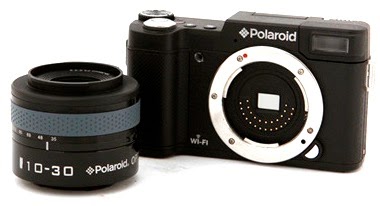
Sekar International isn't a name you'd associate with Polaroid but the licensee did try to get the iM836 off the ground by copying the Nikon J1. Ok, copying may be a strong word. Google copied the workings of iOS and they didn't get sued. Now Sekar isn't a newbie in the digital camera scene. They have been making Vivitar lenses for the longest time. They also license Hello Kitty, Kodak and even Polaroid as brands to drive their consumer electronics products like cameras and Android tablets.

Technically speaking, Polaroid exist only in name. It does not exist as a photographic entity anymore than Atari's famed console gaming division.

Do We Need Another Mirrorless Platform?

Actually no. There are too many. When Panasonic and Olympus pioneer the mirrorless interchangeable lens camera, or iLCs, the other camera manufacturers actually did write them off. But when sales of the mighty Pen started to eat into DSLR sales, the powers that be started to take notice.

From Samsung to Canon, these manufacturers have put their bet on iLCS. Polaroid being just another brand name isn't going to cut it. Why invest in a camera that cost more than a smartphone which doesn't even allow you to make phone calls? It just doesn't make sense.

Polaroid was the Apple of its Time

Steve Jobs idolized Dr. Edwin Land, the founder and CEO of Polaroid. If you look at the 1972 launch of the SX-70, where Dr. Land held his keynote address to announce the new product, it was exactly the same as what Steve Jobs did for the iPod 'click wheel' and 'iPhone'.

Dr. Land would take the product out of his pocket and unveils the product before the excited press and audience. Jobs wanted to emulate this innovative vigour, something he tried to keep up throughout his life in Apple.

The Polaroid SX-70


Polaroid's legacy was that it pioneered the instant photo business, a technology that was not duplicated until the 1980s with Fujifilm entering the business and within a decade, launched its own integral instant sheet film camera, the Instax series.

Instagram's Homage to Polaroid 

The dark ages of film gave birth to the digital age. Not a bad thing but the value and experiences are very different. Even though digital is technically 'instant'. It is has no physical attributes unlike print film.

Today we enter the world of the Instagram moment, as oppose to a Kodak moment. Instagram, surprising, was modelled after the Polaroid SX-70. The square format used by Instagram is a technological copy of the SX-70's print film aspect ratio. You don't have to flip the camera on its side to shoot landscape as the square format effectively makes that redundant. The SX-70 Land camera is used in the same manner, there is no need to tilt it on its side as the pictures are square. Sharing is instant, the world will see your pictures the moment you post them up.

Welcome to the Instagram age.

You can follow my Instagram feed at http://instagram.com/freiherr.


Google's "Coming Soon" RAW image support

0

Not to be outdone by Nokia's announcement for DNG file support, Google has come out to say that RAW file APIs are coming for Google Android KitKat.

First, the API already exist in part within KitKat. Problem is, it's not activated as yet. Developers have seen bits of the API within KitKat but when will Google come out with the option to do this remains questionable.

RAW equals more Storage

That's right, a 8 megapixel sensor can yield up to a 8MB RAW file. This doesn't sound very good if you happen to have a 16GB device with no option to take in a microSD card. The new generation of sensors are already headed towards 16 megapixels and with that, you're dealing with even more storage problems.

RAW support will only be available on high end devices

Possible. The majority of folks have no need for RAW. If all you ever do is post to Instagram or Facebook, then a small JPG file will do just fine. High end camera phones within the same ballpark as the Nokia 1020 will have the ability to save in RAW whenever required but lower end devices running KitKat will probably not have that feature for the sake of taming this storage hungry requirement.

RAW support on selected Apps

There are apps on the iPhone that already does this. That is to convert the JPG files to TIFF. So far, there hasn't been much talk about this with the Apple fanboys as TIFF files are massive! Once Google green lights the API for RAW image capture, device manufacturers are not expected to give you this option automatically but you should be able to buy camera apps that will do this for you. Premium camera apps are far and few on the Playstore. The idea that you'd pay more for an app just coz of a bunch of filters is already passe. Serious amateurs will demand more control over their images and this is where RAW files will appease them.

RAW File Impact on Workflow

Another reason why RAW files may not be such a hit is that it will impact your workflow. Apps must have the ability to edit and open RAW files natively and without sufficient RAM, you won't be able to do this. Furthermore, RAW file editing is already possible via Google's Picasa, making good on the fact that Google will encourage you to consume more mobile data just to upload it to the cloud. Backing up to the cloud should only be performed through a Wifi connection.

Do you really need RAW?

Going forward, camera phones will eventually replace the DSLR and compact camera when it comes to casual photography. Apps can already dial in artificial 'bokeh' when there isn't any. It is just a matter of time when the right app comes along to do all this. Having RAW files at your disposal means that you will have access to untouched images from the sensor—which can then be used to generate all manner of effects with imaging quality rivaling that of upmarket compact cameras. Once this is achieved, you won't be taking that DSLR on holiday.


DEMOTIX: How Corbis Failed the Photojournalist

0

I recently posted my first article to Demotix to see how it all worked out. Sad to say, it's not going to win you any fans or money. The story was approved on the Demotix website and I was very disappointed with the results on how news is sold to publishers and news organisations. Demotix says that your news content is pushed out immediately to all news publishers once it is approved for circulation but nothing was said about keeping the news from the prying eyes of the world.

Content is Freely Available to Everyone

A news story in my case was made up of text content and picture content. The content in question was free to view to just anyone and there was even sharing buttons for Facebook and Twitter! WTF?
I was given the impression that Demotix only sold these items to verified News organisations, wire services, etc. Apparently not! You can see the number of views within your published story and Demotix actively encourages you to spread the word to get more hits. Pictures are protected with a watermark but it won't take much for someone with Photoshop to remove it. Content is King so they say but here, it is treated like a five dollar whore.

Limit Content Exposure for best Results

Content, regardless if it is pictures or text should not be let out into the wild. Demotix should have done was limited the views on the submitted stories to genuine news agencies and publishers. A story summary could be used as a lead-in to the content and if they wish to read more, News Publishers should get the proper accreditation. News publishers are not going to pay for a story as long as it is out everywhere on the Internet with generated 'likes' on Facebook shares. Facebook shares and likes are not going to earn you money. It works in the opposite manner by devaluing the content.

Profit Sharing on Page Views

Starting January 2014, Demotix will split the advertising revenue with you for every page views you get on their site. WTF? How many people would subscribe to reading the news on Demotix is beyond me but it certainly is not a pay to use website. There is no pay wall and the feed goes out to the world for free. Anyone can carry a link to that feed.

As far as it goes, earning money on page views isn't going to cut it unless you're posting porn links which in turn generates millions of hits. You'd be lucky to get $10 dollars for all your effort to bring one story to the table and yes, that fee isn't going to pay for your transport cost. Even a horse cost more to maintain in fresh oats.

What Corbis can do for You?

Corbis is the big name behind Demotix. That said it should be pretty reputable but the way in which they treat your content is just not going to cut it for you. Demotix believes that citizen journalism is going to change the way news is covered around the world but don't leave your day job for it.

It is true that you don't need a lot to be a photojournalist for Demotix. The mobile app for both Android and iOS gives you the freedom to post from anywhere so you can work whenever you want.
Demotix is probably a good stepping stone towards a paying job in journalism and not the other way round. Content which are more text heavy—meaning with interviews and quotes used to make the story, are seriously not worth your time to cover. Text is not protected under Demotix and anyone can copy and paste that story onto their news clip without ever attributing it to you or Demotix. News items should have an international flavor to be featured, so unless you live in a city which has an international focus chances are your don't have a story worthy enough to make the news. That said, should you ever take a stab at this, make sure you have captured the attention of the masses with a damn good collection of stories with the ultimate intention of landing you a full time paying job somewhere else.