
Showing posts with label selfie. Show all posts

Photography Evolution in Review 2014

0

So what will you remember about 2014 that was worth reviewing? Was it the Drone craze where people ante up to a flying camera or was it that you should never let monkeys take a selfie?

The drone photography business has taken off in such a way that the US National Parks have banned them forever from their midst.

A Geeky Drone Pilot gets roughed up at the Beach

Bad pilots who fly them in public have blood in their hands after crashing them into pedestrians. The craze has gone so far that even GoPro have announced they will come out with a flying camera as soon as their R&D engineers get back from their Christmas Holidays. Meanwhile frustrated single and bow legged women have gotten brave enough to beat up geeky drone pilots who fly their wares in public. That said, aerial photography in 2014 hasn't been all that good.


On another note, David Slater's predicament echoes some of the pain felt by photographers around the world when his monkey pix was made public domain. Technically, and this by legal definition, Slater should not have released it as a selfie because an animal can legally be the rights holder and not the human that owns the camera. His pictures went viral and made it to the top ten list of stories in 2014 in regard to the photography profession that went wrong.

Photography as a Profession

Being a photographer in 2014 has gotten more difficult. There are loads of photographers who cringe on admitting this one true fact that they lack the financial means to prepare for retirement. The successful ones (which are only a handful) gloat at their peers who can't seem to get ahead in the cut throat world of photography.


True. There are plenty of corporates in this world who hire photographers to do work. But these jobs hardly constitute a viable means to earn a living wage judging from the equipment and business savvy one needs in this world.

Remember that in the old world of analog film, photographers co-existed with color lab technicians who developed the prints needed for real world use. Today, everything is online and the onus is on the photographer to process, capture and edit photos all on their own for the same amount of fees—which does not take into consideration the amount of camera equipment, software and computers you need these days to conduct your business. Color lab technicians in the good old days were the go-to guys whenever you needed something done to your positive or negative film. Some even went as far as to manually touch up the negatives or positives to remove blemishes and such from actual film. Photography in its heyday supported a long string of down line jobs, from print makers, color labs and the printing press. Today, with the Internet Disruption model, this is no longer possible. It is basically you and your equipment that decides the way you conduct a business. As for digital prints for hanging on your wall, you can upload them to Flickr and order one online.

Photography went from becoming a hard skill to the Performing Arts where photographers had to suffer for their art without clients ever taking them seriously. Everyone is a photographer thanks to the iPhone and as long as you have 1,000 followers on Instagram, you're a pro. This is not expected to change in the near future and in 2014, I would like to say a silent prayer to all those photographers who have abandoned their dream for a stable monthly income in light of the demands of the real world.

Keeping up with the Joneses

So we have more megapixels in 2014 but camera companies are not making more money from it. So you have more more cameras with the same megapixel count. This has been one of the stories for 2014 and if you were one to fall for this old Jedi mindtrick, then you've been had.

Each time a sensor is created, millions are spent pouring into the research and development process. To think they will be able to give you more pixels for cheaper is a defeatist strategy. People are taking more photos but not with actual digital SLR cameras or DCCs.

The Lumia 1020 still ranks on top of my list for a camera even though it's not really a camera in the first place.


Even though the Apple iPhone 6 ranks on top for color reproduction and low light performance, I'd rather have DNG files of scene I take to work them in post production for a better fit. Who cares if the iPhone can post to FB and Instagram all at the same time? Good pictures have to be edited in some way unless you were using a Leica camera with those expensive glasses for lenses.

Behold! the MA!
Speaking of Leica, they will take the headline for the only company to have come out with a top spec analogue camera! Yes! Film lives! Then again you need to check the price tag before you jump for joy. The new Leica MA weighs in at just over US$4700. It is totally manual, no light meter, nada. When you consider the Leica MP, a pro spec manual camera that sells for just over U$4900, that 200 dollar difference starts to look shady.

Compare the MP


The MP was built for professionals, namely press people who love winding each frame mechanically to capture a picture. It has the same flash x-sync and shutter speed as the MA. Either Leica has a wicked sense of humor or they are just removing old unsold MPs by cannibalizing their parts to make a new budget model (though the term budget may not necessarily apply in this case).

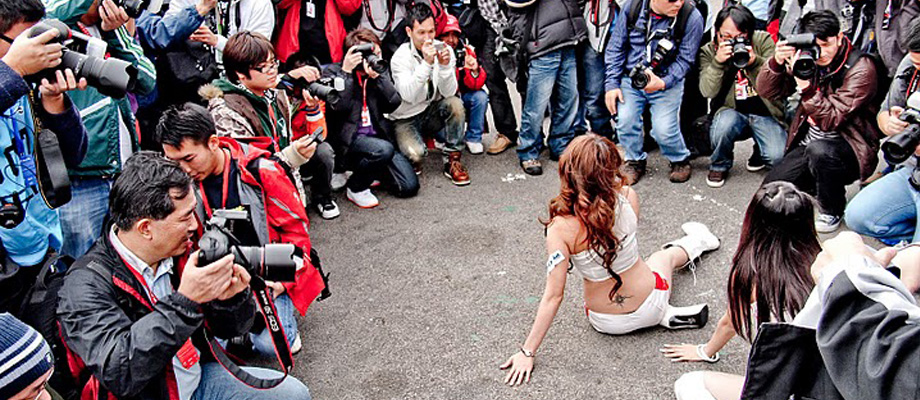
Regardless of where you stand these days. I would like to wish you all a great year ahead shooting can capturing moments that truly matters instead of trying to take a dozen selfies each time you chance across a bathroom mirror.

Photography will still be around and for better of worst, your best bet is to not to buy into the hype and use only what you need to get a good picture.

Merry Christmas and a Happy New Year to All!


A tribute to analogue film in the Secret Life of Walter Mitty

2

When James Thurber wrote his story of Walter Mitty, little did he know that Ben Stiller would turn it into a homage of sorts to analogue film. Thurber wrote this short story in 1939 and it was actually made into a film back in the 1947 but this remake with Ben Stiller starring and directing became something of a nostalgic journey for many.

The movie featured Sean Penn as a photographer, who worked exclusively on film but in one scene, a camera seen in the movie was paired wrongly with an AF-S 300mm f/2.8 VR G lens. That's a bit of a misuse of creative license for historical accuracy for that matter.


Nikon F3T paired with an AF lens?
The Nikon F3T was the very last workhorse from the dark ages of film photography. I remember the F3 well, I wanted to own one but never had the chance to. Here's a short quote from Wikipedia on the F3.
A significantly more durable, robust titanium version of the F3HP was also offered, called the "F3/T", initially in a more natural titanium finish or 'champagne' coloring, and later in a less conspicuous black. It weighs 20 grams less than the comparable F3. The champagne offering was introduced in 1982 and was quickly discontinued around 1985, making it the rarer (and costlier on the used market) of the two titanium models. The F3/T featured titanium clad viewfinders (DE-4), titanium back, titanium top and bottom plates. It also benefited from the conformal coating of the internal circuit board. The mechanical specifications between the black finished F3/T and the natural finish F3/T were identical.


Beautiful things don't ask for attention- James Thurber
The camera is manual but to a point. You can only fire it at one speed, 1/80 sec if you don't have any batteries. It uses two LR44 batteries sold at most watch shops. There were several variations of the F3, including the HP (high eyepoint which the FT is based) and the P for Press. This version had a dedicated hotshoe ontop of the petaprism bulkhead. This meant you could use a standard flash with the hotshoe mount as opposed to a dedicated hotshoe mount found on far left of the camera. This was in fact a pain for some to use as the Nikon hotshoe was non-standard.

For those of us old enough to remember, seeing Life magazine featured in the movie brought back many memories. It was the only way to see the best of what photojournalism has to offer.

Life was an American magazine that from 1883 to 1936 was published as a humor and general interest magazine. Time founder Henry Luce bought the magazine in 1936 solely so that he could acquire the rights to its name when it became a weekly news magazine launched by Luce with a strong emphasis on photojournalism. Life was published weekly until 1972; as an intermittent "special" until 1978; and as a monthly from 1978 to 2000.[1] It became a weekly newspaper supplement published by Time Inc. from 2004 to 2007 and was included in some American newspapers. The website, life.com, existed from March 2009 to January 2012, as a joint venture with Getty Images under the name See Your World, LLC,[2] which in January 30, 2012, became a photo channel on Time.com.

Death of Photojournalism?

Life Magazine's final demise was in 2000. It was just after the Dotcom bubble of the 90s. For that, I think the movie had it right as up until then, there were still film photographers but Instagram? That's another creative license which was abused by Hollywood for the sake of entertainment.

Today, real photojournalist are a rare breed. Many who enter the profession now have to spend a big load of cash on equipment alone, and the big payoff is a myth unless you were a paparazzi.

Molhem Barakat, the Reuters freelance photojournalist killed recently while covering the Syrian conflict was paid only a hundred bucks for uploading his pictures. He was 18 years old. His gallery of work can be viewed here.

I don't think Reuters would have paid him pittance if we were all shooting on film. Digital photography has in some way depreciated the value of images regardless of where they come from. There is nothing more rewarding than to see your work pay off in some way and to be able to do what you do best.

Digital photography is not sacred. It can be tampered with, edited and enhanced with a computer. Analogue photos on the other hand exist in celluloid. Shooting a picture is only one part of the equation. You had to find a way to develop the film and send it over to the News agencies. Not easy I tell ya.

I remember working in a darkroom where a photo was developed by hand, the print had to be dried and later line scanned transmitted to the head office. It was fucking hard work compared to what people had to do now. Developing film has two stages, the first is to develop the roll into a negative and the next, using an enlarger, a hardcopy print was made from that frame. This is what you see in "The Secret Life of Walter Mitty". Digital photographers today have no idea how this was done and couldn't understand the process to appreciate it. In the age of digital, the last thing you needed to do was to create a two step process to sharing your pictures to the world. For this I can proclaim one thing.

Photojournalism is dead. Long live the Selfie.