Showing posts with label digital photography. Show all posts

Petapixel proves that Photography is Dead

0
When Petapixel ran the Creating Composite Photos, what it really did was to prove that photography is dead and digital re-imaging is alive. 

Clint Davis is a professional photographer but how much of what he does is really about photography? For many years now since I started to write this blog, I realize that Professional photographers in the traditional sense do not exist anymore. In essence, they have lost the legitimacy to call themselves photographers since digital imaging and technology has changed all that.

It started with the death of the color lab which was the conduit to print those photos. Here the masters of imaging did what they had to do to print a better picture. Now this doesn't mean they add things to it but their job is to make it look stunning. There are masters who take pride in their work in developing these print images that are good enough to hang in any corporate hall. Today that's up to a digital artist, who through photoshop recreates or re-imagines the photos. Why is this called digital art? Because it isn't real.


The image is a mixture of composites, sometimes the composite is with a background that isn't even real. So how does this count as photography?

If you look at it objectively from a digital artist point of view., even the car itself can be a toy version that is later blended into the picture.


This is why it becomes very difficult to justify the work of a photographer and a digital artist. Since you are not really creating a real picture, why not call yourself a composite artist?

The very use of the 'photographer' moniker has become a bit of a joke if all you do is blend bits of other photos into a single image.

But as we herald the passing of real photography, let's welcome the democratization of imaging where anyone with a computer and a camera can make wonderful pictures. The reality is that a picture no longer is worth a thousand words but a thousand smiles.

Pure Photography is not about Photoshopping Details

0

Here is another reason why you should be reverting back to analog photography instead of going digital. The image above is the latest in a series of digital photo editing tools which basically allows you change any landscape picture into one that could just win you an award.

The program in question is called Landscape Pro, an intelligent picture detecting and enhancement program that runs on Macs and PCs.

What the program does is to detect elements within the picture to enhance and unlike Photoshop, which needs you to get down to smoothening the minute details like color fringing. It uses a masking technique for you to label objects within a picture so that the program can automate the process with a preset algorithm to darken, lighten, or just change the look and feel completely.

At the moment, some of the usual presets are already geared towards more challenging digital editing with contrast controls, lighting direction as well as shaded color in water environments.


With technological advances in digital editing, what is the worth of a picture these days?

For commercial photography, it is great guns to shoot in any weather and yet produce sunny 16 results. It saves time too since you are not subjected to environmental elements on any day which could ruin your shoot. So you can literally play God with your pictures.

Death of Pure Photography

Pure photography these days are designated with a #nofilter tag on pictures but the point is, who cares? I personally do not care if you have a #nofilter tag on your digital pictures since it is shot digitally in the first place. If you stuck a #film tag on it, I would take notice.

The #nofilter tag is like telling the world you are vegetarian but do I care that you don't eat meat? You still eat #food so why should I be of interest to how you eat.

Likewise why would I be interested in a #nofilter tag when all you shoot on is with a digital camera.

Unlike analog film, there is only so much you can do to it while in the darkroom. Contrast controls are limited to what you are able to do with hand dodging. Yes, this happens when you are in a dark room where you use your hands to dodge and burn a picture to control the highlights, and shadow details while expose a sheet of photographic paper with an Enlarger.

Beyond this, you can only touch up the film medium to scrub out very small details.

The purity of analog photography is now lost for good since every picture we see these days are nothing more than a by product of the computer age.

I would not bother to go and see a photo exhibition just to witness what technology is capable of doing to a digital image. But I would pay to go and see pictures capture from a forgotten past because photographer those days used only film.

For those living in Europe, there is still a love for photography that is unseen elsewhere though I do not know how long this affair will last.

Don't get me wrong. Digital for me is a great way to learn photography, you can shoot countless frames until you get it right without costing you a dime. In film, you pay for every frame that gets wasted.

The learning curve to photography is very low these days and if you still haven't got it, you might as well take up house painting.


How Art became a victim of the Digital Age

0


Every artist secretly wants to continue doing what they love doing, and in doing so, they also hope to have the funds to continue this endeavor. 
I find it difficult to call myself an artist these days. Though never poor of talent but never rich enough to conquer the inevitable challenges of a chosen path. Everywhere I go these days, people talk of art for art sake, and how they have been robbed of their creation thanks to the digital world we live in. Take for example, Prince, who died recently and absolutely refuse to let people use his music unless it was paid for in some way. Or for that matter, artist photographers who are routinely called photoshop hacks because nothing they do is ever good enough for an audience fed on a steady stream of fake digital photos. 

What about the aging artist continue to struggle to get their work noticed, not that they are not any good but have yet to be discovered by social media. Then there are the craftsmen, who do what they do because of skill and technique and will never attain the merits of being an artist. 

Photography is no different. Photographic art sells, but for that you need to be a desktop artist and not one operating a digital camera. 

It's hard to justify the worth of a picture these days if it is shot in digital. I remember a time when being a photographer was a hardskill that had to be applied creatively. You need to know about the various types of film, how to develop it in a darkroom and how to print and dodge it with a enlarger. The chemicals were different, color negs, positive film, b/w and let's not forget about the type of paper used in the darkroom printing process. If a client want to blow up a picture to poster wall size, they come back to you and you have to find a good lab to do that. This was craftsmanship at its finest. 

Photographers were artist in the time of analogue film. They were admired and respected. The craftsmen of the photo trade also existed of course but they were not in high demand. These were the journeymen of the industry. Photographers who mastered the art of analog photography only developed those one of a kind prints. It wasn't something you'd find off a line printer because developing it on print also took a certain kind of skill. 
Today, the darkroom is a computer and the art is the digital filters you can dial in through Instagram or a camera app that works on your iPhone. 

Then the Internet came Along....


Digital is the way to go. There is nothing more to learn beyond processing it on a computer, which you must own of course, and with the right software...available free online if you know where to find it. What's more mobile apps offer you the chance to dial in those enhancements to photos with minimum skill. Want a sepia effect? Just ante up on that in-app purchase if you don't already have it. Digital has leveled the playing field so anyone with a smartphone can be a photographer. Even Steve McCurry, an ambassador of sorts for photojournalism declared he is no longer a photojournalist but a visual story teller. He switched places and got a whole lot of flak for this

Digital Photography is a non skill judging from the low expectations of both clients and photographers. If you try to explain the complex digital procedures during a shoot, they will laugh at you. Got a problem? The use Photoshop to solve it. For this, you need to be skilled in Photoshop....and talent hasn't got anything to do with it. It is a matter of skill on how you brush in or brush out a subject. You need to illuminate a certain area of a picture, you just dial in the overexposed in photoshop. You become a keyboard jockey once you learn all the hot keys needed to perform this on the fly. 

Lighting is very easy to learn these days with the instant results you get from digital filters and enhancements. Got a studio with strobes? Even simpler! Shoot each frame and compare the lighting exposure. It takes a fraction of a second for a frame to be shot and if you can't get it right after 3 shots, you got to be autistic. It was different in the days of analog. Even after taking exposure readings, you had to bracket the frame (three shots) to be safe. There is no fall back if exposure is wrong.

For years, Kodak and Fujifilm had to teach people how to use their film, and even held seminars for professional photographers. I attended them in my time and that's when the manual cameras were going out of fashion. People switched to all automatic film cameras but thanks to the film stocks, you could never be sure you have a hit or miss because Kodachrome behaved differently than negative film. So it was back to manual controls. I started to appreciate photography because it was complicated and knew that if I picked it up, it would go well with my writing. Yes, I started writing for newspapers and magazines using a manual typewriter....you know the sort that had actual physical keys which hammered a thin film of ink ribbon to paper. With a film camera in my bag, I was a photojournalist as well. How times have changed now that everything you want to do can be performed from the comfort of a Starbucks cafe with free WIFI and your smartphone. Everything you write or photograph can be up in social media in a matter of minutes. 


How Digital Killed the Analog Star

Did I shoot using Kodachrome? Yes I did. It was a bitch to learn to use but I picked it up after countless failures. Each time I got a package in the mail (you had to send it overseas for developing), my fingers could not contain the excitement as the postman rung the door bell to tell me I had mail.

Kodachrome was a hidden art that few photographers would learn to use in their lifetime. Casual photographers would never turn to Kodachrome as learning it was a trial by fire. You see, there are no sample shots you can look at or metadata to refer to. Each time you took a shot, you jot down the exposure data. The scene had to be remembered in your head as when your Kodachrome slides came back, you had to remember why it didn't turn out the way you remembered it. That was how difficult it was but you could pick that up if you spent time learning about film stocks and its nuances.

These days everything in photography has to do with economics and there is nothing Nikon and Canon can do to change that. First, I have been shooting for over 20 years, on film, instant and now digital, worked with some of the best photographers in the world and now seen how photography has taken on new meaning with digital thrown in.

Economics is what determines the success of any type of technology and for digital, the same is true for users who buy into those thousand dollar equipment in the hope of making it professionally.


It ain't easy making a living with digital equipment. Think of the investment, then think of the returns and you know why digital has been a difficult value point. Nikon and Canon want you to spend more money on equipment, buy more lenses, upgrade to new camera bodies every 12 to 18 months. 

Rapid Growth before a Decline

Digital DSLRs saw rapid growth from 2006 onwards, before tapering off in 2011, the trend now is to headed south, thanks largely to mobile smartphones.

I must say that I don't use a DSLR to shoot anymore. There is no reason to as I don't shoot professionally for anyone. Even when I do, I try to capture everything on a mobile device. Why? Coz it's a hobby. I turn down request to shoot because the pay is far too little and I am not in the mood to compete with people who flash around hefty DSLRs. Besides, taking a good photo is not difficult. If you know how to position your camera in view of the scene before you, you'd get a picture. It is not rocket science. Digital makes it real easy for you to get an idiot proof instant result that you can share with the world on Instagram.

DSLRs are great to have. Good to use if you find paying clients but these days, the only paying clients are those in wedding, commercial events or products and news. Even photojournalism doesn't pay enough to warrant you to take up a hefty insurance tab from Lloyds of London and going out to a war zone to make money shooting images. It's much cheaper for the news agencies to hire the locals from the war zone. Pay them peanuts too.


Does the world remember the last conflict photojournalist who fell in the line of duty? No. The world at large doesn't much give two hoots about who died photographing a war because digital images are apparently worthless beyond a use by date. Those who have died in Syria, Iraq, Libya....will be forgotten.

Digital pictures are passed around like a cheap hooker and after constant use as memes, would you even pay to enter an art gallery to see the real picture from the one you find on the web?

Would I have given two hoots about a photographer who gets beheaded on a YouTube video? Nope. I really have no business to care. People die all the time and I hope it was worth your entertainment because the real pictures from a war zone isn't worth much these days.

Pictures are Sold as Royalty Free


Yes, I have sold my pictures online. All of them are royalty free. Rights managed photos don't sell well because, well, they are expensive. 

These days, people rarely buy photos which are rights managed for print advertising. And I have pointed this out before when competing brands sometimes stumble on the same image and these gets used in a newspaper advert....both at the same time. 

Turn to the internet, and you would be inundated with offers to royalty free stock image libraries that sell loads of photos for one flat price. 

Crowd sourcing single use photos are now popular. A brand name yogurt company can now do away with a dedicated photo shoot with a commercial photography when they dangle an offer to the crowd sourcing community to produce a picture they can use online and in print. The cost? maybe in the region of 300 to 500 USD. WTF? A commercial photographer would charge 4 times as much to produce that same photo. Now you see the difference?

And if you have good skills on photoshop, you can make those royalty free images even better by removing the background brand names on the city streets and replacing them with less obvious signs. This is what you need to do to sell a five dollar royalty free stock photo. 

The Future is in Limited Prints


Digital photos are retouched, it's like a model whose had a ton of plastic surgery done on her. Film photos can be digitally scanned and enhanced, but you can still buy the real thing, a print from an analog negative. That's the real deal. No hocus pocus with Photoshop.

Iconic photo prints from analog film are going to be collectables one day. Just like the ones that was used to shoot Steve Jobs for the book. Both pictures featured in the book were taken on analog film. So who gets the last laugh? Certainly not the digital photographer.

Today, people keep photo albums on Flickr and Google Photos. No one even prints photos anymore. I have a family album which I pieced together and this is for those who wish to remember me when I am gone. But for the rest of you on digital, your digital account dies with you. Forgotten as though cobwebs had obscured your digital account. I don't even have digital photos of my best friend who died seven years ago, just a memory of his email address. And if a friend had a Facebook account, his profile will be put in cold storage if left inactive for more than a year. The memory of the dead will not stay alive on Facebook.

An iconic analog print photo signed and autographed will be an investment. That is art. It increases in value over time. The other stuff shot on digital, not so. 

Photography has evolved into the fast food business—and anyone can learn to make a burger from scratch at McDonalds. Make of that what you will....


Olympus gets Nostalgic with the new Pen F

0
Nostalgia, that's what it is when it comes to owning the Pen F.

I have the analogue version of this camera that gives you 72 shots from a roll of 36 frame film. And there are many similarities with the Pen EP digital cameras but the one that comes closest is the new Pen F, which unfortunately is going to confuse the hell out of you.

The new Pen F, and I say new because it is a digital camera, looks very much like the old one and consumers will no doubt be kicking themselves when they go searching for it on google. The problem is that both share the same name.

This is the film camera, not the digital one


The new Pen F isn't cheap. It cost 1,200 bucks....in USD. In terms of technical specs, you have a new 20 megapixel sensor in place of the 16 megapixel one found in the EM5. No weather sealing for the Pen though.

  • 20MP Live MOS Four Thirds format sensor
  • 5-axis image stabilization with automatic panning detection
  • 2.36 million dot OLED electronic viewfinder
  • Up to 10 fps continuous shooting (20 fps with electronic shutter)
  • Highly customizable interface, twin controls
  • Fully articulating 1.04 million dot, 3" LCD touchscreen
  • 50MP High-res Shot mode
  • 1/8000 sec top mechanical shutter speed (1/16,000 with e-shutter)
  • 1080/60p video recording

The next drawback is the lack of 4K video, which is kinda sad if you asked me as video shooting is now a requirement for most cameras. 

The Pen F like its predecessor released in the 60s are designed to be used like a Rangefinder camera. You can keep both eyes open while keeping one in the viewfinder for framing. 

This means it is a street shooter. And not being a DSLR type camera makes it less useful if shooting commercial photos. I am pretty sure the AF is on par with some entry level DSLR but that's not the point. 

Selling Nostalgia

This is something which camera companies are now innovating though I am not sure how attractive this would be. Remember years ago when Nikon released the Nikon Df? How many actually liked it enough to buy one?

Olympus thinks it can reinvigorate the product line with a new Pen F line. I can already see a second generation Pen F with 4K video shooting if this one succeeds but I can't say I will be putting my bet on this. 

Digital cameras don't offer you much these days as the shooting experience is pretty standard with other digital offerings in the market. The only difference is that digital cameras will get more expensive since there are fewer buyers.


The craze from 7 years ago is truly dead. Nostalgia is probably the secret ingredient they hope you'd buy into as camera companies desperately need your money to soldier on.

So will it work? I really do not know.

Digital cameras are tools for the moment. If you want something of real value, you should take the Pen F analog because that is one camera that really rocks.

The resurgence of film photography will gather speed and in time, no one would remember the digital Pen F.

But in the mean time, Olympus needs to get its sales cracking and there is no better way to try than to give it the film look. 


Food Photography, how Instagram changed the Business

0


I have in the past worked with an award winning food photographer and from what I know, they are in a class of their own but as technology would have it, a slew of foodie pictures found regularly on Instagram has made life a little more difficult. 

Foodies blog about where to eat and what to eat, and in the process take photos for their Instagram feed as part of their promotional efforts. Some of the pictures showcase capture the unique atmosphere of the eatery or restaurant while others are styled in such a way that reflect their creativity and lighting. 

There are still people who shoot food but budgets for a stylist would depend on the client. Today, almost anyone who wants to get creative can look through the numerous instagram photos that are tagged with #foodphotography to get an idea on what is possible. This comes at the expense of professional stylist who once commanded decent paychecks just to style food. 

Today, the digital photographer is nothing more than a journeyman, who goes out of his way to make a budget shoot possible. Food styling was once an art. If it looks good on picture, then it's good to eat...except that it wasn't the case. Industrial glazes and chemicals were added to bring out the color and making it look exceptional during the age of analogue film was an art in itself. you needed quality studio lighting and exposure readings had to be made at every step to avoid unexpected results. Photographers would burn through boxes of Polaroid prints just to check the color and lighting. It was, ultimately a time consuming process. 

With Photoshop, changing the colors isn't a big deal anymore. You want the lobster to look more crimson, it can be done with the right tint. Selective tinting is a boon to food photography and for that, you can ask any digital artist. 


How Instagram made Food Photography Fashionable 

The advent of social media changed the food photography landscape. First, people posted to Facebook and Flickr, and when Instagram came along, that became a food fashion statement on where you have been eating. 


It also helped to promote the eateries themselves, forcing chefs to style the food in a platter that is welcoming to the eyes and photography aficionados. The choice of plates, cutlery and table setting had to be tempting enough for people to drop by and take pictures for their friends to see.

This sort of thinking started to influence how food photography was conducted. It was not about shooting the images at at studio anymore like what you find at Dominoes Pizza or McDonalds. 

Today Food Photography is a mass market exercise that is not dominated by professionals but amateurs. 

Pros help to style the photos in the menu but they don't sell the restaurant. It is the mass market posting on social media that ultimately decides your success. 

This has led people to believe that food styling and photography is but the tip of the ice berg. An image with the right food proportions is what gives the idea on what your guest are getting but ultimately, it is the posting on social media that builds your reputation. 

We no longer have to wait for a jaded food reviewer to tell you that the food doesn't taste as good as it looks, you can already get that if you mates are foodies who eat in many places and post what they have tasted on Facebook. 

Social media campaigns have to tied with socially shared pictures and that's what builds branding and interest in the long term. The short term is always about putting up a print ad or two to get the ball rolling. Promotions at this point is just to tell people you're open for business. And as long as your food comes out of the kitchen that is great to look at and inspires the appetite, those pictures will go viral. 


Food Photography as a Business

The prospect of an Instagram foodie styling and shooting your menu is a reality. Restaurants don't need to hire professional photographers these days as budgets for them will run into thousands of dollars just for the menu pictures alone. 

Pros would like to take that business but with the onslaught of Instagram foodies, that makes it a very difficult proposition. 

What's more, being a pro food photographer would also mean starting up in a location where there is a food culture and with competition coming from amateurs, it gets more difficult to include a professional food stylist as a part of the package. 


So not only would you have to be the photographer and stylist, you also needed to be a good digital artist to know how to enhance those shots you made. 

The good part of this is the simplicity of it all. No DSLRs are necessary. You can shoot with a portable strobe (like the Foldio 2) and an iPhone if you knew how and as long as your services are priced accordingly (and not by the thousands of dollars) you probably can have your cake and eat it.


UPDATE: Instagram photos now in portrait and landscape


So what better way to sell your restaurant than with a full size picture instead of a square one? Get your customers cracking, dress the tables and dining area and color coordinate your table wares. The food is going to be complemented with more than just a square close up of the food but everything else about the restaurant can now be experienced. 


How the digital age has change Automotive Photography

0


In a previous life, I was a magazine editor who had to carry a camera and take photos of cars for the print use. This was in the 90s. During that time, I was told repeatedly that shooting cars was the most difficult aspect of photography (analogue) because of how the lighting fell on the car on specific times of the day. In daylight, you can only shoot during the early hours of the rising or setting sun.

Shooting was a pain as you had to recce a suitable location in which to place the cars. That made the whole process even more difficult as it had to be done in advance, prior to getting the cars needed.

Then you have to wait for the weather of course. If that holds up, you have a shoot on your hands.

The process kept a lot of people at work. The whole photography business, even in a studio environment to shoot a car advertisement would cost in the ballpark of US$100,000. Photographers with large studios and strobe lighting were dominated by a few players. Film exposure had to be captured right and that was how the business was done.

I even met John Lamm, of Road and Track magazine once and spoke to him about his photography. He was essentially the man every guy wanted to emulate, photographing the latest cars for the hottest car magazine on the planet. This was the stuff that made college kids dream about being a professional photographer. The art, the skill and the know how was something you had to pick up over time because analogue is brutal when it comes to mistakes. There are no second chances if you fuck it up the first time.

The Great Digital Disruption


Of course when digital photography and Photoshop came along, things started to change. What made matters worst was that magazines started to cut budgets in view of the stuff you an already find on the Internet. Shooting cars wasn't a big deal anymore. Anyone could get the official pictures from the marques which look strangely like pictures taken off a digital workstation.

Looks real? Baby...this is a rendered image!
Advertising companies could even get files from the 3D modelling workstation and place that car in almost any imaginable background and blend that into photo realistic quality. Any other enhancements can be done in photoshop. Car photography, became what is later known as composite photography...where objects are added to to create an image.

But don't get me wrong, photographing cars still happen but not on the same scale as it would for shooting a Top Gear episode.


The decline of print magazines contributed to the decline of photographers working on such publications because suddenly, anyone can shoot cars. You didn't need a pro but just anyone with a camera with an eye for composition. I remember in the old days, we had to shoot covers for the magazine and this meant we had to shoot a car with the right composition to use. There must be room for text, and room for the masthead of the magazine. Heck, you don't need to do all that.

With digital, things got a lot easier. No more fussy with the photos, just ask the digital artist to render a background and drop the surgically clean official image from the car manufacturer into a blurred background. So many work arounds were available where you didn't need to incur the cost of a photographer. This meant that photographers did less specialised work.

Photographers had to play second fiddle to the digital artist who can literally create magic from the desktop.

What Can Photoshop do for You

Photoshop was a blast and it shows. Having a photographer to shoot a car of a different color didn't have to mean having three different colored cars had to be on set. Just shoot one and a digital artist will render a photo realistic color onto it.

This meant no more long hours in the photography studio. Just one shot, or one take with the perfect lighting and that's it. No more fussy around to recreate the look of the first car image of a different color. 


Better still if you have a photo realistic 3D vector of the car which you can tip around on its axis. You can have a different view by tilting the camera of the 3D program and render the image. Who needs a photographer now when everything can be done on a computer?


Digital photography suddenly didn't seem so great anymore when you have hyper realistic cars speeding around the track of a computer game. As long as a vector file of the car exist, you can have that rendered anywhere in the world and have pink elephants flying overhead for good measure. 

Digital has Levelled the Playing Field

Today, we don't need to go on location to shoot a car. You can render one by buying a cheap background image and blending the car in. Drop in the lighting shadow and you're done. 

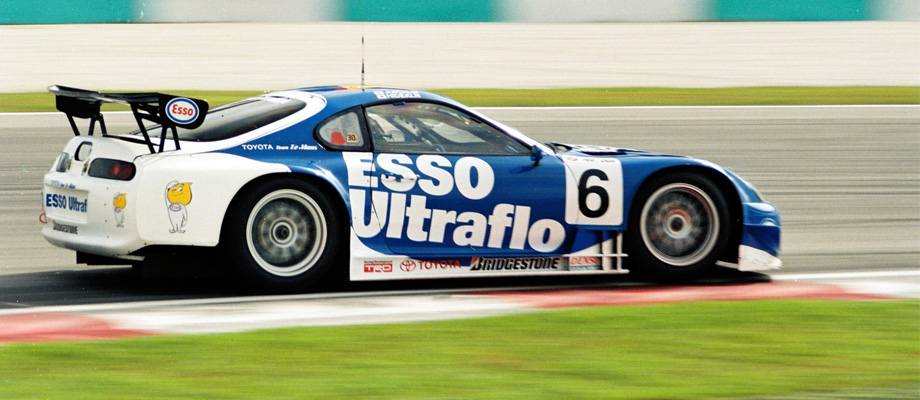
The only thing that hasn't changed is that motor sports images still have to shot on track or in circuit. Beyond that, there is hardly anything that can't be done. I mourn the passing of a bygone era where the image was sacred. Hardly anyone notices this as many of you have never shot on analogue film. 

The decline of print journalism also contributed to the decline of automotive photography as less and less are paying attention to shooting a car that looks good. Publishers are unwilling to hire a photographer to shoot a unique image when they can already rip one off the Internet for next to nothing. Makes perfect cents doesn't it?



Affinity to put a lid on Adobe's Cloud based Photoshop

0


This year marks the 25th anniversary of Adobe Photoshop. If you have been using Adobe's wildly successful Photoshop since version 1.0, you'd know that this software was responsible for changing the way photographers work with  digital photos. Adobe's photo editing tool is so popular, even ISIS terrorist use it to create propaganda.

ISIS Photoshop Image

ISIS photoshop image

Adobe's Photoshop was born in the age of analogue photography, where photos had to be scanned onto disk and manipulated. This allowed unlimited possibilities for photographers to improve on their images, and this alone does not mean enhancing the color curves. You can mask and take out objects that get in the way, change the color of clothing and blend in still subjects as requested by your client.

In my DTP years, I found Photoshop indispensable for creating wild and beautiful imagery for use in print and later websites.

Fast forward to the new century and the move to the Creative Cloud. Adobe says that it gives good reason for them to move to cloud based software as it gives them the chance to update the software quickly and address your needs efficiently. This was all bullshit of course, as Adobe had no means to control their software from being pirated and had to do something about it. Several attempts were made including the use of activated keys and regular updates via a live Internet connection. That didn't work. So what next? Why not try having an always online software?

Adobe's Epic Fail and Fall from Grace


When people talk about Cloud Computing, it's really about programs that connect you to a higher consciousness with greater processing power than your desktop PC. In the case of Google's Cloud strategy, your stuff exist in the cloud via Google Chrome, a PC device which has bare basic processors and just about enough RAM to run your CPU. The idea behind it was to allow you to carry a machine that let's the Cloud do your heavy lifting.


Not so for Adobe, Photoshop has evolved into a behemoth of code.  You can't possibly move your work to the cloud all at one so the CC badge was just added to confuse you. Relaunched as a subscription only cloud verified program for desktop PCs, Photoshop CC was meant to keep the pirates at bay while reaping the rewards of the digital imaging age.

Let's be reasonable, no photographer is desk bound all the time, you can't have digital uploads of your images unless you have hyper fast internet access. This means storing your client images online would require you to park yourself and computer at a Starbucks Cafe and let it chew through the web traffic. If you live in a city, getting high speed internet isn't a problem but not all photographers have such access.

Then you have the annual cost, for which they promise you regular feature updates. Seriously, when you move to the cloud, how often did you have to wait for new features? Did it come every month? Week? Let me tell you a secret, a program that needs to be updated regularly is one that is badly coded....to the point they are fixing it as it goes live. No program is totally bug free when released but there is a critical testing period in which to sort out the pressing bugs. If this bug hunting isn't done correctly, then the process will continue into your living room after you have bought it.

Adobe has found many creative ways to enhance the Photoshop experience...the the point it gets almost too cluttered with features. This is where Lightroom comes in. It simplifies the process for digital image editing without the heavy loaded features found in the full version of Photoshop. Pro photogs are advised to get both, so that one can function as a full service image editing tool while the other slimmed down version is more for photo management.

Welcome to Affinity

When Adobe bought out Macromedia, it was a designated anti-monopoly move that no one cared about. Since then there has been no real challenger to Adobe's Photoshop but on the Mac, Affinity hopes to change that perspective.

Affinity Photo is a stand alone Photoshop rival that is now in Beta. It is a wonderful alternative to Adobe's offering and though not really ready for prime time, it could pose a serious challenge.

What Adobe has done so far has been to build on the core of Photoshop over the years and this has made it very heavy on hardware resource. Affinity Photo on the other hand was built from the ground up so there isn't any legacy code to worry about. Affinity previously had a hit with Affinity Designer, a Adobe illustrator killer app that runs only on the Mac.


Affinity Photo Beta Has Landed from MacAffinity on Vimeo.

You can sign on for the free beta right now by heading to the their website. The other thing I like about Affinity is that it isn't cloud based. You can take it with you. No problems there when you travel anywhere with an assignment in tow. The features are very powerful as can be seen in the video so for the professional, this is a God send.


And now for the price...it's 50 bucks...USD, only from the Mac Appstore when it launches. And how much were you paying for your copy of Photoshop CC to do the same thing?

One of the underlying reasons that people all over the world have been totally taken with Photoshop is that it has become mainstream. Geeks, amateurs, professionals and even casual hobbyist have taken to it like ducks to water.

Adobe has never had it so good. But in order to monetize, they will need people to pay for the full version. Piracy was one of the reasons they switch to the cloud. But they could have just made it cheaper if they wanted people to buy more of it.

Affinity sees this as a way to muscle in, but only on the Mac for now. This makes sense as it concentrates its resource on building a stable alternative to Photoshop before embarking on world domination.


Should Analog Devices go Digital?

0

The folks at hayesburban found a way to revitalize some old analogue device for the digital age before it is made a door stopper. The NoLab Super 8mm digital cartridge is just one device that can be used in place of the traditional film cartridge. The Super 8mm NoLab module sticks into any Super 8mm analogue camera and in the process, makes the film camera from a bygone era usable again.

The specifications are as follows:

Features
  • 720p HD video capture in 4:3 format
  • Frame rate automatically adjusts to camera settings (up to 60 fps)
  • Integrated Film Look options
  • Unlimited storage via removable SD card
  • Battery and recording status light
Specifications
  • Image Sensor:  5 megapixel Omni Vision OV5600 series
  • Video Encoding: 720p HD H.264 (4:3)
  • Memory:  Removable high capacity SD card
  • Connections:  One mini USB port (primarily for charging)
  • Battery:  Rechargeable LiPo battery providing up to 3 hours of continuous recording
  • Housing:  Machined aluminum, color anodized and laser etched
  • Height:   70mm
  • Width:    75mm
  • Depth:    24mm
  • Weight:   160g

Once the technical problems have been sorted out, this project will go to Kickstarter or Indiegogo for funding. Right now, it is still in the tweaking stage.

Should Digital be the Way Forward?


I have my doubts but then again it's not for me to decide. It's just like GMO foods, if you are fine with it, then let's go all the way. 

For me, such a project isn't exactly innovative. There has been attempts to revitalize analog cameras in the past by replacing the film intake with a digital back. NoLab is taking on this same approach and let's say you do get the camera working again with a digital Super 8mm, what then? Would you rather shoot with such restrictive features such as 720p? People these days are already yelling for 4K video capture. 

Then you have the stalwarts who buy analogue for the sake of shooting film.Why would they go digital? Your iPhone probably has better video quality than a Super 8mm camera running a digital cartridge. 

In the end, it makes no sense at all to continue maintaining a digital feed on a analogue device. It just doesn't quite cut it. 

Why We Shoot Film


The whole concept of analogue is to have something you can hold onto, a moment in history that is not vaporous in nature. That's why people shoot film. People do not shoot film to convert to silky smooth digital videos for fun. It makes no sense. If you want a final digital feed, you can always shoot the footage digitally and put in the analogue effects during post production. People are not sharp enough to tell the difference. Some say that it is not genuine but only experts can tell the difference if the footage is shot on film as the majority of people have lost their eye and appreciation of anything analogue.

Though I applaud the spirit of such a venture, I do feel that such products are doomed to commercial obscurity. In the end, it is all about creative license versus cost. The reason why people are shooting so much digital videos and image is because of cost. It cost you next to nothing to have a moment ingrained on Facebook. Having a film roll shot, process and projected on screen has become a creative endeavour. The artist and the art isn't about cost, it is about the approach to showcase your creative excellence. Cost is never a concern when it comes to such artistic expressions.

So please continue to shoot film and if you feel the urgent need to go digital, there is always the iPhone which does it all.